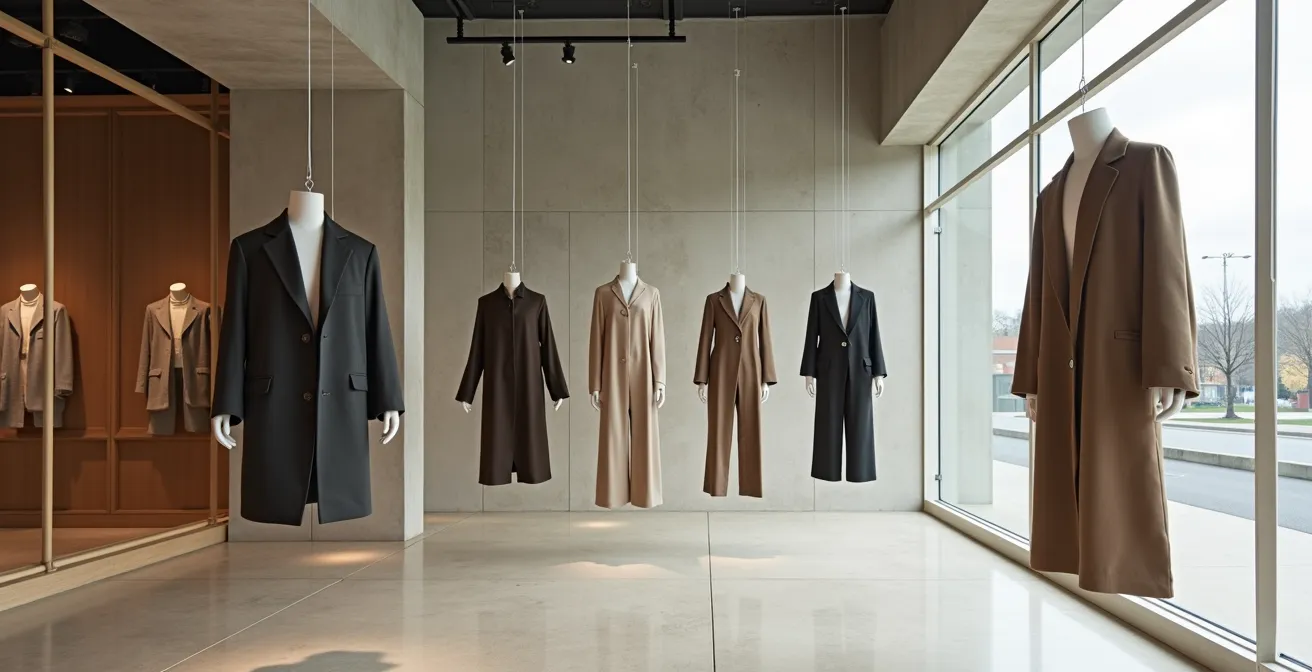
The mainstreaming of gender-fluid fashion is not a fleeting trend but a fundamental rewiring of the relationship between identity, the body, and the garment itself.
- Successful adoption hinges on a « garment-centric » design philosophy, focusing on intrinsic attributes like drape and structure over gendered assumptions.
- Authenticity is paramount, requiring deep cultural understanding and collaborative co-creation, not surface-level marketing gestures.
Recommendation: Brands must evolve from simple demographic targeting to a form of commercial anthropology, understanding the sociological « why » behind consumer expression to develop relevant and resonant products.
The visual landscape of fashion is undeniably shifting. Garments once strictly segregated by gender now coexist on racks, in campaigns, and on runways. It has become increasingly common to see collections that blur traditional lines, presenting a more fluid and expansive vision of style. The immediate and most common analysis credits this evolution to the cultural power of Gen Z and the influence of high-profile celebrities who champion gender-fluid aesthetics. While these factors are significant catalysts, they are merely the visible symptoms of a much deeper, more structural transformation.
To truly understand the rise of gender-fluid fashion in mainstream retail, one must look beyond surface trends. The phenomenon represents a fundamental change in the way consumers construct their identities and, consequently, a necessary evolution in how apparel is designed, marketed, and sold. It signals a move away from designing for a predetermined, gendered body towards a more sophisticated approach: designing for human expression. This requires a shift in perspective, from demographic checklists to a form of commercial anthropology, where the intrinsic properties of the garment—its drape, volume, texture, and structure—take precedence over the presumed gender of the wearer.
This article provides a sociological and strategic analysis for retail buyers and cultural observers. We will dissect the critical components of this shift, examining what it takes to achieve authenticity, the risks of performative inclusion, the redefinition of professional attire, and the new economic models that prioritize longevity over disposable trends. This is a guide to navigating a new era where the product, not the label, defines its place in a consumer’s life.
To fully explore this complex subject, this analysis is structured to guide you through the key strategic and cultural considerations. The following sections break down the challenges and opportunities presented by the rise of gender-fluidity in the fashion industry.
Summary: The Rise of Gender-Fluid Fashion in Mainstream Retail
- How to Adapt Your Brand to Inclusivity Standards Authentically?
- Appropriation vs Appreciation: Where Is the Line in Fashion?
- The Risk of Ignoring Diversity in Your Campaign Casting
- How to Reflect Culture Without looking Like You Are Trying Too Hard?
- What Happened to « Workwear » After the Remote Work Revolution?
- Skate Culture Influence vs Luxury Adoption: Who Owns Streetwear?
- How to Calculate Cost Per Wear to See If Cheap Clothes Are Expensive?
- How to Build a Mood Board That Actually Translates into Product?
How to Adapt Your Brand to Inclusivity Standards Authentically?
Adapting to inclusivity is no longer an ethical option but a commercial imperative. The financial incentive is significant; market research indicates that the gender-neutral clothing sector will reach $209.73 Billion by 2032. However, authenticity cannot be purchased. It must be cultivated from within an organization and reflected in every action, moving far beyond seasonal campaigns or diverse casting calls. It requires a genuine commitment to understanding and uplifting the communities a brand wishes to serve. This means dismantling old, binary systems and embedding inclusivity into the very fabric of product development, marketing, and customer experience.
This deep-seated change is a response to a profound societal need. As designer Thorn de Vries articulated in an interview with VOCAST, this movement is driven by the realization that binary gender roles are restrictive for everyone. He notes:
more and more people are realizing 1. there is more between man and woman, and 2. the oppression that comes with gender roles is something very relevant to everyone
– Thorn de Vries, VOCAST interview on gender-fluid fashion
A brand that demonstrates this understanding effectively is H&M with its « My Chosen Family » campaign. Instead of a generic message of support, the campaign focused on the concept of « chosen families »—a vital support system within the LGBTQ+ community. By collaborating with LGBTQ+ designers and centering a specific, resonant experience, H&M showcased a nuanced understanding that builds trust and credibility. True authenticity is therefore not about speaking *to* a community, but providing a platform for them to speak for themselves.
Appropriation vs Appreciation: Where Is the Line in Fashion?
As fashion seeks global inspiration, it treads a fine line between cultural appreciation and cultural appropriation. Appreciation involves a respectful engagement with a culture, often involving collaboration, credit, and a genuine effort to understand the context and significance of cultural elements. Appropriation, conversely, involves taking from a marginalized culture without understanding or respect, often stripping symbols of their original meaning for commercial gain. This act reduces profound cultural heritage into a disposable trend, reinforcing power imbalances and causing tangible harm.
The distinction is critical in an industry built on visual language. For retail buyers and designers, navigating this requires a commitment to research, humility, and dialogue. The question is not « Can I use this? » but rather « What is my relationship to this culture, and how can my work honor its origins instead of exploiting them? »
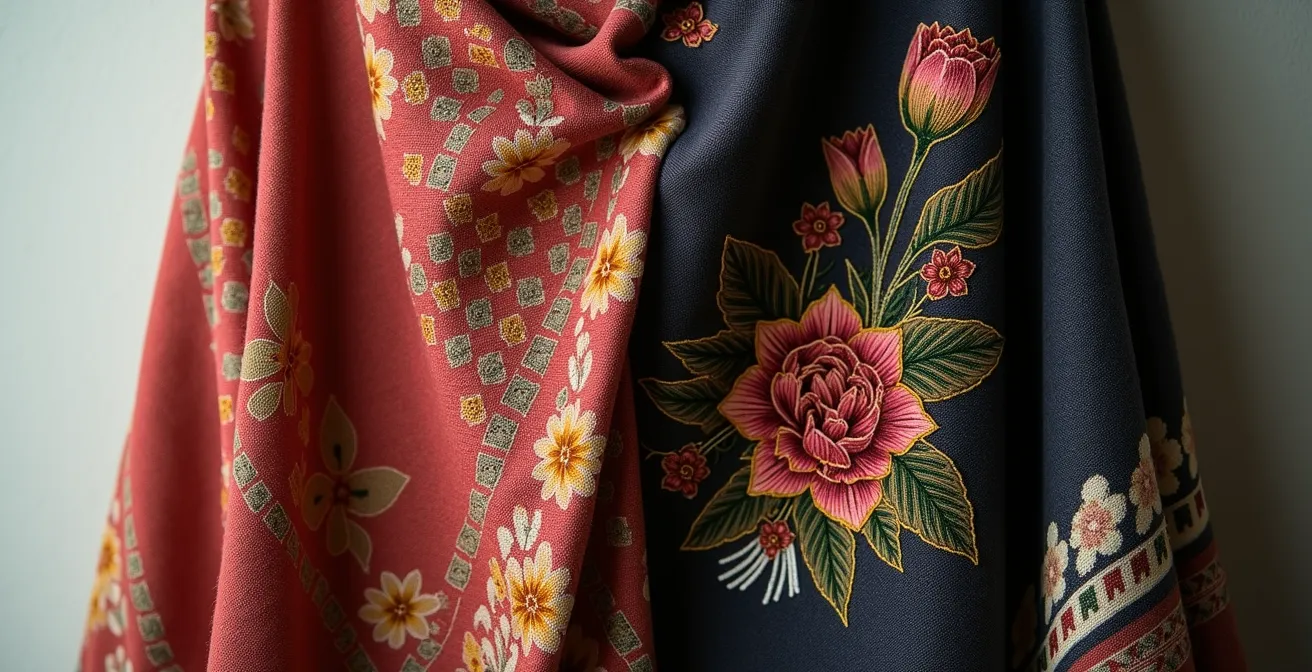
This visual metaphor highlights the crucial difference. On one side, we see authentic textiles rich with history and meaning. On the other, we see reinterpretations that may capture a pattern or silhouette but risk losing the soul. The challenge for the industry is to draw inspiration from the craft, quality, and stories of global cultures (appreciation) without simply lifting sacred or significant motifs for a fleeting collection (appropriation). This involves compensating artisans, crediting sources, and understanding what is and is not appropriate to share.
The Risk of Ignoring Diversity in Your Campaign Casting
In today’s market, ignoring diversity in casting is not merely a moral failing; it is a significant commercial risk. Homogeneous representation signals that a brand is out of touch with contemporary social reality and, crucially, with the future of its consumer base. Data confirms this: studies reveal that around 70 percent of consumers say they are interested in buying gender-fluid fashion in the future. Ignoring this vast and growing segment means deliberately alienating a majority of potential customers. The risk is no longer reputational damage alone; it is a direct threat to market relevance and long-term profitability.
Furthermore, diversity in casting is about more than just visual representation. It is a powerful tool for building brand affinity and trust. When consumers see themselves and their communities reflected authentically, it creates an emotional connection that transactional marketing cannot replicate. A lack of diversity, conversely, communicates indifference or exclusion, effectively telling a large portion of the population, « This brand is not for you. » In a crowded marketplace, such a message can be fatal. True inclusion requires a strategic framework that goes beyond tokenism.
Action Plan for Authentic Brand Representation
- Consultation: Engage with LGBTQ+ advocates and diversity consultants during the design and campaign development process to ensure authentic, respectful representation.
- Environment: Create inclusive physical and digital spaces, such as gender-neutral fitting rooms and removing binary gender options at online checkout.
- Casting: Partner with a wide range of models and influencers, showcasing diverse body types, ages, abilities, and ethnicities in all marketing materials.
- Communication: Develop transparent and clear communication about product fit and sizing, providing detailed measurements to help all customers find the right size for their body.
- Training: Implement comprehensive and ongoing staff training on inclusive language, pronoun usage, and creating a welcoming environment for all customers.
How to Reflect Culture Without looking Like You Are Trying Too Hard?
One of the greatest challenges for brands engaging with cultural movements is to appear genuine rather than opportunistic. The fear of « trying too hard » often leads to one of two undesirable outcomes: a retreat into bland, safe designs or a clumsy attempt at relevance that feels inauthentic. Critic and consultant Katy Jon Went memorably described the failure of the latter, where poorly executed attempts at neutrality result in something akin to a « former communist bloc-bland/Star Trek androgyny. » This highlights the danger of adopting an aesthetic without understanding its underlying philosophy, resulting in products that are devoid of personality and cultural resonance.
The antidote to this is not to try less, but to engage more deeply. Authenticity emerges from long-term commitment and specific, meaningful actions rather than broad, generic statements. It is about understanding the nuances of a culture and finding a relevant intersection with the brand’s own identity and industry. A prime example is Nike’s « Be True » campaign. For years, the brand has demonstrated a commitment to the LGBTQ+ community, and their 2024 initiative shows this depth.
Nike’s « Be True » Campaign 2024
Nike’s long-running « Be True » initiative celebrated the authenticity and creativity of the LGBTQ+ community through a dedicated collection and events. Crucially, their commitment went beyond product. By choosing to support The OUT Foundation, Nike specifically addressed the real-world barriers that many LGBTQ+ individuals face in fitness spaces. This targeted approach demonstrates a genuine understanding of the community’s experiences within their specific industry, making the campaign feel earned and impactful rather than performative.
Nike’s success illustrates the key principle: reflecting culture effectively is about finding a credible role to play. It requires listening, learning, and contributing in a way that is specific, sustained, and true to the brand’s core purpose.
What Happened to « Workwear » After the Remote Work Revolution?
The global shift to remote and hybrid work environments acted as a powerful catalyst, fundamentally dismantling the traditional codes of professional attire. The binary uniform of the corporate world—structured suits for men, pencil skirts and blouses for women—lost its daily relevance. This created a vacuum where comfort, practicality, and personal expression became the new drivers of « workwear. » This evolution naturally paved the way for more gender-fluid silhouettes, as the focus shifted from conforming to a rigid dress code to constructing a wardrobe that supports a more integrated lifestyle.
This new paradigm aligns perfectly with the preferences of the emerging workforce. For example, a 2024 survey revealed that 56% of Gen Z shoppers actively prefer brands that offer gender-neutral collections. For them, the blend of professional and personal is native, and their clothing choices reflect this. The new workwear is less about signaling a corporate role and more about expressing individual identity. This has led to the rise of what can be called « gender-fluid professional » attire, a category defined by its versatility and focus on garment quality over gendered norms.
The following table breaks down the core philosophical and stylistic differences between these two approaches to professional dress.
| Aspect | Traditional Workwear | Gender-Fluid Professional |
|---|---|---|
| Silhouette | Binary (suit vs. dress) | Oversized blazers, wide-leg trousers |
| Focus | Formal dress codes | Comfort and self-expression |
| Key Pieces | Structured suits, pencil skirts | Architectural knitwear, luxury hoodies |
| Philosophy | Dress for the job you want | Dress as the self you are |
As the table illustrates, the fundamental philosophy has been inverted. The old maxim was about projecting an aspirational role, whereas the new approach is about authentically reflecting one’s present self. This shift is not temporary; it reflects a permanent change in our relationship with work and identity.
Skate Culture Influence vs Luxury Adoption: Who Owns Streetwear?
Streetwear has always been a battleground of authenticity, a genre born from the accessible, anti-establishment creativity of subcultures like skate, surf, and hip-hop. Its core ethos was democratic: style defined by community and personal expression, not by price point or exclusive runways. However, as luxury fashion houses began to adopt its aesthetics—oversized hoodies, graphic tees, and sneakers—a central question emerged: who « owns » streetwear? Is it the culture that birthed it, or the industry that commercialized it on a global scale?
From a sociological perspective, the concept of gender fluidity has been inherent to streetwear long before it became a marketing term. Skate culture, in particular, prioritized function and comfort, leading to a naturally unisex wardrobe. This reality is rooted in history, as research from Heuritech points out: « gender fluidity is not just a trend — it is a reality for many people, and gender non-conforming people have always existed throughout history. » Streetwear was one of the first modern fashion movements to organically reflect this, making its adoption by luxury a complex act of translation.
When high fashion incorporates these elements, it often sanitizes them, stripping away the grit and rebellion in favor of polished, high-cost commodities. This is evident as mainstream and niche brands tap into the movement, with leaders like Gucci, Molly Goddard, and JW Anderson demonstrating how the aesthetics of fluidity can be elevated to a luxury context. This process isn’t inherently negative, but it changes the meaning of the garments. The skate-influenced hoodie worn on the street is a sign of community belonging; the same silhouette in cashmere on a runway becomes a symbol of status and cultural awareness.
How to Calculate Cost Per Wear to See If Cheap Clothes Are Expensive?
In an era dominated by fast fashion, the low upfront cost of a garment can be deeply misleading. The true price of our clothing is not what the tag says, but what it costs over its entire lifespan. This is the central premise of « Cost Per Wear » (CPW), a simple but powerful formula: Total Cost of Item ÷ Number of Times Worn. This metric reframes purchasing decisions from a short-term transaction to a long-term investment analysis. From this perspective, a cheaply made $20 t-shirt that falls apart after three washes is significantly more expensive than a well-constructed $100 t-shirt worn a hundred times.
The urgency of this calculation is underscored by our consumption habits. Alarming research shows that on average, people wear each item only seven times before discarding it. This cycle of disposability, fueled by low-quality manufacturing and fleeting trends, is both economically irrational and environmentally unsustainable. Adopting a CPW mindset is an act of resistance. It encourages a focus on quality, timelessness, and personal style over momentary novelty, values that align perfectly with the principles of a durable, gender-fluid wardrobe built on versatile staples rather than disposable, hyper-gendered trends.
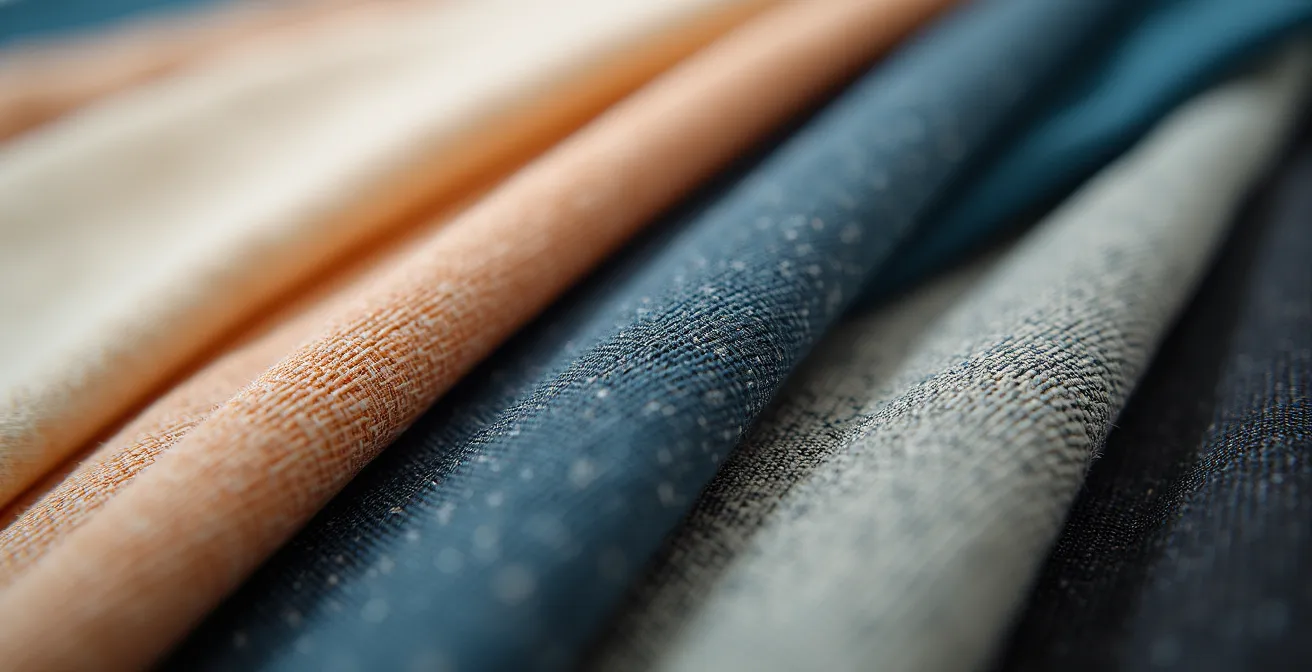
The visible quality of a garment’s construction—its fabric, stitching, and finish—is the physical basis for a low CPW. To put this into practice, one must consider not only the initial price but also the hidden costs and the item’s potential for longevity.
- Calculate basic CPW: Divide the total cost of the item by the number of times you realistically expect to wear it.
- Factor in maintenance costs: Add the estimated cost of alterations, dry cleaning, or special repairs over the item’s lifetime.
- Consider longevity: Recognize that high-quality, well-made items will last longer, naturally lowering their CPW over time.
- Track actual wears: Keep a simple log for a few key pieces to understand your real usage patterns versus your perceived ones.
- Compare before buying: Use estimated CPW as a key decision-making metric when choosing between a cheap item and a quality investment piece.
Key Takeaways
- Gender-fluid fashion is a structural shift, not a passing trend, driven by a move from wearer identity to the intrinsic properties of the garment.
- Authenticity requires deep cultural integration through co-creation and long-term listening, not just diverse marketing visuals or seasonal campaigns.
- The « Cost Per Wear » metric is a crucial tool that connects sustainability, quality, and the rejection of disposable, hyper-gendered fashion cycles.
How to Build a Mood Board That Actually Translates into Product?
The mood board is the critical nexus where abstract sociological insights and cultural trends are translated into tangible, commercial products. In the context of gender-fluid fashion, a poorly constructed mood board can lead directly to the « bland androgyny » that fails to connect with consumers. The traditional method of organizing inspiration into rigid « Menswear » and « Womenswear » silos is obsolete. It perpetuates a binary that the design process is supposed to be transcending. A modern, effective mood board must be organized around a new, more fluid set of principles.
The most effective approach is to adopt a garment-centric organization. Instead of pinning images based on the presumed gender of the wearer, designers should group inspiration by the intrinsic qualities of the clothing itself. Categories might include « Drape & Fluidity, » « Structure & Architecture, » « Volume & Silhouette, » or « Texture & Handfeel. » This method forces the design team to focus on the properties they want to create, leading to more innovative and intentional garments that work across a spectrum of body types. It’s a practical application of the philosophical shift at the heart of the gender-fluid movement.
This mindset is perfectly captured by designer Nalo Zidan of Yazi Clothing, who emphasizes the product over the label:
I think about a place that sells jeans, like Levi’s: If I went in and am just looking for a certain cut and a certain size, I would go for that cut and size whether or not it said ‘men’s’ or ‘women’s’ over it
– Nalo Zidan, Designer with Yazi Clothing
Ultimately, a successful mood board is one that grounds creative vision in commercial reality. It should be informed by data—such as body measurement overlaps, return rates on unisex items, and social listening—to ensure the final product is not only beautiful and expressive but also fits and sells.
By integrating these sociological insights and strategic frameworks, retail buyers and brands can move beyond reactive trend-chasing and begin to proactively shape a more inclusive and innovative future for fashion.
Frequently Asked Questions About Gender-Fluid Fashion Design
How should brands organize design inspiration for gender-fluid collections?
Organize by attributes like ‘Drape,’ ‘Structure,’ ‘Volume,’ rather than traditional ‘Menswear’ and ‘Womenswear’ categories. This approach focuses the creative process on the inherent properties of the garment, not the presumed identity of the wearer, fostering more innovative design.
What data should inform gender-fluid mood boards?
To ground creative vision in commercial reality, mood boards should be informed by quantitative and qualitative data. This includes analysis of body measurement overlaps across genders, return rate analytics for existing unisex items, and social listening data on how customers describe fit and style preferences.
How can brands ensure authentic representation in design?
Authenticity is achieved through genuine collaboration. Brands should work with LGBTQ+ advocates and design influencers throughout the entire process, from initial concept to final product. This ensures the collection is informed by the authentic stories and personal experiences of the community it seeks to represent.