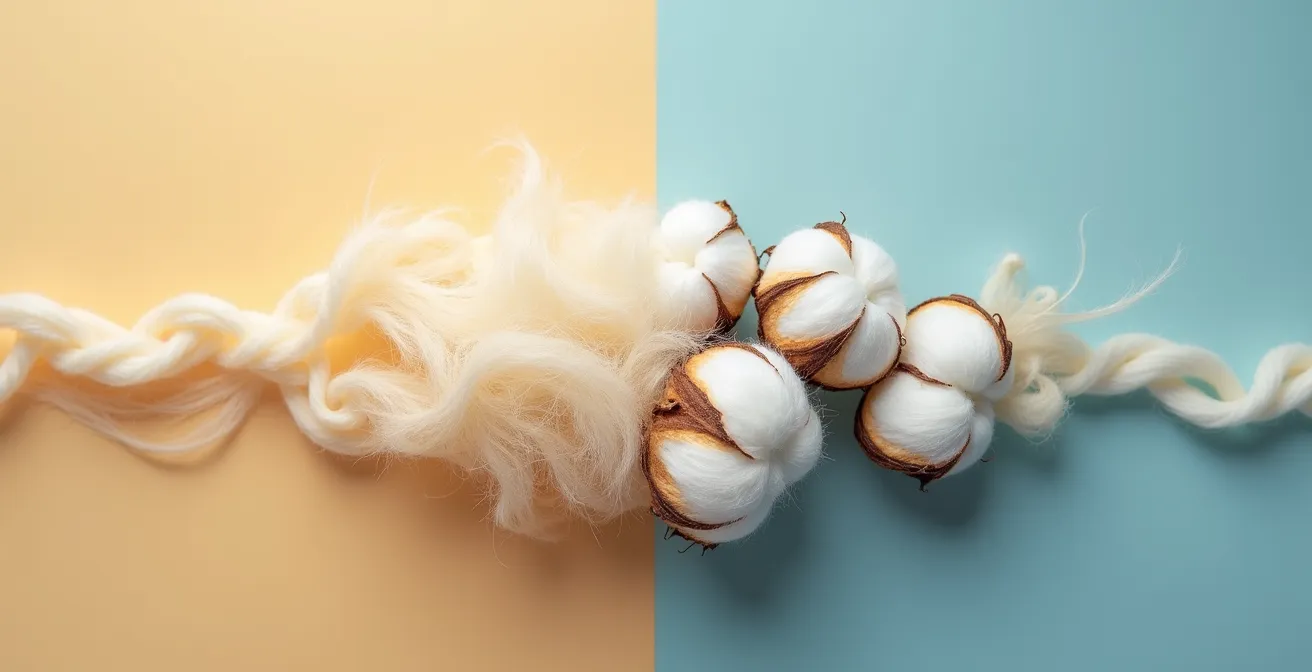
The debate between Tencel and organic cotton often misses the most critical factor: true sustainability is proven through a rigorous audit, not just claimed on a label.
- Certifications like GOTS are not just badges; they are verifiable claims that require you to check the supplier’s status in a public database.
- Many popular « eco-fabrics »—including bamboo viscose, recycled polyester, and some plant-based leathers—can hide chemically intensive processes or non-biodegradable plastic components.
- A fabric’s true durability and environmental impact depend on the complete lifecycle, including the weave structure and post-purchase care requirements.
Recommendation: Adopt a sustainability auditor’s mindset. Question the material’s origin, verify every certification, analyze its full composition, and assess the entire lifecycle before making a sourcing decision.
For any eco-conscious designer or consumer, the choice between Tencel and organic cotton has become a defining dilemma. On one hand, organic cotton is lauded for eliminating toxic pesticides and insecticides from its cultivation. On the other, Tencel™ Lyocell, a branded fiber from Lenzing, is celebrated for its closed-loop manufacturing process that recycles over 99% of its solvents and uses significantly less water. Brands often present this as a simple choice between two « good » options, highlighting the benefits that best suit their marketing narrative. This approach, however, dangerously oversimplifies a complex reality.
The conventional wisdom focuses on a narrow set of metrics, often ignoring the full lifecycle, compositional purity, and the rampant greenwashing that plagues the industry. The real challenge isn’t picking a winner in the Tencel vs. cotton showdown. It’s about developing the skills of a sustainability auditor to cut through the noise. The crucial question is not « Which material is better? » but rather, « How can I verify the claims made about this specific fabric? » A material is only as sustainable as its most vulnerable point in the supply chain, from feedstock and processing to durability and end-of-life.
This article provides an auditor’s framework for evaluating fabric sustainability. We will move beyond surface-level comparisons to explore the critical verification steps, expose common greenwashing traps with materials like recycled polyester and bamboo, and analyze the nuances of durability, from fiber strength to weave construction. The goal is to equip you with a professional scorecard for making genuinely informed and defensible material choices.
To navigate this detailed analysis, the following guide breaks down the key audit points every conscious professional needs to master. From verifying certifications to understanding the hidden truths behind next-gen materials, each section provides a crucial piece of the puzzle.
Summary: Tencel vs. Organic Cotton: A Professional Scorecard
- How to Verify the Origin of Your « Organic » Fabric?
- GOTS vs OEKO-TEX: Which Certification Matters More for Your Brand?
- The « Bamboo » Fabric Lie That Many Brands Still Tell
- Why Recycled Polyester Is Not the Perfect Solution for Fashion?
- What Are Pineapple and Mushroom Leathers and Do They Last?
- Natural vs Synthetic Fibers: Which Is Really More Durable for Workwear?
- Twill vs Satin Weave: Which Is More Snag-Resistant?
- How to Wash Naturally Dyed Fabrics to Prevent Fading?
How to Verify the Origin of Your « Organic » Fabric?
The term « organic » is one of the most powerful—and misused—in the textile industry. While genuine organic cotton offers clear environmental benefits by eliminating synthetic pesticides and fertilizers, its label is not a guarantee. True sustainability requires verification, not just trust. For a designer or brand, relying solely on a hangtag or a supplier’s verbal assurance is a significant risk. The only way to ensure the integrity of the claim is to trace it back to its source through a credible, third-party certification system. The most rigorous standard for this is the Global Organic Textile Standard (GOTS).
Unlike other certifications that may only test the final product, GOTS audits the entire supply chain, from the farm where the cotton is grown to the facility where it is spun, woven, and dyed. This « seed-to-shirt » traceability is the cornerstone of its authority. An authentic GOTS-certified fabric ensures not only organic fiber content but also adherence to strict environmental criteria (like wastewater treatment) and social standards based on the International Labour Organization (ILO). Verifying a GOTS claim is a non-negotiable step in any professional fabric audit.
Your Action Plan: Verifying GOTS Certification
- Locate the GOTS license number on your garment’s label or the supplier’s product description.
- Access the official GOTS Public Database at global-standard.org to begin the verification.
- Enter the license number into the search field. If the full code fails, try using only the numerical value.
- Verify the supplier’s Scope Certificate, which confirms the certification’s validity and the specific product categories covered.
- For maximum assurance on a specific batch, check if a Transaction Certificate is available for that particular shipment.
GOTS vs OEKO-TEX: Which Certification Matters More for Your Brand?
After verifying a material’s organic origin with GOTS, the next layer of an audit involves understanding the landscape of other common certifications, primarily OEKO-TEX. Many brands use these labels interchangeably, but they signify fundamentally different things. Confusing them can lead to flawed sustainability assessments. GOTS certifies the organic process, while OEKO-TEX certifies product safety. An auditor must know which certification to look for to answer a specific question.
The GOTS certification is a holistic standard that applies only to natural fibers. It guarantees that a minimum of 70% of the fiber content is certified organic and that the entire manufacturing process adheres to strict environmental and social criteria. It is the gold standard for proving organic integrity. In contrast, the OEKO-TEX Standard 100 is a testing and certification system for all types of textiles, including synthetics and blends. It tests the final product for a list of over 100 harmful substances. A fabric can be OEKO-TEX certified without being organic; it simply means it is safe for human skin. For example, Tencel cannot be GOTS certified because it is a man-made cellulosic fiber, but it is frequently OEKO-TEX Standard 100 certified, proving it is free of harmful chemicals.
This comparative table, based on information from the Simple Ecology GOTS Certification Guide, clarifies the distinct roles of each standard.
| Certification Aspect | GOTS | OEKO-TEX 100 |
|---|---|---|
| Scope | Entire organic process from seed to finished garment | Final product testing for harmful substances |
| What it proves | Organic origin and ethical production | Product safety and absence of harmful chemicals |
| Eligible materials | Natural organic fibers only | All textile materials including synthetics |
| Tencel eligibility | Cannot be GOTS certified (man-made cellulosic) | Can be OEKO-TEX certified |
| Social criteria | Includes labor standards based on ILO | Does not address social aspects |
With a strict set of guidelines to encompass both the environmental and social aspects of the supply chain, the GOTS certification proves to be one of the most rigorous certifications to achieve in the textile business.
– Simple Ecology, GOTS Certification Guide
The « Bamboo » Fabric Lie That Many Brands Still Tell
One of the most persistent « greenwashing traps » in the fashion industry is the marketing of « bamboo » fabric. Bamboo as a plant is a highly sustainable resource: it grows rapidly, requires little water, and doesn’t need pesticides. Brands leverage these agricultural facts to sell fabric that sounds eco-friendly. However, the vast majority of fabric labeled as bamboo is actually bamboo viscose (or rayon), a material produced through a chemically intensive process that is far from natural.
The viscose process dissolves bamboo pulp using harsh chemicals like sodium hydroxide and carbon disulfide, which can be toxic to workers and pollute the environment if not handled in a closed-loop system—which they rarely are. The U.S. Federal Trade Commission (FTC) has repeatedly warned brands that these fabrics must be labeled as « rayon » or « viscose » to avoid misleading consumers. In contrast, Tencel™ Lyocell uses a non-toxic amine oxide solvent in a closed-loop process that recovers and reuses over 99.5% of the solvent. This makes Tencel’s production process vastly superior from an environmental and safety standpoint.
As explained by the Reskinned Sustainable Fashion Guide, Tencel represents a verifiable, sustainable alternative to the often misleading bamboo viscose.
| Process Aspect | Bamboo Viscose | Tencel Lyocell |
|---|---|---|
| Chemical Process | Uses sodium hydroxide and other harsh chemicals | Uses non-toxic NMMO solvent |
| Environmental Impact | Open-loop process with chemical discharge | Closed-loop process recovering 99.5% of solvents |
| FTC Labeling Requirement | Must be labeled as ‘rayon’ or ‘viscose’ | Can be labeled as Tencel or Lyocell |
| Certification | Rarely meets eco-standards | OEKO-TEX Standard 100 certified |
TENCEL™ is a type of lyocell fabric created from wood pulp, usually from fast-growing eucalyptus or beech trees. The fabric was created by Austrian company Lenzing, who coined the name TENCEL™ to differentiate their type of wood-pulp fabric from the rest. TENCEL™ is certified by OEKO-TEX Standard 100 too, who mark it as non-toxic, and sourced from sustainably managed forests.
– Reskinned, Reskinned Sustainable Fashion Guide
Why Recycled Polyester Is Not the Perfect Solution for Fashion?
Recycled polyester, often derived from PET plastic bottles, is widely promoted as a circular solution to fashion’s addiction to synthetic fibers. On the surface, it seems like a clear win: it diverts plastic from landfills and reduces the demand for virgin polyester, which is a petroleum product. However, from an auditor’s perspective, recycled polyester is a flawed solution that perpetuates a more significant problem: microplastic pollution. Whether virgin or recycled, polyester fabrics shed tiny plastic fibers during every wash.
These microplastics are too small to be filtered out by wastewater treatment plants and end up in oceans, rivers, and even our food chain, causing widespread environmental harm. While recycling bottles into fabric is a form of downcycling, it locks the plastic into a textile system from which it is not currently recyclable at scale. Furthermore, the focus on recycled polyester can serve as a form of greenwashing. A report on the industry’s reliance on this material reveals a troubling trend: while major brands boast high percentages of recycled polyester, the overall market for virgin polyester is growing even faster. A 2024 analysis from the Changing Markets Foundation shows that although recycled polyester volumes rose, its market share fell because virgin polyester production outpaced it.

This illustrates that recycled polyester is not displacing virgin polyester but merely supplementing its growth. The solution isn’t just to use recycled materials, but to move away from fossil-fuel-based fibers altogether. An auditor must assess a material’s full lifecycle integrity, including its impact during the use phase (washing) and its end-of-life potential, neither of which is resolved by recycled polyester.
What Are Pineapple and Mushroom Leathers and Do They Last?
The search for sustainable alternatives to animal leather has led to exciting innovations in plant-based materials, such as Piñatex® (from pineapple leaves) and Mylo™ (from mycelium, the root structure of mushrooms). These materials utilize agricultural byproducts or rapidly renewable resources, presenting a compelling story of circularity and lower environmental impact compared to conventional leather tanning. Piñatex, for instance, is a non-woven textile made from pineapple leaf fibers, a waste product of the pineapple harvest, making it an economical and sustainable feedstock.
However, an auditor’s job is to look beyond the marketing and examine the material’s compositional purity and durability. A significant challenge for many plant-based leathers is that they are not 100% bio-based. To achieve the necessary strength, flexibility, and finish, they are often coated with or bonded together using petroleum-based plastics. According to an industry analysis on innovative fabrics, many of these materials contain Polyurethane (PU) or Polylactic Acid (PLA) as binders. While PLA is a bioplastic, it requires industrial composting conditions to biodegrade and can contaminate conventional plastic recycling streams.
Case Study: Piñatex Development and Market Adoption
Piñatex is a material that imitates leather but is derived from pineapple leaf fibers. This byproduct of pineapple farming is economical, viable, and environmentally sustainable. Piñatex is widely applied in accessories, shoes, and sometimes clothes. Its adoption by brands showcases the market’s interest in innovative, lower-impact materials. However, its performance and end-of-life depend on its specific finish, which has evolved over time to reduce plastic content.
This « hidden plastic » component is a critical detail. It affects the material’s biodegradability and complicates its end-of-life management. While these innovations are a positive step away from traditional leather, a thorough audit must question their exact composition and real-world durability to avoid trading one environmental problem for another.
Natural vs Synthetic Fibers: Which Is Really More Durable for Workwear?
When selecting fabrics for high-use applications like workwear, durability becomes a primary sustainability metric. A garment that lasts longer reduces consumption and waste, regardless of its origin. Historically, synthetic fibers like polyester and nylon have been favored for their high tensile strength and abrasion resistance. However, this perspective often overlooks the performance of robust natural fibers and the lifecycle trade-offs of synthetics, such as microplastic shedding and reliance on fossil fuels.
Advanced natural and man-made cellulosic fibers are challenging the dominance of synthetics. For example, durability testing often shows that TENCEL™ Modal can withstand more wash cycles than cotton while maintaining its softness and structure. Even more compelling is the performance of traditional bast fibers like hemp. Hemp is an exceptionally strong and durable fiber that requires significantly less water and no pesticides to grow. It is a carbon-negative crop that regenerates the soil, making it a powerhouse of sustainable agriculture.
Case Study: Hemp Canvas for Durable, Eco-Friendly Jeans
Hemp fibers are strong and possess great withstand, which makes clothing from hemp long-lasting and sustainable. Recognizing this, iconic brands like Levi’s have begun incorporating hemp into their collections, often blended with cotton, to design more environmentally friendly jeans. This adoption by major manufacturers, as noted in a review of top sustainable materials, signals a shift toward using high-durability natural fibers to reduce the environmental footprint of notoriously resource-intensive products like denim.
For an auditor, choosing a durable material for workwear involves looking beyond the simple « natural vs. synthetic » dichotomy. It requires a nuanced assessment that considers fiber properties (like hemp’s strength), processing innovations (like Tencel Modal’s resilience), and the full lifecycle impact, including maintenance and end-of-life.
Twill vs Satin Weave: Which Is More Snag-Resistant?
A fabric’s durability is not determined by its fiber content alone; the weave structure plays an equally critical role. The way threads are interlaced affects a fabric’s drape, luster, and, most importantly, its resistance to snagging and abrasion. For designers creating products meant to last, understanding the difference between common weaves like twill and satin is essential. A twill weave, characterized by its diagonal ribs (like in denim), is known for its excellent durability and soil-hiding properties.
In a twill weave, the yarns are tightly packed, creating a dense and sturdy fabric that can withstand significant friction and stress. This makes it an ideal choice for workwear, upholstery, and everyday apparel. In contrast, a satin weave creates a smooth, lustrous surface by having several yarns « float » over others. While this structure gives the fabric a luxurious feel and high sheen, it also exposes long threads that can easily catch and pull, resulting in snags. Satin weaves are therefore best suited for special occasion wear or items that will not be subjected to rough use.
When conducting a material audit for durability, the combination of fiber and weave must be considered:
- For Maximum Durability: Choose a strong fiber like hemp or organic cotton in a dense twill weave. This is the best option for high-use garments like trousers and jackets.
- For Moisture-Wicking Durability: Tencel in a twill weave offers a good balance of strength, snag resistance, and moisture management.
- For Occasion Wear: A satin weave can be used for its aesthetic appeal, but it should be avoided for products that require high performance and longevity. High-contact areas like elbows and knees are particularly vulnerable.
Choosing the right weave is a strategic decision that directly impacts a product’s lifecycle. A beautiful but impractical satin garment that snags on its first wear is the opposite of sustainable design.
Key Takeaways
- Verification Over Trust: Never accept a sustainability claim at face value. Use tools like the GOTS database to audit your suppliers and confirm certifications.
- Process Matters More Than Origin: A « natural » source like bamboo means little if the manufacturing process is chemically intensive. Contrast this with verifiable closed-loop systems like Tencel™ Lyocell.
- Look for Hidden Plastics: Many next-gen materials, from recycled polyester to plant-based leathers, rely on petroleum-based components that undermine their biodegradability and perpetuate microplastic pollution.
How to Wash Naturally Dyed Fabrics to Prevent Fading?
The final phase of a product’s lifecycle—its use and care—is a critical and often overlooked aspect of sustainability. A garment’s true environmental footprint includes the energy and water consumed during washing, as well as its ability to retain its appearance over time. Fabrics colored with natural dyes, derived from plants, minerals, and insects, offer a beautiful, non-toxic alternative to synthetic dyes. However, they are often more sensitive to heat, pH, and light.
Improper care can cause these delicate colors to fade rapidly, shortening the garment’s usable life and negating its sustainable origins. As a designer or informed consumer, providing or following correct care instructions is essential for preserving the integrity of naturally dyed textiles. Unlike synthetic dyes, which form strong chemical bonds with fibers, many natural dyes form more superficial bonds that can be disrupted by harsh detergents, high temperatures, or prolonged sun exposure. Gentle care is not just a recommendation; it is a requirement for longevity.
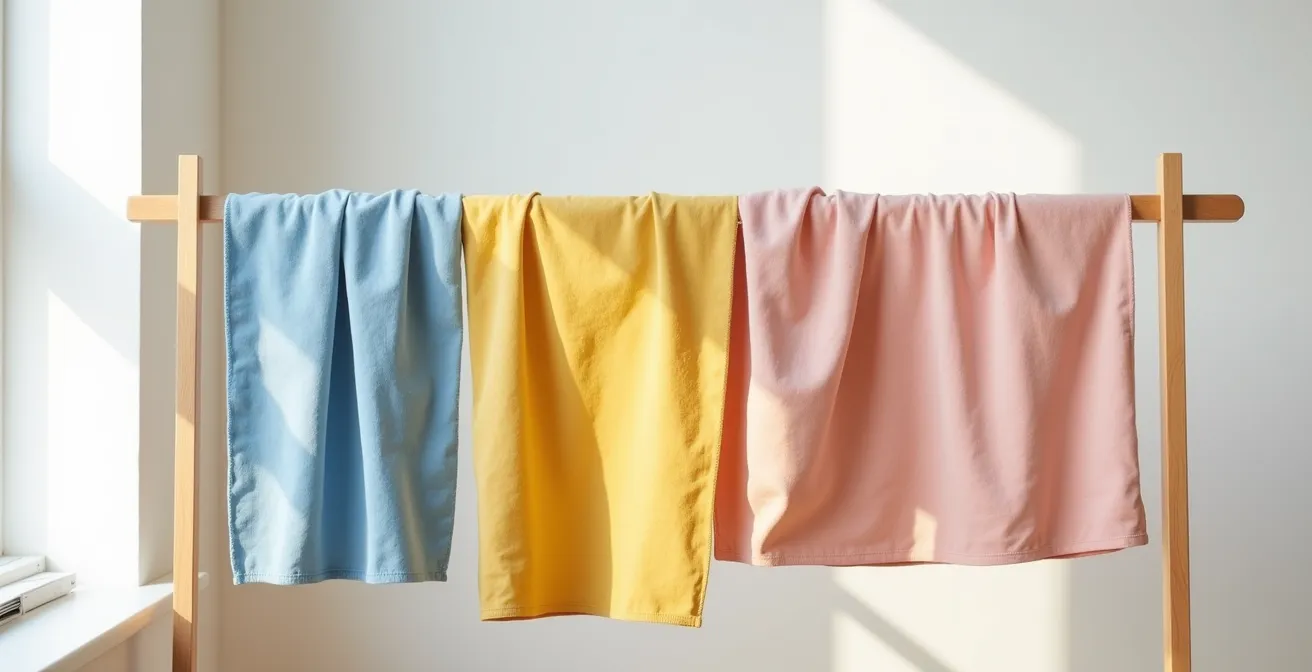
Preserving the beauty of these fabrics requires a specific care regimen:
- Wash garments inside out at a low temperature, ideally 30°C (86°F) and not exceeding 40°C (104°F), to protect the dye on the fabric’s surface.
- Use a pH-neutral, gentle detergent. For plant-based dyes, adding a small amount of white vinegar to the rinse cycle can help stabilize the pH and maintain color vibrancy.
- Avoid tumble drying at all costs. The high heat can damage both the natural fibers and the dyes. Instead, air dry garments away from direct sunlight to prevent fading from UV radiation (photodegradation).
- If ironing is necessary, use a low temperature setting and do not use steam, as the moisture and heat can affect the dye.
By embracing these care practices, you complete the chain of custody for a sustainable product, ensuring that the resources and craftsmanship invested in its creation are honored throughout its entire lifecycle.
Ultimately, building a truly sustainable collection is not about finding a single « perfect » material, but about building a rigorous evaluation process. By adopting the mindset of a sustainability auditor—verifying claims, scrutinizing composition, and considering the full lifecycle—you can make defensible choices that align with genuine environmental values. Start today by applying this framework to your next material selection.