
For acne-prone skin, choosing mineral sunscreen isn’t a preference—it’s a fundamental strategy to prevent both breakouts and accelerated aging.
- Mineral SPF creates a physical, non-reactive shield, unlike chemical sunscreens which absorb into the skin and can trigger an inflammatory cascade.
- Proper application and reapplication are non-negotiable to prevent UV-induced post-inflammatory hyperpigmentation (dark spots) on inflamed areas.
Recommendation: Make a non-comedogenic, high-zinc-oxide mineral sunscreen the unwavering foundation of your daily routine, even indoors.
The dilemma is maddeningly familiar. You know that daily sun protection is the single most powerful anti-aging tool at your disposal, yet the fear of clogged pores, a greasy finish, and painful new breakouts makes you hesitate. Many people with acne-prone skin end up abandoning sunscreen altogether, unknowingly trading one problem for a far more permanent one: photoaging. The common advice is a simple binary: mineral is ‘good’ and chemical is ‘bad’. But this oversimplification misses the crucial point.
The real issue isn’t just about avoiding a pimple tomorrow; it’s about safeguarding your skin barrier integrity for the decades to come. The wrong sunscreen doesn’t just cause a breakout; it can initiate an inflammatory cascade that undermines any anti-acne or anti-aging efforts you’re making. The choice of SPF is not an afterthought—it is the foundational, stabilizing element upon which your entire skincare routine is built. An unstable foundation leads to chaos, irritation, and accelerated aging.
This guide moves beyond the surface-level debate. We will treat sunscreen not as a cosmetic but as a critical piece of health equipment. We’ll explore why a mineral formula acts as a true protective shield, how to apply and reapply it without disrupting your makeup or your skin’s balance, and why this commitment is non-negotiable—even when you’re sitting inside. It’s time to stop compromising and arm yourself with the knowledge to protect your skin without fear.
This article provides a comprehensive framework for integrating the right type of sun protection into your life. The following sections will guide you through the practical challenges and scientific reasoning, empowering you to make the safest and most effective choice for your skin’s long-term health.
Summary: The Ultimate Guide to Sunscreen for Acne-Prone Skin
- When to Reapply Sunscreen Over Makeup Without Ruining Your Look?
- The Risk of Applying Too Little: Why SPF 50 Becomes SPF 4?
- How to Layer SPF Under Makeup to Stop It From Rolling Off?
- Why You Need SPF Indoors If You Sit Near a Window?
- Ears, Neck, and Hands: The Areas You Forget to Protect?
- When to Start Using Anti-Aging Moisturizers for Maximum Effect?
- The Risk of Mixing Vitamin C and Retinol in the Same Routine
- Why Dehydrated Skin Ages Faster Than Dry Skin?
When to Reapply Sunscreen Over Makeup Without Ruining Your Look?
Reapplication is the point where even the most diligent sunscreen users fail. For those with acne-prone skin wearing makeup, the challenge is even greater. The rule is uncompromising: protection degrades with sun exposure, sweat, and time. For maximum efficacy, especially when outdoors, sunscreen should be reapplied every 40 minutes when sweating or swimming, and at least every two hours otherwise. But how do you do this over a full face of makeup without creating a cakey, streaky mess that could trigger a breakout?
The solution lies in choosing the right formula and application method. Smearing a liquid or cream lotion over foundation is a recipe for disaster. Instead, you must rely on products specifically designed for this purpose, which almost exclusively come in mineral-based formats. Mineral powders and cushions are your greatest allies here, as they deposit a fresh protective shield without disturbing the layers beneath.
Here are the most effective methods for reapplying SPF over makeup:
- SPF Powders: A brush-on powder containing zinc oxide and/or titanium dioxide is the gold standard. It provides a fresh layer of physical protection while simultaneously absorbing excess oil, which is a major benefit for acne-prone skin.
- SPF Cushions: A cushion compact with a mineral formula allows for a controlled, tapping application. This method gently presses the product onto the skin. However, impeccable hygiene is crucial; always use a clean applicator to avoid transferring bacteria.
- SPF Mists: While convenient, most SPF sprays designed for the face are chemical-based and can pose inhalation risks. If you must use one, spray it into your hands first and then press it onto your skin, never directly onto your face. Always seek out mineral-based mists if available.
The Risk of Applying Too Little: Why SPF 50 Becomes SPF 4?
The number on the bottle—SPF 30, SPF 50—is a promise based on a specific, lab-tested condition: applying 2 milligrams of product per square centimeter of skin. In reality, almost no one applies this much. Studies have shown that the average person applies only 25% to 50% of the recommended amount. When you do this, the protection level doesn’t just decrease; it plummets. An under-applied SPF 50 doesn’t act like an SPF 25; its efficacy can drop to a shocking SPF 4 or 5.
For acne-prone skin, this is catastrophic. It’s not just about getting a tan or a sunburn. UV exposure on already inflamed skin triggers a severe defense mechanism. As highlighted in a key dermatological observation, this exposure is a primary driver for the development of post-inflammatory hyperpigmentation (PIH). These are the stubborn dark spots that linger for months after a pimple has healed. When you under-apply sunscreen, you are essentially giving UV radiation a direct invitation to worsen inflammation and create these lasting marks, making your acne scars darker and more persistent.
The « less is more » approach that might feel safer for breakout-prone skin is, in fact, creating more long-term damage. You are not only leaving yourself vulnerable to photoaging and skin cancer but are actively worsening the very condition you’re trying to manage. The only way to get the protection you paid for is to apply a generous amount—about a nickel-sized dollop for the face alone. A non-reactive, non-comedogenic mineral sunscreen makes this generous application possible without the fear of irritation from chemical interference.
How to Layer SPF Under Makeup to Stop It From Rolling Off?
One of the biggest complaints about sunscreen, especially from makeup wearers, is « pilling »—when the product balls up and rolls off the skin. This not only ruins your makeup but indicates that your SPF isn’t forming a uniform, protective film. The cause is often an incompatibility between skincare layers, and the type of sunscreen you choose is a primary factor. The fundamental difference between mineral and chemical sunscreens dictates how they should be layered.
Chemical sunscreens work by being absorbed into the skin to convert UV rays into heat. For this process to be effective, you must wait for 15 to 30 minutes after application before applying makeup. Rushing this step is a common cause of pilling. Mineral sunscreens, conversely, work by forming a physical barrier on the skin’s surface. They are effective immediately, requiring no wait time.
This illustration highlights the goal: a smooth, seamless integration of layers.
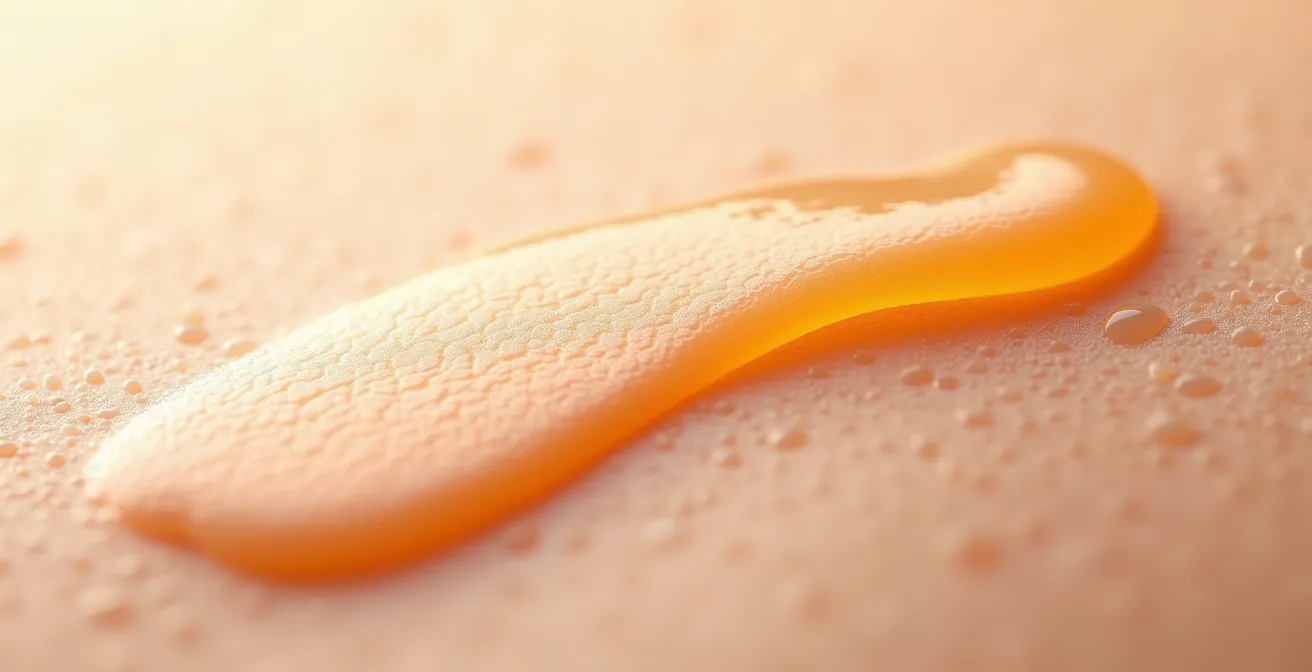
To achieve this seamless finish, the texture and ingredients of both your sunscreen and makeup matter. Silicone-heavy primers and foundations can often clash with certain SPF formulas. However, the most reliable strategy is to build a non-reactive foundation with a mineral sunscreen as your base layer.
This table breaks down the key differences for makeup application:
| Characteristic | Mineral Sunscreen | Chemical Sunscreen |
|---|---|---|
| Wait Time Before Makeup | Immediate application | 15-30 minutes |
| Texture | Thicker, may leave white cast | Lightweight, transparent |
| Primer Compatibility | May react with silicone primers | Better cosmetic elegance under makeup |
| Film Formation | Sits on skin surface | Absorbs into skin |
| Best For | Sensitive, acne-prone skin | Normal to oily skin |
Why You Need SPF Indoors If You Sit Near a Window?
It’s a pervasive myth that you’re safe from the sun’s damage once you’re inside. While UVB rays, the primary cause of sunburn, are largely blocked by glass, the same is not true for UVA rays. UVA radiation is the silent ager. It penetrates deeper into the skin, destroying collagen and elastin, and is a major contributor to wrinkles, sagging, and skin cancer. Frighteningly, standard office or home windows can let in over 60% of UVA rays.
If your desk, couch, or driver’s seat is next to a window, you are experiencing significant, cumulative UV exposure throughout the day. This incidental exposure is one of the most overlooked causes of premature aging. For those with acne-prone skin, it also means a constant, low-grade trigger for the inflammatory cascade that leads to post-inflammatory hyperpigmentation. You might notice that acne scars on one side of your face—the side that faces a window—are darker or more persistent.
The message from dermatologists is unequivocal. As Dr. Jason Thomson of the Skin + Me Dermatology Team states, you must protect yourself from this insidious threat:
Harmful UVA rays can penetrate glass, so it’s essential that you protect yourself against them.
– Dr. Jason Thomson, The Dose – Skin + Me Dermatology Team
This is why daily sunscreen application is a non-negotiable habit, like brushing your teeth. It is not an « outdoor activity » product. It is a daily defense shield against an ever-present environmental aggressor. Choosing a cosmetically elegant mineral sunscreen that you enjoy wearing makes this daily commitment effortless.
Ears, Neck, and Hands: The Areas You Forget to Protect?
Even the most dedicated face-cream-and-sunscreen users often make a critical mistake: they stop at the jawline. The neck, décolletage, ears, and hands receive just as much, if not more, incidental sun exposure as the face, yet they are chronically neglected. These areas have thinner skin and fewer oil glands, making them particularly vulnerable to the signs of photoaging. A youthful face paired with a sun-damaged neck and spotty hands is a tell-tale sign of incomplete sun protection.
Forgetting these areas effectively creates a roadmap of your past sun exposure. Dermatologists can often guess a person’s true age or lifestyle simply by looking at their hands and neck. The ears, particularly the tops and backs, are also high-risk zones for skin cancer, as they are constantly exposed and rarely protected. Your sun protection routine must be holistic, covering all skin that sees the light of day.
The image below serves as a stark reminder of these often-overlooked but highly vulnerable zones.

Extending your sunscreen application is a simple habit change with profound long-term benefits. Every time you apply your facial SPF, make it a conscious ritual to continue down your neck, across your chest, over your ears, and onto the backs of your hands. Because these areas can also be sensitive, using a gentle, non-irritating mineral-based formula is the safest approach. There is no point in protecting your face from chemical interference only to expose your neck and hands to it.
When to Start Using Anti-Aging Moisturizers for Maximum Effect?
The beauty industry markets « anti-aging » as a category you enter in your 30s or 40s, typically with expensive creams and serums. This is a fundamental misunderstanding of how skin aging works. The vast majority of visible aging—up to 80%—is caused by UV exposure. Therefore, the single most effective anti-aging product is not a moisturizer; it is a broad-spectrum sunscreen. The question shouldn’t be « When do I start using an anti-aging cream? » but « When do I start using sunscreen religiously? » The answer is: now.
An effective anti-aging routine begins with a robust defense, not a belated attempt at repair. Before you even consider adding active ingredients like retinoids or vitamin C, you must establish a non-negotiable foundation of daily sun protection. Without it, you are fighting a losing battle, as UV rays will continue to degrade collagen and cause cellular damage faster than any serum can repair it.
Mineral sunscreen is the cornerstone of this defensive strategy. As clinical research from the Cleveland Clinic shows, formulas with zinc oxide and titanium dioxide act as a physical shield. In the words of Dr. Anisha Patel, they provide the ultimate defense:
Mineral sunscreens offer the most protection because they’re literally creating a physical separation between you and the sun.
– Dr. Anisha Patel, M.D., MD Anderson Cancer Center
This protective shield is the most potent anti-aging « moisturizer » you can buy. It works immediately upon application and, by preventing damage in the first place, it ensures that any other anti-aging products you choose to add later can work on a stable, protected canvas. Starting this habit in your teens or early 20s will have a more dramatic impact on your skin’s future than any cream you could buy in your 40s.
The Risk of Mixing Vitamin C and Retinol in the Same Routine
The world of active ingredients can be a minefield for acne-prone skin. While powerful actives like Vitamin C (an antioxidant) and Retinol (a cell-turnover powerhouse) offer incredible benefits, using them incorrectly or together can lead to irritation, a compromised skin barrier, and increased sensitivity. The cardinal rule is to never layer Vitamin C and Retinol in the same application (e.g., both at night). The standard, safest protocol is Vitamin C in the morning to fight free radicals during the day, and Retinol at night to work on repair.
However, the real risk comes from not pairing these actives with the correct sunscreen. When you use actives, your skin becomes more vulnerable to sun damage. Using a chemical sunscreen, which works by creating a chemical reaction in the skin, can add another layer of potential irritation to an already sensitized canvas. This is where the non-reactive nature of mineral sunscreen becomes paramount.
Mineral formulas, particularly those with a high concentration of zinc oxide, are not just passive shields. Zinc oxide is renowned for its anti-inflammatory and soothing properties, making it the perfect partner for an active-heavy routine. It calms the irritation that actives can sometimes cause, while providing robust physical protection. It ensures your Vitamin C and Retinol can do their jobs without interference.
Your Action Plan: Combining Actives with SPF for Acne-Prone Skin
- Apply your Vitamin C serum in the morning to clean, dry skin.
- Follow with a non-comedogenic mineral sunscreen containing zinc oxide for broad-spectrum and anti-inflammatory benefits.
- Use your retinol product only at night, as it can increase photosensitivity and is degraded by UV light.
- Always choose non-comedogenic mineral formulas when using any potentially irritating active ingredients to maintain skin barrier integrity.
- Allow each layer to fully absorb for a few moments before applying the next to prevent pilling and ensure maximum efficacy.
Key Takeaways
- Mineral sunscreen provides a non-reactive, physical shield, making it the superior choice for sensitive and acne-prone skin to avoid chemical interference.
- Under-application is a critical failure; it drastically reduces SPF efficacy and significantly increases the risk of post-inflammatory hyperpigmentation on acne lesions.
- Sun protection is a 365-day commitment, required even indoors near windows and on often-forgotten areas like the neck, ears, and hands.
Why Dehydrated Skin Ages Faster Than Dry Skin?
The terms « dry » and « dehydrated » are often used interchangeably, but they describe two different problems with a critical distinction for skin aging. Dry skin is a skin type; it naturally lacks oil (lipids). Dehydrated skin is a condition; it lacks water. Any skin type, including oily and acne-prone skin, can become dehydrated. Dehydrated skin is a direct indicator of a compromised skin barrier. When the barrier is damaged, it can no longer hold onto water effectively, leading to trans-epidermal water loss (TEWL).
This is precisely why dehydrated skin ages faster. A compromised barrier is a gateway to inflammation. Irritants, pollution, and UV radiation can penetrate more easily, triggering an inflammatory cascade that degrades collagen and elastin. This creates a vicious cycle: the skin is too weak to defend itself, leading to more damage, which further weakens the barrier. Fine lines and wrinkles appear more pronounced on dehydrated skin, and its ability to heal and repair itself is severely diminished.
For acne-prone individuals, this is a double-edged sword. The harsh cleansers and treatments often used to control oil can strip the skin, leading to dehydration and a damaged barrier. Adding an irritating chemical sunscreen on top of this compromised skin is like pouring fuel on a fire. This is where mineral sunscreen becomes a therapeutic tool. As clinical observations from Dania Dermatology show, zinc oxide’s gentle and soothing properties are ideal for inflamed, dehydrated skin. The Revoderm Dermatology Team further notes that zinc oxide’s anti-inflammatory properties can actively help reduce acne-related redness.
By choosing a non-comedogenic mineral sunscreen, you are not just blocking UV rays; you are applying a calming, protective layer that helps your skin barrier heal. This is the most fundamental step in slowing down the accelerated aging associated with dehydration.
Your journey to clear, youthful skin doesn’t start with expensive serums; it starts with the non-negotiable daily act of protecting it. This means choosing a mineral sunscreen that works with your skin, not against it, and applying it with the discipline of a true sun safety advocate. Commit to a mineral sunscreen today. Your future skin will thank you.