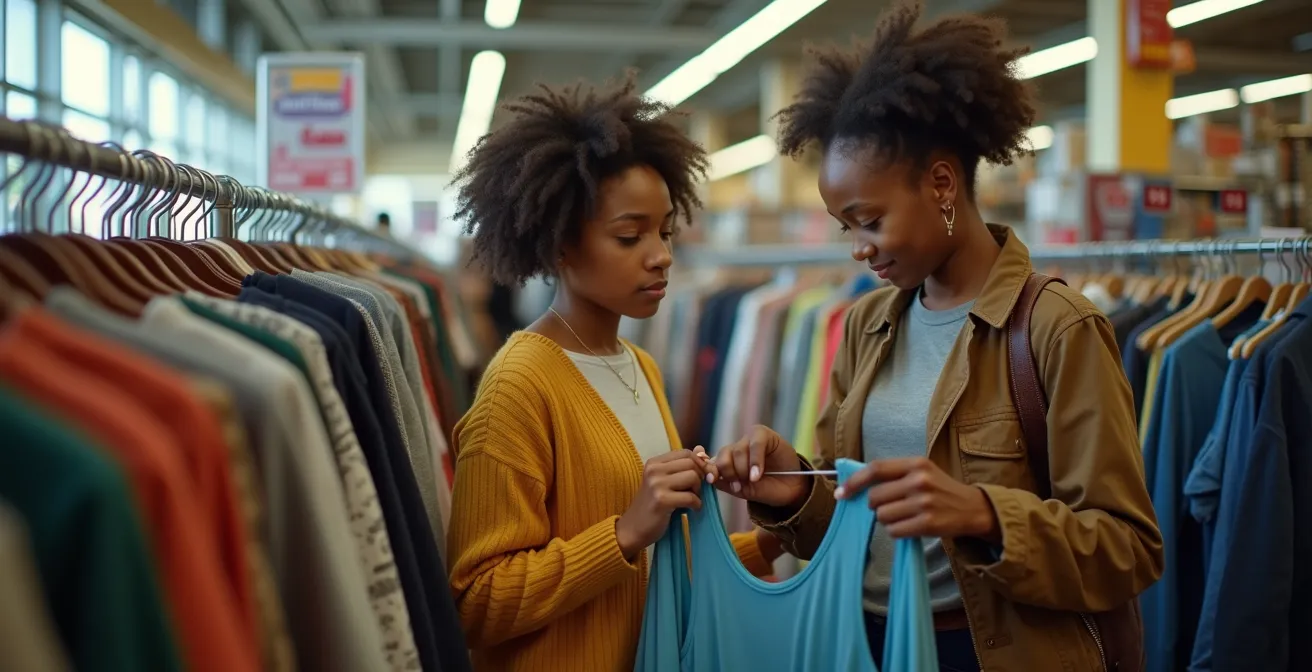
The popular narrative shames budget-conscious consumers for buying fast fashion, but the real issue isn’t individual morality—it’s economic necessity.
- True affordability is measured in « cost per wear, » not the initial price tag.
- Learning to identify quality fabric and construction is a more effective tool than boycotting accessible brands.
Recommendation: Shift your focus from guilt to strategy: learn the system to make smarter, more durable choices within your financial reality.
The conversation around fast fashion is often framed as a simple moral binary: you are either an ethical consumer who invests in sustainable, expensive brands, or you are part of the problem. This narrative, while well-intentioned, completely ignores the economic reality for millions of families. When your budget is tight and children are growing out of their clothes every season, the low upfront cost of a fast-fashion item isn’t just a temptation—it’s a necessity. The guilt associated with these purchases is a heavy burden, but it’s often misplaced. The pressure to « buy better » rings hollow when « better » is financially out of reach.
The standard advice—invest in timeless pieces, shop at high-end boutiques, or meticulously curate a capsule wardrobe—presupposes a level of financial stability and disposable income that many do not have. For a low-income family, the choice is not between a $20 t-shirt from a mass-market retailer and a $150 ethically-made equivalent; it’s between that $20 t-shirt and not having a new t-shirt at all. Recent survey data reveals that the average American spends around $120 per month on clothing, a figure that must cover necessities for the entire family, making every dollar count.
But what if the solution wasn’t to abandon the only accessible option, but to master it? This article reframes the challenge. Instead of focusing on guilt, we will provide a socio-economic and material science toolkit to empower you. We will move beyond judgment and into strategy, exploring how to extract the maximum possible value from every purchase. This guide will demonstrate how to assess true cost, identify quality in a sea of disposability, understand the system you’re participating in, and mitigate its impact—all while respecting the very real constraints of your budget.
This article provides a structured approach to becoming a more strategic consumer, even within the fast fashion ecosystem. We will break down key concepts from financial calculation to material science, giving you the practical tools to make informed decisions that serve your family’s needs and budget.
Summary: A Strategic Guide to Navigating Fast Fashion on a Budget
- How to Calculate Cost Per Wear to See If Cheap Clothes Are Expensive?
- The Fabric That Pills After One Wash: How to Avoid It?
- Twill vs Satin Weave: Which Is More Snag-Resistant?
- Zara vs Shein: What Is the Difference in Supply Chain Speed?
- The Hidden Risk of Microplastic Shedding in Cheap Activewear
- Tencel vs Organic Cotton: Which Is Truly More Sustainable?
- Why « Green » Production Saves Money After 2 Years of Operation?
- How to Transition from Fast Fashion to Thrifting Step-by-Step?
How to Calculate Cost Per Wear to See If Cheap Clothes Are Expensive?
The most deceptive aspect of fast fashion is its low sticker price. A $10 shirt seems like a bargain, but if it falls apart after three washes, its true cost is over $3 per wear. Conversely, a $40 shirt that lasts for 40 wears has a cost per wear (CPW) of just $1. This simple calculation is the most powerful tool for a budget-conscious consumer, shifting the focus from upfront cost to long-term value. It’s an economic principle that allows you to see beyond the marketing and assess an item’s true affordability. For families, this is critical; it’s the difference between constantly replacing clothes and building a functional wardrobe.
Calculating CPW requires a small shift in mindset. You must consider the entire lifecycle of the garment, not just the moment of purchase. This includes potential maintenance costs like special detergents or dry cleaning, and even the « cost » of your time spent on repairs. When you begin to think in these terms, the economics of your wardrobe change dramatically. An analysis has shown that quality second-hand clothes were 33% cheaper per wear than new fast fashion items, even if their initial price was slightly higher. This data proves that durability is a direct financial asset.
To make this practical, you don’t need a complex spreadsheet. Start by mentally estimating how many times you’ll realistically wear an item. Be honest: is this a trendy piece for one season or a staple you’ll reach for weekly? Applying this quick mental check in the store can immediately re-contextualize a « cheap » price tag and prevent impulse buys that ultimately drain your budget. This strategic thinking transforms shopping from a reactive purchase to a calculated investment in your family’s wardrobe.
Your Action Plan: Calculate the True Cost Per Wear
- Track the initial price: Note the full cost of the item, including any taxes and shipping fees. This is your starting point.
- Add maintenance costs: Factor in any special expenses required to care for the garment, such as dry cleaning services or specific detergents.
- Factor in repair costs: Consider the potential cost of future repairs (like replacing a button) and the time you might invest in mending.
- Divide by actual wears: Track the number of times the item is actually worn. Divide the total cost by this number to find the true cost per wear.
- Compare to your hourly wage: To put the cost in perspective, compare the final CPW to your hourly earnings. This helps assess its true affordability.
The Fabric That Pills After One Wash: How to Avoid It?
One of the most common frustrations with fast fashion is poor fabric quality. A garment can look great on the hanger but quickly develop pills (small balls of fuzz), lose its shape, or become transparent after a single wash. This is often due to the use of short-staple fibers and loose weaves, which are cheaper to produce. Learning to spot these low-quality materials before you buy is a crucial skill for making your money go further. It’s a form of material literacy that empowers you to find the hidden gems of durability even in a low-cost environment.
You don’t need to be a textile expert to assess fabric quality. A few simple, physical tests performed in the store can reveal a lot about a garment’s future performance. These tactile checks help you identify fabrics prone to pilling and premature wear, saving you from the disappointment and wasted money of a disposable purchase.
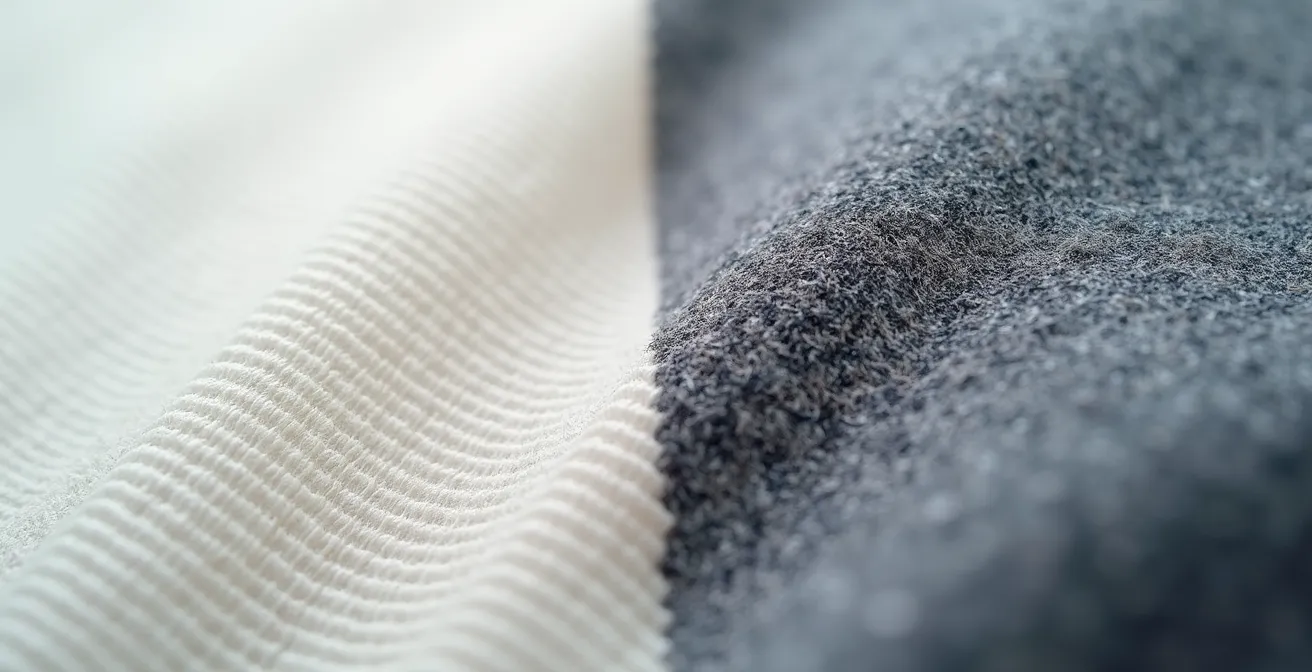
As the image above illustrates, the difference between a tight, dense weave and a loose, fuzzy one is stark. The tighter weave is inherently more durable and less likely to snag or pill. By training your eye and hand to recognize these differences, you can make smarter choices at the point of sale. Here are five quick tests you can perform in the store:
- The Stretch Test: Gently stretch a small part of the fabric. If it snaps back into shape quickly, it has good elasticity and is less likely to sag. If it holds the stretched shape, it will likely lose its form.
- The Rub Test: Vigorously rub the fabric between your thumb and forefinger for a few seconds. If it starts to feel fuzzy or a residue forms, the material is highly prone to pilling.
- The Light Test: Hold the fabric up to a light source. If you can easily see through it, or if the weave appears uneven and sparse, it’s a sign of low density and poor quality.
- The Seam Check: Examine the stitching along the seams. Look for tight, even stitches. Loose, uneven, or broken stitches are a clear indicator that the garment will not last.
- The Weight Test: In general, a heavier fabric is made with more material and a denser weave, which often translates to better durability than its ultra-lightweight counterparts.
Twill vs Satin Weave: Which Is More Snag-Resistant?
Beyond the type of fiber (like cotton or polyester), the way those fibers are woven together has a massive impact on a garment’s durability. Understanding the basics of different weaves can help you choose clothes that are inherently more resistant to snags, tears, and daily wear. The two most common examples to compare are twill and satin. A twill weave, easily identified by its diagonal parallel ribs (like in denim jeans), is exceptionally durable. This structure makes it resistant to showing stains and, most importantly, highly snag-resistant.
In stark contrast, a satin weave creates a smooth, glossy surface because its structure involves long « floats » where threads pass over several others. While this creates a luxurious feel, these long floats are extremely susceptible to catching on rough surfaces, leading to prominent snags that are difficult to fix. This makes satin-weave garments unsuitable for daily, hard-wearing use. Knowing this simple fact can guide your purchases: for a child’s pants or a work shirt, twill is a far superior investment. For a special-occasion item, satin might be acceptable.
This knowledge applies to other weaves as well. Plain weave is a simple, grid-like pattern that offers moderate durability, while knits (like in t-shirts) offer comfort and stretch but can be prone to holes. The following table provides a quick guide to help you make more informed decisions based on a garment’s intended use.
| Weave Type | Durability | Snag Resistance | Care Required | Best For |
|---|---|---|---|---|
| Twill (Denim) | Excellent | High | Low maintenance | Daily wear, work clothes |
| Plain Weave | Good | Moderate | Low maintenance | Shirts, basic tees |
| Satin Weave | Poor | Very Low | High maintenance | Special occasions only |
| Jersey Knit | Moderate | Low | Medium maintenance | Casual wear, activewear |
Zara vs Shein: What Is the Difference in Supply Chain Speed?
Not all fast fashion is created equal. Understanding the operational differences between brands like Zara and « ultra-fast » fashion players like Shein reveals a lot about the quality, cost, and ethics of the clothes they produce. Zara pioneered the fast-fashion model by shortening the traditional design-to-sale cycle from months to weeks. However, the new generation of online retailers has accelerated this process to a staggering degree. This acceleration has profound implications for consumers.
The core difference lies in the production model. Zara operates on a responsive model, producing smaller batches of new styles to test the market. Shein, on the other hand, employs a real-time, on-demand model, listing thousands of new items daily that are produced in extremely small quantities (sometimes as few as 100 units). If an item gets traction online, more are produced. This « test and repeat » model minimizes financial risk for the company but maximizes the pressure for speed, often at the expense of quality control, material standards, and labor oversight. In 2024, reports indicated that Shein’s market value reached $100 billion, more than H&M and Zara combined, showcasing the immense profitability of this hyper-accelerated model.
For the consumer, this translates to lower prices but also a higher gamble on quality. While a Zara item may have undergone at least some level of quality testing, an item from an ultra-fast retailer may have had virtually none. The following comparison highlights the dramatic difference in scale and speed.
| Metric | Traditional Retail | Zara | Shein |
|---|---|---|---|
| Design to Sale | 6-9 months | 2-3 weeks | 3-7 days |
| New Items Daily | Weekly drops | 500+ items | 6,000+ items |
| Minimum Order Quantity | Thousands | Hundreds | As low as 100 |
| Price Range | $30-100 | $20-60 | $3-30 |
| Quality Testing Time | Weeks | Days | Hours or none |
The Hidden Risk of Microplastic Shedding in Cheap Activewear
While the focus is often on visible quality, there are hidden environmental and health costs associated with cheap clothing, particularly activewear made from synthetic materials like polyester, nylon, and acrylic. Every time these garments are washed, they shed tiny plastic fibers known as microplastics. These fibers are too small to be filtered out by wastewater treatment plants and end up in our oceans, rivers, and even drinking water, eventually entering the food chain.
This issue is compounded by the low quality of many fast-fashion synthetics. Looser weaves and lower-grade fibers tend to break and shed more easily. While a family on a budget may rely on affordable activewear for sports or comfort, it’s important to be aware of this invisible consequence. The environmental impact of fashion isn’t limited to the factory; it continues in our homes with every laundry cycle. This problem exists alongside other environmental burdens, such as the immense water usage in textile production; documentary evidence reveals it takes an astonishing 2,700 liters of water to produce a single conventional cotton shirt.
However, awareness does not have to lead to guilt or inaction. There are several practical, low-cost steps you can take to significantly reduce the amount of microplastics your laundry releases. These methods not only help the environment but can also extend the life of your synthetic clothing by being gentler on the fibers.
- Wash in cold water only: Hot water breaks down synthetic fibers faster, increasing shedding. Washing cold can reduce it by up to 30%.
- Use a specialized laundry bag: Mesh laundry bags designed to capture microplastics (often called Guppyfriend or similar) are a one-time investment that can trap a significant portion of shed fibers.
- Wash less frequently: Unless an item is heavily soiled, consider spot cleaning or airing it out instead of putting it through a full wash cycle.
- Air dry when possible: The high heat and tumbling action of a machine dryer are harsh on synthetic fabrics and increase fiber shedding.
- Choose tighter weaves: When buying synthetics, opt for smooth, tightly woven fabrics over fuzzy textures like fleece, which are known to be super-shedders.
Tencel vs Organic Cotton: Which Is Truly More Sustainable?
As consumers become more aware of fashion’s environmental impact, materials like organic cotton and Tencel (a brand name for lyocell) are often promoted as « greener » alternatives. From a purely environmental standpoint, both offer significant benefits over conventional cotton, which is notorious for its heavy water and pesticide use. The Aral Sea case study is a devastating example: a significant portion of the sea vanished in under two decades largely due to river diversions for cotton production, destroying the local fishing economy.
Tencel/lyocell is often considered a top-tier sustainable fabric. It’s made from wood pulp, typically from sustainably managed forests, and processed in a « closed-loop » system where over 99% of the water and solvents are recycled. Organic cotton eliminates harmful pesticides and uses less water than conventional cotton. However, for a budget-conscious family, the primary question is one of practicality and affordability. These sustainable fabrics come with a significant price premium, with organic cotton often costing 20-30% more and Tencel commanding a 40-60% premium over conventional materials. This price difference can make them inaccessible for many.
Beyond cost, durability and care must be considered. Tencel is known for its excellent durability, soft feel, and quick-drying properties, and it rarely needs ironing—a significant time-saver for busy families. Organic cotton is durable and easy to wash, but it dries slowly and often requires ironing. The biggest hurdle, however, remains availability. While organic cotton is becoming more common in mass-market stores, Tencel is still largely confined to more expensive, specialized brands. For a low-income consumer, the « best » sustainable fabric is often the one they can find and afford, if any.
Case Study: The Aral Sea and the True Cost of Cotton
The story of the Aral Sea in Central Asia serves as a stark warning about the water intensity of conventional cotton farming. To irrigate vast cotton fields in Uzbekistan, the rivers that fed the sea were diverted. This resulted in the sea shrinking dramatically, with some estimates suggesting half its area vanished in just 18 years. This ecological catastrophe led to the collapse of a once-thriving fishing industry, devastating local economies and demonstrating the profound, real-world consequences of producing a water-hungry crop.
Why « Green » Production Saves Money After 2 Years of Operation?
There is a growing narrative within the fashion industry that « going green » is not just good for the planet but also for the bottom line. Brands often highlight how investing in energy-efficient machinery, water-recycling technology, and sustainable materials can lead to significant operational savings over time. After an initial investment, these « green » production methods can reduce a company’s expenses on water, energy, and raw materials. In theory, these savings could be passed on to consumers, making sustainable fashion more affordable.
However, the economic reality is more complex. The savings at the production level rarely translate into lower prices on the retail floor. Instead, these gains are often absorbed as increased profit margins for the company or reinvested elsewhere. As one analysis from the Economics Observatory points out, the link between corporate savings and consumer prices is tenuous at best. This creates a paradox where companies may be producing more « efficiently » while prices for consumers continue to rise.
Operational savings from green production rarely translate to lower retail prices for consumers.
– Economics Observatory, Fast Fashion: What Are the True Costs?
Furthermore, the industry is facing inflationary pressures that counteract any potential savings. A recent industry survey shows that more than 70% of fashion executives expect their prices to increase in 2024, citing rising costs for labor, transport, and materials. For the low-income consumer, this means that even as brands tout their green credentials, the price of clothing—both conventional and « sustainable »—is likely to climb, further squeezing already tight budgets. The promise of affordable green fashion remains, for the most part, an unfulfilled one.
Key Takeaways
- The most effective way to manage a clothing budget is by calculating the ‘Cost Per Wear’ (CPW), not by chasing the lowest initial price.
- Learning to perform quick, in-store fabric tests (for stretch, pilling, and weave density) is a critical skill for identifying durable garments.
- The « ultra-fast » fashion model (e.g., Shein) prioritizes speed and volume over quality control, resulting in lower prices but a higher risk of poor durability compared to traditional fast fashion (e.g., Zara).
How to Transition from Fast Fashion to Thrifting Step-by-Step?
For many, thrifting is presented as the ultimate ethical and affordable alternative to fast fashion. It promotes a circular economy and can offer high-quality, durable clothing at low prices. However, simply saying « go thrifting » is unhelpful advice for a busy family on a budget. Successful thrifting requires a strategy, time, and an awareness of the social dynamics at play. The recent trend of « thrift store gentrification, » where affluent resellers bulk-buy the best items in low-income areas to sell online at a markup, can reduce the availability of essential clothing for the very people who depend on thrift stores the most. A strategic approach is therefore not just efficient, but also more considerate.
This means approaching thrift shopping with a clear plan. Instead of browsing aimlessly, which can be time-consuming and overwhelming, a targeted approach will yield better results and save precious time. Knowing what you’re looking for and when to shop are key components of this strategy.
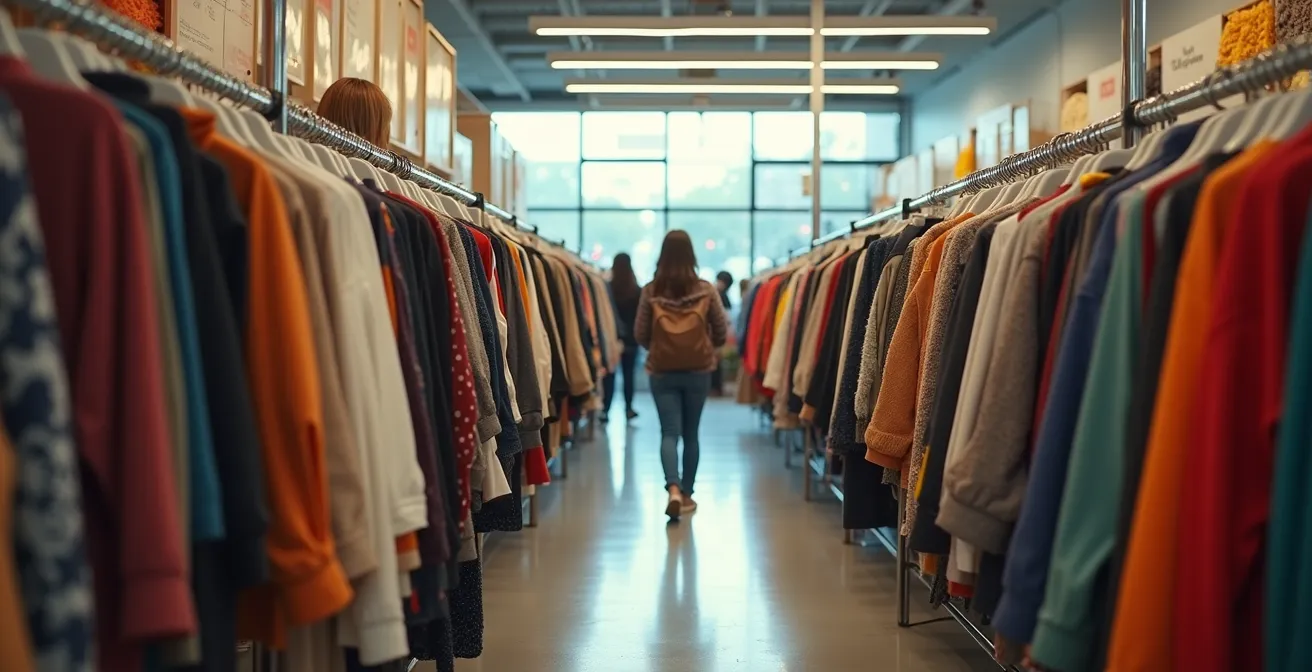
The goal is to integrate second-hand shopping into your life in a manageable way. It doesn’t have to be an all-or-nothing switch. By following a few key steps, you can make thrifting an effective tool in your wardrobe-building arsenal. Here’s a smart way to get started:
- Create a specific wishlist: Before you go, make a list of exactly what you need (e.g., « blue jeans, size 10, » « kids’ winter coat, size 6 »). This prevents impulse buys and focuses your search.
- Visit on restock days: Most thrift stores restock on specific days of the week, typically Mondays or Tuesdays. Shopping on these days gives you the best selection. A quick phone call can confirm a store’s schedule.
- Focus on classic, durable pieces: Prioritize items that won’t go out of style quickly, like well-made coats, denim, and basic knits. Use the fabric quality tests mentioned earlier to assess their durability.
- Start with accessories and basics: If you’re new to thrifting, begin with easier-to-find items like scarves, belts, and simple t-shirts before hunting for more specific or statement pieces.
Frequently Asked Questions about Fabric Durability and Quality
Why does twill last longer than satin?
Twill’s diagonal weave pattern creates a stronger, more stable fabric structure that resists tears and snags by distributing stress more evenly. In contrast, satin’s long, floating threads on the surface are not well-secured and catch easily on rough surfaces, causing pulls and damage.
Is a higher thread count always better?
Not necessarily. While thread count can indicate density, the type of weave and the quality of the fiber itself are far more important for durability. A high thread count made from weak, short-staple fibers will not last as long as a lower thread count fabric made from strong, long-staple fibers in a durable weave like twill.
Can you identify weave type without expertise?
Yes, you can identify basic weaves with a quick visual inspection. Twill shows distinct diagonal lines (like denim). Plain weave looks like a simple checkerboard or grid. Satin is easily recognizable by its very smooth, shiny, and reflective surface.