
The surge in hiring 3D designers isn’t just about creating faster renders; it’s because brands now need ‘Digital Garment Engineers’ who build production-ready virtual products, not just illustrate concepts.
- This new role directly translates to reduced sampling costs and significantly faster time-to-market.
- Expertise in fabric physics and structural integrity, not just aesthetics, has become the most valuable asset for a modern designer.
Recommendation: Focus on learning production-centric software like CLO3D to build a portfolio that demonstrates technical construction and problem-solving, proving you can deliver a viable digital product.
If you’re a recent fashion design graduate, you’ve seen the tidal wave coming. Job postings increasingly demand skills in CLO3D, Browzwear, and other 3D software, often pushing traditional Adobe Illustrator and sketching abilities down the list. The common narrative is that this shift is about saving money and time, making fashion more sustainable by reducing physical prototypes. While true, this explanation barely scratches the surface and misses the fundamental transformation of the designer’s role.
The industry isn’t just looking for people who can make pretty, photorealistic images of clothes. It’s searching for a new type of creative professional: the Digital Garment Engineer. This is someone who understands that a design’s viability is no longer determined at the physical sampling stage, but at the very first click in a 3D environment. A recent industry analysis reveals that over 71% of fashion companies now use CAD software, signaling a point of no return. This isn’t about replacing creativity with technology; it’s about embedding creativity within the very physics and structure of a garment from its inception.
This guide breaks down what this new reality means for you. We won’t just tell you that 3D is important. We’ll explore how to transition your existing skills, which tools are right for which career path, and how to think like a Digital Garment Engineer. It’s a mindset shift from illustrating a 2D vision to architecting a 3D, production-ready reality.
For those who prefer a visual and practical demonstration, the following video offers an excellent primer on the foundational sewing techniques within CLO3D, showcasing the hands-on process of constructing a garment in a virtual space. It’s a perfect complement to the strategic insights discussed in this article.
To navigate this new landscape, it’s essential to understand each component of this industry shift. The following sections break down the core skills, strategic choices, and future-facing concepts that define the modern 3D fashion designer’s career, providing a clear roadmap from graduation to employment.
Summary: Your Roadmap to Becoming a Digital Garment Engineer
- How to Transition from Adobe Illustrator to CLO3D Effectively?
- CLO3D vs Marvelous Designer: Which Is Best for Fashion?
- The Risk of Ignoring Fabric Physics in 3D Simulations
- How to Speed Up Sampling by 50% Using Digital Twins?
- What Should Be in a Digital Fashion Portfolio to Get Hired?
- When Will We Wear Digital Clothes in Augmented Reality Meetings?
- 3D Printing vs Hand Sewing: Which Prototyping Method Suits Accessories?
- How to Transition from Sketch to Structure Without Losing Design Integrity?
How to Transition from Adobe Illustrator to CLO3D Effectively?
The biggest hurdle in moving from 2D to 3D isn’t learning the software’s interface; it’s rewiring your brain. In Adobe Illustrator, you are a master of illusion, creating static representations of garments. In CLO3D, you are an architect. Every line you draw has structural implications, and every seam is a point of tension governed by gravity and fabric properties. Your skills are not obsolete, but they must be re-mapped.
Think of your expertise with the Pen Tool. In CLO3D, this translates directly to using the Internal Polygon/Line tools to create style lines, plackets, and topstitching. The key difference is that these lines can now be used to cut, sew, and manipulate the fabric pattern in a simulated reality. Your understanding of shape and proportion is more valuable than ever, but it must now contend with the ‘Physics-First Mindset.’ A design that looks beautiful as a flat sketch might pull or drape incorrectly once subjected to a virtual gravity field.
The transition requires you to unlearn static thinking and embrace a dynamic, interactive process. You no longer just join two lines; you engineer a seam that will hold under simulated tension. The most effective way to manage this is to start with simple garments—a t-shirt, a basic skirt—to understand the relationship between 2D patterns and their 3D draped results. This foundational practice is what builds the intuition of a true Digital Garment Engineer.
Your Action Plan: The 5-Step Mental Shift from 2D to 3D Fashion Design
- Unlearn static thinking: Accept that your patterns will interact with gravity and fabric physics, not just serve a visual aesthetic.
- Map your Illustrator skills: Recognize that the Pen Tool translates to the Internal Polygon/Line tools for creating construction lines in CLO3D.
- Think in simulations: Understand that every seam becomes a tension point that must be engineered for performance, not just visually joined.
- Practice with basic shapes first: Build your intuition by starting with simple garments before attempting complex, avant-garde designs.
- Embrace the physicality-first mindset: Ensure every design decision accounts for real-world fabric behavior, from stretch to weight.
This disciplined approach ensures you’re not just learning a program but adopting a new, more powerful methodology for creation.
CLO3D vs Marvelous Designer: Which Is Best for Fashion?
A common point of confusion for newcomers is the distinction between CLO3D and its sibling software, Marvelous Designer. Both are developed by CLO Virtual Fashion and share a core engine, but their purposes and target industries are vastly different. Choosing the right one is the first critical step in defining your career path. The decision boils down to one question: do you want to create production-ready products or visually stunning concepts?
CLO3D is the undisputed standard for the fashion industry. Its entire feature set is built around the garment production lifecycle. It integrates with PLM (Product Lifecycle Management) systems, generates precise patterns with notches and grain lines, and creates files compatible with industrial cutters. Learning CLO3D positions you for roles like 3D Pattern Maker, Technical Designer, or Virtual Prototyping Specialist. You become a key player in the manufacturing chain.
Marvelous Designer, on the other hand, is the tool of choice for the entertainment industry—gaming, film, and visual effects. Its focus is on creating dynamic, beautiful cloth simulations for concept art and character animation. While it’s excellent for artistic draping and rapid visualization, its patterns are not designed for real-world manufacturing. A career with Marvelous Designer leads to roles like Character Artist, 3D Modeler, or Virtual Marketing Creator.
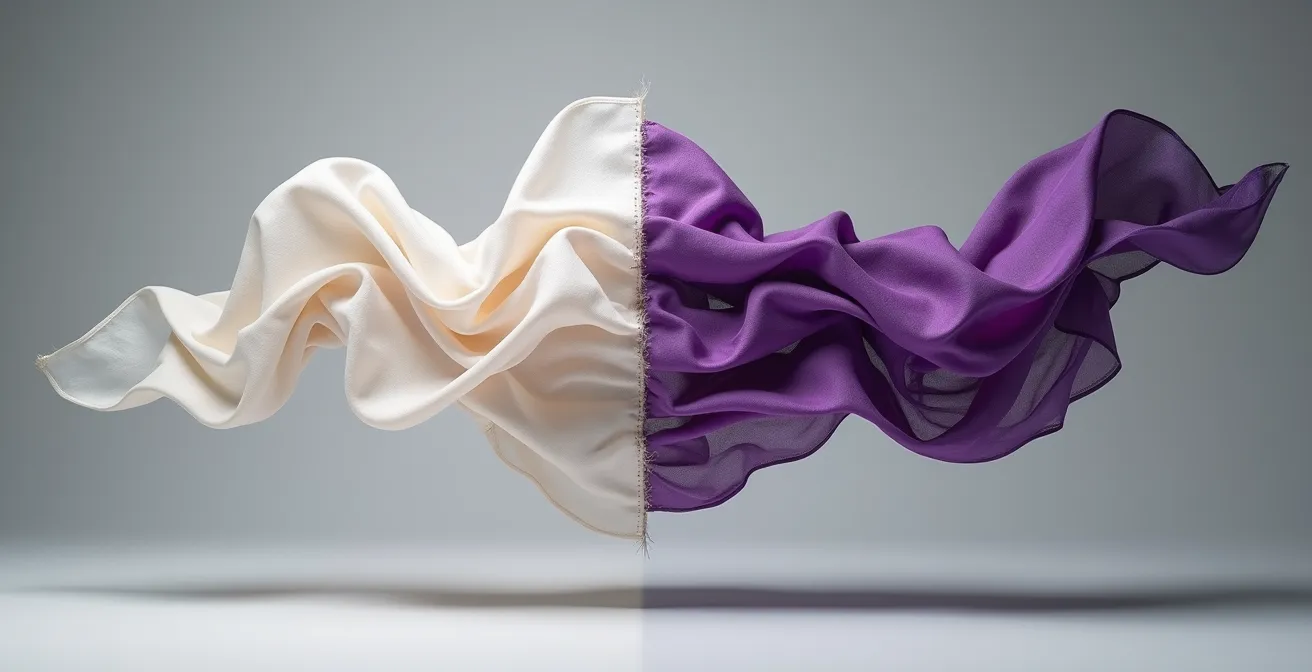
This image conceptually illustrates the difference: CLO3D’s output is akin to a precise architectural blueprint, while Marvelous Designer’s is a fluid, artistic sculpture.
For a fashion graduate aiming to work for a brand, CLO3D is the non-negotiable choice. It is the language of modern product development. The following table breaks down the key distinctions to help clarify this crucial decision.
| Feature | CLO3D | Marvelous Designer |
|---|---|---|
| Primary Focus | Production-ready patterns | Visual effects & gaming |
| Industry Standard | Fashion manufacturing | Entertainment industry |
| Integration | PLM systems, industrial cutters | Game engines (Unreal, Unity) |
| Career Path | Technical design, pattern making | Concept art, virtual marketing |
| Monthly Cost | $39-50/month | $39-50/month |
While both are powerful, only one is built to bridge the gap between design and physical production.
The Risk of Ignoring Fabric Physics in 3D Simulations
In traditional fashion design, the « feel » of a fabric is a tactile experience, discovered late in the process with a physical sample. In 3D design, fabric physics are a set of data inputs you control from the beginning. Ignoring or mismanaging these properties is the single greatest risk a digital designer faces, as it leads to prototypes that look great on screen but are physically impossible to produce.
Every digital fabric in a CLO3D library has presets for properties like stretch, shear, bending, and density. A common mistake for beginners is to use a generic « cotton » preset for a silk charmeuse design. The result is a simulation that completely misrepresents how the final garment will drape, pull, and move. This creates a false sense of security, leading to design approvals for products that will ultimately fail in physical sampling, erasing all the time and cost benefits that 3D is supposed to provide.
Adopting a « Physics-First Mindset » means you treat fabric selection and property tuning as a primary design step, not an afterthought. It means understanding that changing a fabric from cotton to a heavier wool might require altering the pattern pieces themselves to support the new weight and drape. This approach is what separates a 3D artist from a Digital Garment Engineer. The engineer knows that the simulation’s accuracy is paramount for maintaining trust with production teams.
Case Study: The Cost of Inaccurate Simulations
Fashion brands have found that accurate fabric physics are a non-negotiable part of the digital workflow. Companies that invest in proper fabric simulation and use platforms with robust physics engines achieve faster design approvals and streamline supply chain collaboration. Conversely, those that prioritize visual aesthetics over physical accuracy report significant rework costs and delayed production timelines, as their « approved » digital designs require multiple rounds of physical corrections. The lesson is clear: an inaccurate simulation is more costly than no simulation at all.
The industry’s move toward digital workflows is predicated on this accuracy. It’s estimated that brands using digital sampling tools are expected to achieve a 30% reduction in physical prototypes by 2025, but this is only possible if the digital samples are trustworthy representations of reality.
Ultimately, a beautiful render of a flawed design is a liability, not an asset.
How to Speed Up Sampling by 50% Using Digital Twins?
The term « digital twin » is often used loosely, but in the context of fashion, it has a precise meaning: a production-ready, perfectly simulated virtual garment that serves as the single source of truth for all teams. It’s not just a 3D model; it’s the digital counterpart to a physical product, containing everything from pattern pieces and stitch information to fabric properties and fit data. Mastering the creation of digital twins is how brands are achieving massive accelerations in their sampling process.
Traditionally, creating and reviewing samples is a slow, linear process. A physical sample is made, shipped to the design team for review, notes are sent back, and a new sample is created. This can take weeks for a single iteration. With a digital twin, this process becomes parallel. The design, technical, and merchandising teams can all review the same virtual sample simultaneously in a cloud-based environment. Fit adjustments can be made in real-time on a custom-sized avatar, and colorway decisions that once required dozens of physical lab dips can now be generated and approved in minutes.
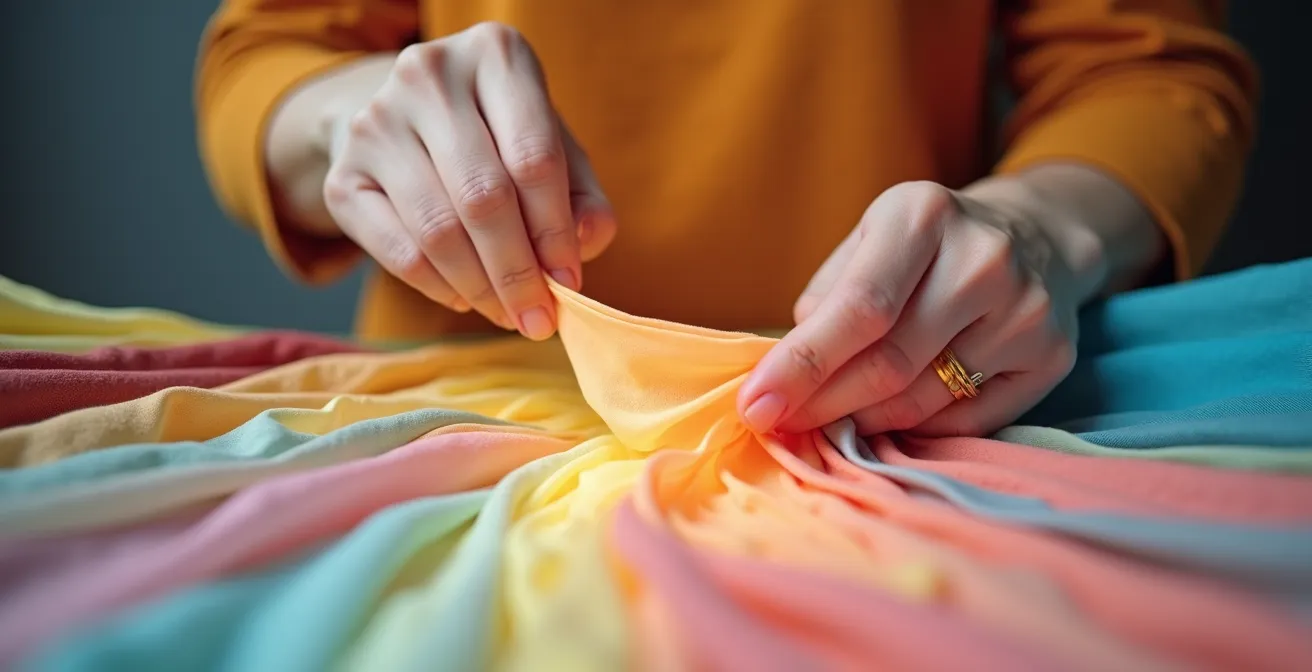
This image of multiple colorways being generated from a single digital design perfectly captures the power of this instant iteration.
This workflow doesn’t just make things faster; it allows for better decision-making by front-loading critical choices. Instead of discovering a fit issue during physical sampling, it’s identified and solved at the initial design stage. As a result, leading fashion brands report achieving a 25% reduction in time-to-market. Your ability as a designer to create accurate, reliable digital twins is the engine behind this efficiency.
Your Action Plan: Implementing a Digital Twin Strategy
- Enable parallel feedback loops: Ensure design, technical, and merchandising teams can review the virtual sample simultaneously.
- Front-load critical decisions: Use the digital twin to make crucial fit and drape choices at the design stage, not during physical sampling.
- Create instant digital catalogs: Generate dozens of colorways and print variations in the time it takes to produce one physical sample.
- Implement cloud-based collaboration: Leverage platforms that allow real-time updates and comments from all stakeholders, no matter their location.
- Integrate with production systems: Connect the approved digital twin directly to manufacturing workflows to ensure a seamless transition from virtual to physical.
You are no longer just designing a garment; you are building the master blueprint for its creation.
What Should Be in a Digital Fashion Portfolio to Get Hired?
A portfolio is your most important asset, and a digital fashion portfolio must communicate more than just a strong aesthetic. Hiring managers are looking for proof that you are a problem-solver—a Digital Garment Engineer who can create not just beautiful images, but viable products. Your portfolio should showcase your process, not just the final result.
Instead of only showing glossy, final renders, include a breakdown of your workflow. Show the 2D pattern pieces you created, screenshots of your garment in the 3D workspace with the sewing lines visible, and perhaps a short video or turntable render showing the garment in motion to demonstrate accurate fabric simulation. This tells a hiring manager that you understand construction and the technical underpinnings of 3D design. Did you solve a difficult draping problem? Show it. Did you create a complex pattern for a tailored piece? Highlight it.
Furthermore, demonstrate your understanding of the entire product lifecycle. Include a project that shows a single design in multiple colorways and fabric variations. Showcase your ability to fit a garment on different avatar sizes. These elements prove that you are thinking about market needs and production efficiency, not just a single creative vision. As Gina Pisut, Ph.D., notes in her analysis of the industry, technology is a tool for efficiency, but it’s the human creativity behind it that remains irreplaceable.
3D Design and AI technology for fashion design and product development. Their use for improving cost, efficiency and customer experience is pivotal. However, there will never be a replacement for the human element that contributes to fashion creativity.
– Gina Pisut Ph.D., Fashion Designer Job Outlook Study
Your portfolio is your chance to prove you are that « human element » who can skillfully wield these powerful new tools.
Showcase both your technical prowess and your design soul, and you will stand out in a competitive market.
When Will We Wear Digital Clothes in Augmented Reality Meetings?
The idea of wearing digital-only clothing in a professional setting might sound like science fiction, but the groundwork is already being laid in adjacent industries, and the technology is advancing faster than many realize. While we may not be showing up to our next Zoom call in a virtual Balenciaga jacket just yet, the question is not *if*, but *when*—and the answer is likely sooner than you think.
The biggest driver of this trend is the gaming industry, which has become the primary testing ground for digital fashion. In the case study below, it’s clear that major brands are already tapping into this space. They see gaming platforms as powerful communities where digital identity and virtual self-expression are paramount. The millions of users buying virtual skins and outfits in games like Fortnite are normalizing the concept of digital ownership and apparel.
Case Study: Gaming Platforms as the Vanguard of Digital Fashion
The alignment between Epic Games (creators of Fortnite) and CLO3D, who have even invested in each other, signals a shared vision for an interoperable digital fashion future. Brands like Vans and Balenciaga are not just releasing products in games for fun; they are executing strategic initiatives to generate buzz and foster brand loyalty within these massive digital communities. This demonstrates that virtual clothing is already a mainstream, revenue-generating product category—it just hasn’t fully crossed over into our daily professional lives yet.
The other key piece of the puzzle is augmented reality (AR) try-on technology. As this tech becomes more sophisticated and accessible via our smartphones and webcams, the barrier to « wearing » digital items will dissolve. The market impact is undeniable; virtual fitting technology is projected to influence $120 billion in fashion sales by 2025. Once this technology is seamlessly integrated into communication platforms like Microsoft Teams or Meta’s Horizon Workrooms, the leap to wearing a fully digital outfit in a virtual meeting becomes a small, logical step.
The skills you build today in CLO3D are the direct foundation for creating the AR and metaverse apparel of tomorrow.
3D Printing vs Hand Sewing: Which Prototyping Method Suits Accessories?
While 3D software is revolutionizing garment creation, the world of accessories presents a unique set of challenges where digital and physical prototyping methods often work in tandem. For accessories like bags, shoes, and jewelry, the choice between 3D printing a model and hand-sewing a traditional sample depends entirely on what you need to test: form or function.
3D printing is unparalleled for iterating on hard structures. It’s the ideal method for quickly testing the form, scale, and ergonomic feel of components like bag clasps, shoe heels, or decorative hardware. You can print three different buckle sizes in a matter of hours for a fraction of the cost of machining them, allowing for rapid, low-cost iteration during the early conceptual phase. However, a 3D-printed model can’t tell you how a leather strap will soften over time or how a canvas bag will slouch when filled.
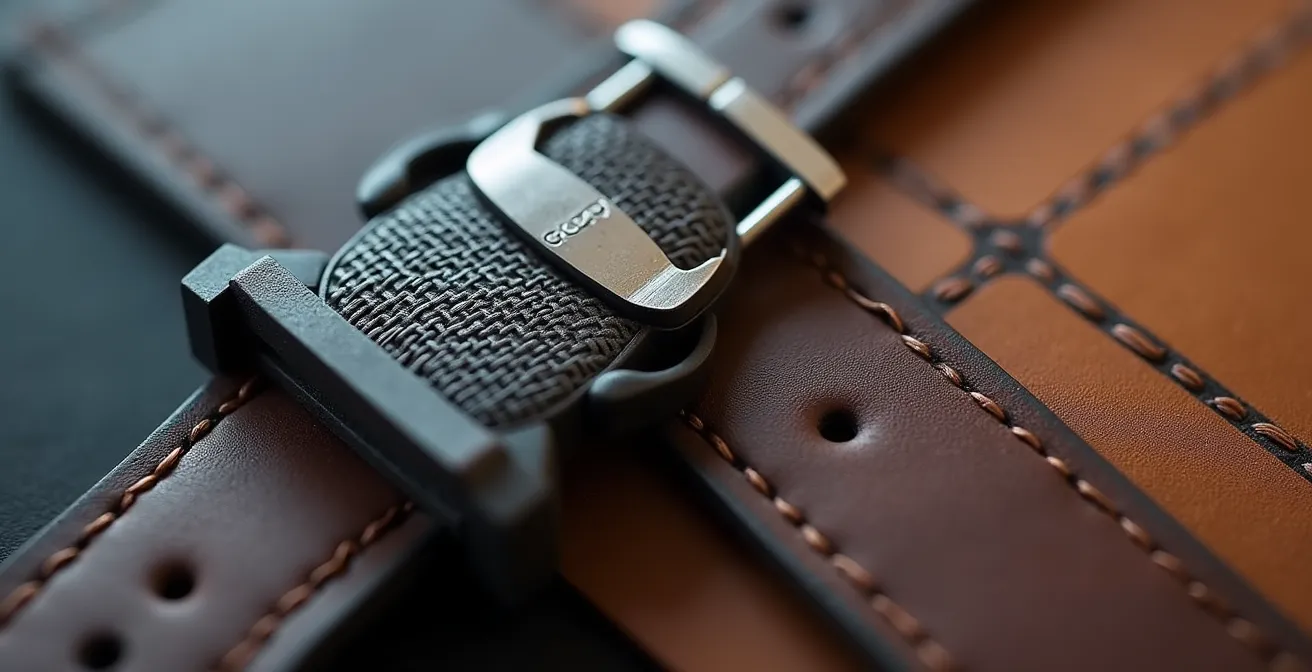
Hand sewing remains essential for testing soft materials and overall feel. There is no substitute for a hand-stitched leather sample to evaluate the « hand » of the material, the drape of a strap, or the real-world function of a pocket. This method provides high-fidelity feedback that is crucial for the final confirmatory stages of design, ensuring the product not only looks right but feels right to the end user. This macro shot highlights the textural difference that each method is best suited to evaluate.
A smart accessory designer doesn’t choose one method over the other; they use both strategically. The most efficient workflow often involves 3D printing hardware components and combining them with hand-sewn material mock-ups to get a complete picture of the final product.
This table summarizes when to deploy each prototyping method for maximum efficiency and insight.
| Aspect | 3D Printing | Hand Sewing |
|---|---|---|
| Best For | Hard structures (clasps, heels) | Soft materials (leather, canvas) |
| Iteration Speed | Rapid for hardware | Slower but higher fidelity |
| Cost per Prototype | Low for multiple iterations | Higher for single pieces |
| Testing Purpose | Form and structure | Feel and drape |
| Ideal Stage | Early iterative phase | Final confirmatory phase |
This hybrid approach leverages the best of both the digital and physical worlds.
Key Takeaways
- The fashion industry needs ‘Digital Garment Engineers’ who combine creative design with technical, physics-based construction.
- Your portfolio must show process—2D patterns, 3D construction, and problem-solving—not just final renders.
- Mastering production-focused software like CLO3D is a direct path to a career in the modern fashion product lifecycle.
How to Transition from Sketch to Structure Without Losing Design Integrity?
A primary fear for traditionally trained designers is that the technical nature of 3D software will sterilize their creative vision. How do you translate the energy and emotion of a fluid pencil sketch into a structured, physics-based model without it becoming rigid and lifeless? The key is to use the 3D environment not as a final rendering tool, but as a digital sculpting medium.
The process begins by creating a « digital muslin » or toile. You block out the core silhouette on an avatar using a basic, neutral fabric. Then, you can import your original sketch as a semi-transparent texture map directly onto the avatar’s body. This acts as a guide, allowing you to sculpt and drape the digital fabric directly over your drawn lines. This technique ensures that the crucial proportions and key style lines of your initial concept are preserved.
The real magic happens when you use the software’s draping and simulation tools to capture the sketch’s « energy. » Use the pinching and fabric property tools to replicate the flow and movement you envisioned on paper. Test how the garment moves with a physics simulation, making iterative adjustments to bring it closer to your original intent. This workflow allows you to maintain the emotional core of your design while simultaneously building its underlying structural integrity. It’s a fluid conversation between your artistic vision and the laws of virtual physics.
You are not simply tracing your sketch; you are interpreting it in a three-dimensional space, making informed decisions about how to translate a 2D line into a 3D seam or drape. This method ensures that technology serves your vision, rather than dictating it.
This process transforms you from a designer who illustrates ideas to an artist who sculpts with digital cloth, ready to build the future of fashion.