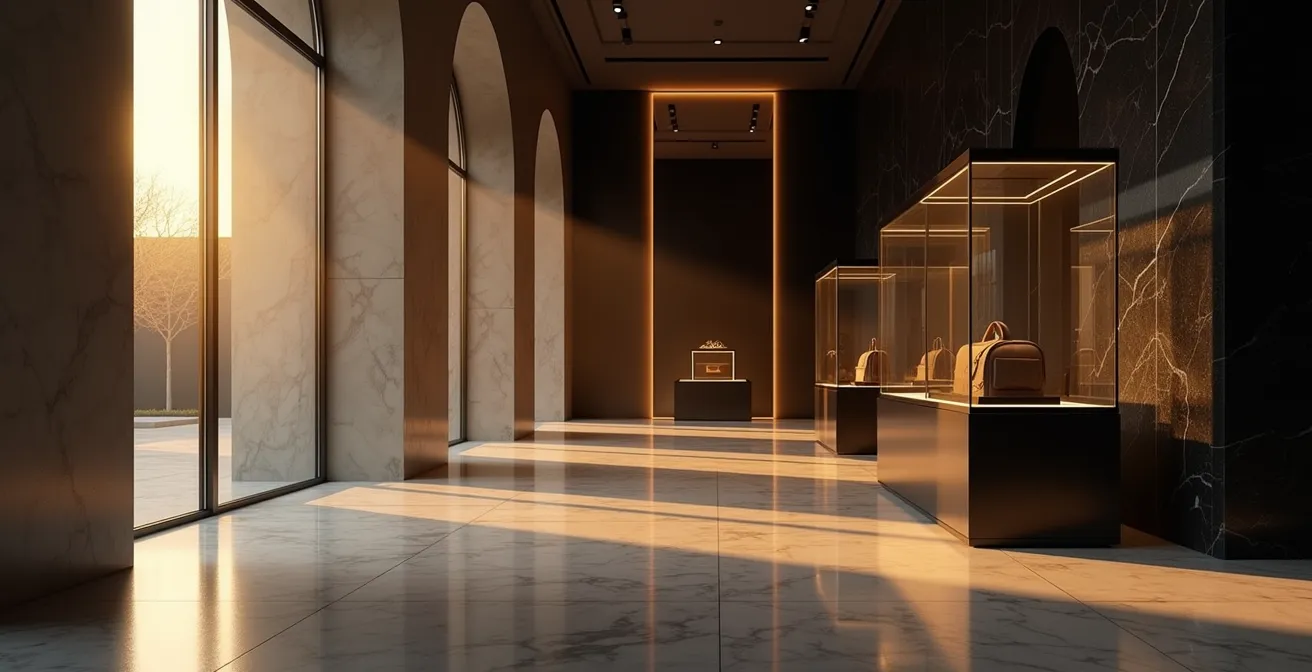
Contrary to common belief, price increases don’t create desire for luxury goods; they validate a pre-existing ecosystem of perceived value built on narrative, scarcity, and psychological distance.
- Raising a price is the final confirmation of a brand’s power, not the source of it.
- Storytelling and legacy provide the « narrative gravity » that makes high prices feel justified, not arbitrary.
Recommendation: For marketing students, analyze price increases not as a cause, but as the effect of a masterfully executed brand strategy.
In the rational world of commerce, raising prices typically tempers demand. Yet, in the gilded realm of luxury, a curious alchemy occurs: a higher price tag can ignite, rather than extinguish, the flames of desire. This phenomenon, often simplistically labeled the « Veblen effect, » leaves many marketing students perplexed. The common understanding is that exclusivity and status symbols drive this behavior, reducing a complex strategy to a simple equation of price equals prestige. But this view is incomplete. It mistakes the symptom for the cause.
The true genius of luxury brand management lies in understanding a counter-intuitive principle: the price increase is not the tool that builds desire. It is the final, public validation of a desire that has already been meticulously constructed. Before a single zero is added to a price, an entire ecosystem of value must be in place. This ecosystem is built on pillars of narrative control, calculated scarcity, and an intentional psychological distance that transforms mere products into cultural artifacts. The price is not a tactic; it is a coronation.
This analysis deconstructs that very mechanism. We will move beyond the surface-level explanation of Veblen goods to explore the strategic architecture that gives a brand pricing power. By examining the interplay of storytelling, product dilution risks, scarcity models, and consumer psychology, we will reveal how luxury houses earn the right to command ever-higher prices. The goal is to reframe the conversation from « why people pay more » to « how brands build a world where paying more feels not only logical, but aspirational.
This guide unpacks the sophisticated strategies behind luxury pricing. We will explore the precise mechanics that allow high-end brands to defy conventional economic logic, turning price hikes into powerful statements of desirability.
Contents: The Architecture of Luxury Pricing
- How to Maintain Exclusivity While Scaling a Brand?
- Storytelling vs Advertising: Which Sells High-End Goods?
- The Risk of Diluting Your Brand with Entry-Level Products
- When to Use the « Drop Model » to Create Instant Scarcity?
- What Do Luxury Consumers Really Want Beyond the Product?
- Legacy vs Innovation: What Drives Growth for Historic Houses?
- Why Ending Prices in .00 Instead of .99 Increases Luxury Perception?
- How to Interpret Macro-Trends for Luxury Collections 18 Months Ahead?
How to Maintain Exclusivity While Scaling a Luxury Brand?
The greatest challenge for a successful luxury brand is navigating the paradox of growth: how to sell more without becoming common. Scaling requires wider accessibility, yet the very essence of luxury is rooted in exclusivity. The solution is not to simply sell more of the same item, but to implement a tiered exclusivity model. This strategic stratification allows a brand to engage different consumer segments without compromising the integrity of its core identity. It’s a delicate balancing act between broadening appeal and protecting the pinnacle of the brand.
A prime example is the approach taken by Ralph Lauren. The brand masterfully operates across multiple tiers, from the aspirational Polo line to the ultra-premium Purple Label. An analysis of this tiered pricing structure shows how Purple Label maintains its aura through superior craftsmanship and scarcity, commanding high prices, while Polo serves as an accessible entry point. This allows the brand to capture revenue at scale while the halo of the top-tier collection elevates the entire brand portfolio. The key is that the brand’s core DNA—a vision of sophisticated American lifestyle—remains consistent across all tiers, preventing fragmentation.
Ultimately, this control over brand perception is what gives a luxury house its financial strength. As the Chairman of Richemont, Dr. Johann Rupert, stated, the primary role is to protect the brand’s core identity. He argues that « if we can have desirability and brand equity then we can have pricing power ». This sentiment, noted by luxury strategists, confirms that pricing is an outcome of brand strength, not a driver of it. Maintaining this power during expansion is the ultimate test of a luxury strategist.
Your Action Plan: Auditing Brand Tiering Strategy
- Points of Contact: List all product lines and collaborations, from entry-level fragrances to haute couture.
- Collecte: Inventory the pricing, materials, and marketing messages for each tier (e.g., Purple Label’s silk vs. Polo’s cotton).
- Cohérence: Confront each tier with the brand’s core values. Does an outlet-exclusive item still reflect the brand’s promise of quality?
- Mémorabilité/émotion: Identify the « halo » product. What makes the top-tier item uniquely aspirational compared to the entry-level ones?
- Plan d’intégration: Determine if any tiers are diluting the brand and prioritize strengthening the boundaries between them.
Storytelling vs Advertising: Which Sells High-End Goods?
In the luxury market, brands do not simply sell products; they sell narratives. While advertising announces a product’s existence, storytelling imbues it with meaning, heritage, and emotion. For the high-end consumer, the story behind an item—its history, the artisan who crafted it, the values it represents—is an integral part of the product itself. This is the core of narrative gravity: a story so compelling it pulls consumers into the brand’s orbit, making the price feel like a ticket to participate in that story, rather than a simple transaction.
This is why, as research from DiginamiX points out, « luxury brands are akin to seasoned storytellers, weaving narratives of legacy, heritage, and unrivaled quality. » Advertising can communicate features, but it struggles to convey the deep, intangible value that justifies a luxury price. A watch is not just a device for telling time; it is a piece of a legacy passed down through generations. A handbag is not just for carrying essentials; it is a symbol of a design philosophy perfected over a century. Storytelling transforms an object into an artifact.
Consider the iconic Tiffany & Co. Blue Box. The box itself has become a globally recognized symbol of elegance and exclusivity. It is a masterclass in visual storytelling. Tiffany’s has gone so far as to trademark its specific shade of teal, not to sell a color, but to protect a crucial chapter of its story. When a customer receives that box, they are not just receiving a piece of jewelry; they are participating in a tradition of luxury and romance that the brand has cultivated for over a century. The box tells a story before it is even opened, creating a sense of anticipation and value that no traditional advertisement could replicate.
The Risk of Diluting Your Brand with Entry-Level Products
The allure of accessible luxury is a siren’s call for many brands. By introducing « entry-level » products—such as scarves, fragrances, or small leather goods—a luxury house can capture a wider audience and boost short-term revenue. These items act as gateways, allowing aspirational consumers to own a piece of the brand dream. However, this strategy is fraught with peril. An over-reliance on lower-priced items can lead to brand dilution, where the perception of exclusivity and superior quality is eroded, turning a luxury name into a mass-market commodity.
The danger lies in shifting the company’s focus from craftsmanship to pure profit. As author Dana Thomas warns in her analysis of the industry, « If your entire raison d’etre is to bring profits to shareholders, you are no longer in the business of making luxury; you’re just in the business of making money. » This shift is often subtle, manifesting in a gradual decline in material quality or a move to less prestigious manufacturing processes to protect margins on these lower-priced goods. Consumers may not notice at first, but over time, the brand’s mystique fades.
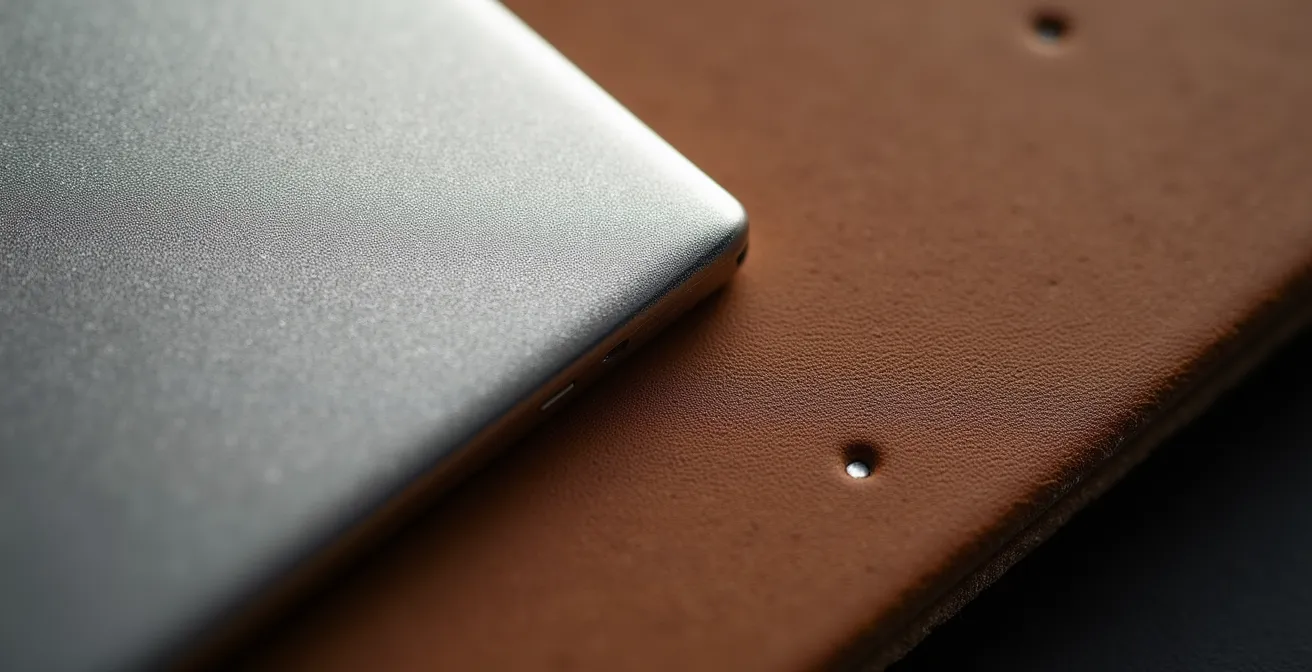
The core identity of a luxury brand is tied to its uncompromising commitment to quality, a tangible difference you can see and feel. This visual represents the gradient of luxury—the transition from raw, authentic materials to a perfectly polished finish. When a brand introduces too many entry-level products, it risks spending most of its time and resources in the « raw » or « mid-tier » space, losing the « polished » pinnacle that defines its image. The most successful houses manage this by ensuring even their most accessible products, like Burberry’s scarves or Tiffany’s silver accessories, are crafted with a quality that honors the brand’s legacy, acting as true ambassadors, not cheap imitations.
When to Use the « Drop Model » to Create Instant Scarcity?
While traditional luxury often relies on a consistent aura of unattainability, modern luxury has embraced a more dynamic form of exclusion: the « drop model. » Popularized by streetwear but now adopted by historic houses, this strategy involves releasing a highly anticipated product in extremely limited quantities at a specific time, often with little to no advance warning. This creates a frenzy of demand, a phenomenon driven by calculated scarcity. Unlike organic scarcity (e.g., a rare diamond), this is a manufactured event designed to generate hype and reinforce the brand’s cultural relevance.
The drop model is most effective when a brand wants to inject energy and urgency into its image, particularly to attract a younger, digitally native audience. It gamifies the shopping experience, turning a purchase into a competitive event. Those who succeed in acquiring the item gain not only the product but also the social capital of being « in the know. » This method creates a powerful sense of community and insider status among a select group of consumers, fostering intense brand loyalty.
However, the master of this principle, even before the « drop » was named, is Hermès with its Birkin bag. The brand has perfected the art of artificial scarcity, not through timed online releases, but through an opaque and highly controlled allocation process. As one case study on the brand notes, Hermès maintains extensive waiting lists for a product it could easily produce in greater quantities. The power of this scarcity is demonstrated by the fact that Birkin bags, with prices starting at $10,000, often resell for double or triple their retail value on the secondary market. This isn’t just a sales strategy; it’s a mechanism for building a legend. By making its most coveted product almost impossible to obtain, Hermès ensures that the desire for it never wanes, cementing its status at the apex of luxury.
What Do Luxury Consumers Really Want Beyond the Product?
The modern luxury consumer is evolving. While craftsmanship and quality remain fundamental, their desires have expanded beyond the tangible product. Today, they seek a deeper connection, one that aligns with their personal values and provides a sense of identity. This shift marks a move from conspicuous consumption to meaningful consumption. The purchase is no longer just about owning a beautiful object; it’s about the experience surrounding it, the story it tells, and the values it represents. Price becomes secondary to this holistic sense of fulfillment.
According to extensive research by Bain & Company, a leading consultancy on luxury markets, today’s high-end buyers « desire brands that suit their values, memorable experience more than material things and authentic stories. » This means they are drawn to brands that demonstrate a commitment to sustainability, champion ethical practices, or have a rich, authentic heritage. The purchase becomes an expression of their own identity. A consumer doesn’t just buy a watch; they align themselves with a brand known for a century of innovation or one that supports ocean conservation.
Brands that understand this create ecosystems of experience around their products. Louis Vuitton, for example, offers extensive personalization services, allowing customers to monogram their initials or add unique patches to their bags. This simple act transforms a mass-produced luxury item into a one-of-a-kind personal treasure. It’s no longer just « a Louis Vuitton bag »; it’s « my Louis Vuitton bag. » This strategy fosters a deep emotional attachment, making the item feel irreplaceable and its premium price entirely justified. The value is no longer just in the leather and stitching, but in the personal story and identity now woven into the product.
Legacy vs Innovation: What Drives Growth for Historic Houses?
For historic luxury houses, growth is a constant negotiation between two powerful forces: legacy and innovation. Legacy—the brand’s rich history, iconic designs, and time-honored techniques—is the bedrock of its authority and authenticity. It is the source of the narrative gravity that justifies its high prices. Innovation, on the other hand, is the engine of relevance, ensuring the brand remains desirable to new generations of consumers. The most successful houses are not those that choose one over the other, but those that masterfully weave them together.
Leaning too heavily on legacy can turn a vibrant brand into a museum piece, respected but not desired. Conversely, chasing trends without anchoring them in the brand’s DNA can lead to a loss of identity, alienating loyal customers and confusing new ones. The key is to innovate *from* the archive. This involves reinterpreting iconic codes, using new materials with traditional techniques, or collaborating with contemporary artists who share the brand’s values. This approach ensures that every new product feels both fresh and unmistakably « on-brand. »
The tension between preserving quality and innovating for profit is a real concern for artisans. As one 40-year veteran of the luxury leather goods industry told CNN in an industry analysis, the pressure to hit certain price points for new, trend-driven items means that « the practices and the materials used… are just not going to be what I want to put my name to. » This highlights the immense value of brands like Hermès, which prioritize legacy craftsmanship above all. This unwavering commitment to its core identity is a key reason it has become one of the world’s most valuable luxury companies. It proves that in the long run, protecting legacy is the most powerful driver of sustainable growth.
Why Ending Prices in .00 Instead of .99 Increases Luxury Perception?
In the world of mass-market retail, « charm pricing »—ending a price in .99 or .95—is a ubiquitous tactic designed to make a price feel significantly lower than it is. The brain processes $9.99 as « $9 and something, » creating a psychological discount. Luxury brands, however, play by a different set of rules. They intentionally do the opposite, favoring round numbers and ending prices in « .00. » This is not a stylistic choice; it is a sophisticated psychological signal known as prestige pricing.
A price like $4,999.99 feels like a marketing tactic. It suggests the seller has tried to make the item appear as cheap as possible, that its value is negotiable and positioned relative to a competitor. In contrast, a price like $5,000.00 feels firm, confident, and absolute. It implies that the price was determined by the intrinsic worth of the product—the quality of its materials, the skill of its craftsmanship, and the power of its brand story—not by a marketing department’s psychological games. It signals that the brand sets the value, and the customer either accepts it or does not.
This is a crucial element of maintaining psychological distance and authority. As research on psychological pricing shows that prices ending in « .99 » connote « value, » while prices ending in « .00 » connote « prestige. » Brands like Louis Vuitton and Chanel have built their empires on this principle. You will not find a classic flap bag priced at $7,999. By pricing it at a round $8,000, they are making an unspoken statement: this is the price because this is what it is worth. This simple decimal point choice reinforces the entire brand ethos of uncompromising quality and unapologetic exclusivity, making the product seem more high-end and desirable.
Key Takeaways
- Pricing power is not a marketing tactic but the result of meticulously built brand equity and desirability.
- The most powerful luxury brands sell narratives and experiences, not just products. The story justifies the price.
- Calculated scarcity, whether through drop models or controlled allocation, creates urgency and reinforces exclusivity in the modern market.
How to Interpret Macro-Trends for Luxury Collections 18 Months Ahead?
For luxury houses, collection planning is a high-stakes act of prediction. Designers and strategists must work 12 to 18 months in advance, interpreting nascent cultural, social, and economic shifts to create products that will feel perfectly relevant when they finally hit the boutiques. This is not about chasing fleeting micro-trends, but about understanding and translating deep macro-cultural currents into a tangible design language that resonates with the brand’s identity. It requires a unique blend of data analysis, cultural intuition, and creative vision.
The process involves monitoring a wide array of signals. These can range from a rising interest in wellness and sustainability, which might translate into collections using innovative, eco-conscious materials, to a geopolitical climate of uncertainty, which could inspire a return to timeless, comforting, and discreetly luxurious « quiet luxury » pieces. It also means tracking economic forecasts, such as the projection from Bain & Company that the global market of personal luxury goods will reach $380 billion by 2025. Such growth indicates a resilient market but also increased competition, demanding even greater differentiation.
The challenge is to filter these broad trends through the unique lens of the brand. A trend towards vibrant color, for example, will be interpreted very differently by the minimalist house of Jil Sander versus the exuberant world of Gucci. The key is not to simply adopt a trend, but to ask: « What is our brand’s perspective on this cultural shift? » By doing so, the brand avoids becoming a slave to fashion and instead positions itself as a cultural commentator, offering its discerning clientele a product that is not only beautiful but also imbued with contemporary meaning. This forward-looking interpretation is what keeps historic houses at the forefront of desire.
To truly master brand strategy, move beyond observing these principles and begin applying them to analyze the luxury houses you admire. This critical thinking is the bridge between academic knowledge and strategic expertise.