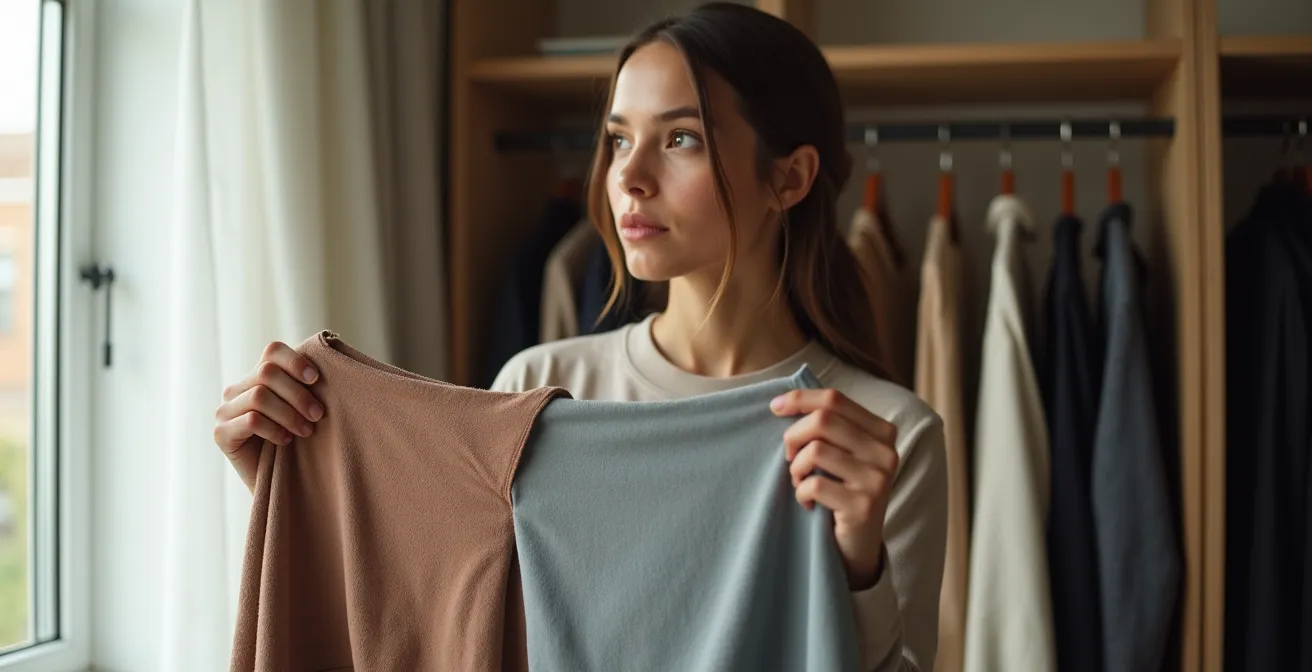
The key to smart trend adoption isn’t avoiding trends, but treating your wardrobe like an investment portfolio.
- Fast fashion accelerates trend cycles, turning viral items into waste at an alarming rate.
- Use practical frameworks to categorize new styles and assess their long-term value before you buy.
Recommendation: Adopt an « aesthetic diversification » strategy, allocating most of your budget to classics and a small, controlled portion to experimental micro-trends.
You see it on TikTok: another week, another « -core » aesthetic. First it was « cottagecore, » then « Barbiecore, » and now it’s « eclectic grandpa. » For Gen Z, the pressure to keep up is immense. The fear of missing out (FOMO) is quickly replaced by the fear of being « cringe » for holding onto a trend a moment too long. The cycle is exhausting and, more importantly, expensive. It fuels a system of rapid overconsumption that leaves both your wallet and the planet depleted. The constant stream of « haul » videos normalizes buying in bulk, treating clothes as disposable content rather than durable goods.
Common advice often falls flat. « Buy timeless classics » feels disconnected when your entire feed is celebrating a fleeting aesthetic. « Set a budget » doesn’t address the psychological pull of wanting to belong and express your identity through these new visual languages. The real problem isn’t a lack of willpower; it’s a lack of a functional diagnostic toolkit. We’ve been trained to be passive consumers, not savvy investors in our own style.
But what if you could change your perspective? This guide will reframe your approach to trends. We will move beyond generic advice and equip you with the mindset of a consumer psychologist and a portfolio manager. You will learn to analyze the lifecycle of trends, diagnose the quality of a garment in seconds, and use strategic frameworks to decide what’s a smart investment and what’s a fun but fleeting fling. It’s time to stop letting the algorithm dictate your spending and start building a wardrobe that is both current and conscious, without the financial regret.
This article provides a complete framework for navigating the fast-paced world of fashion trends intelligently. Below is a summary of the key strategies and insights you will discover.
Summary: How to Master Trends Without Overspending
- Why « Haul » Culture Is the Primary Driver of Textile Waste?
- Why Trends Die in 3 Months Now Instead of 3 Years?
- Fade, Trend, or Classic: How to Categorize a New Style?
- How to Spot Quality Construction in Trendy Fast Fashion Pieces?
- Investment Piece or Trendy Fling: Which Should You Buy This Season?
- The Risk of Adopting a Trend Just Before It Becomes « Cringe »
- How to Style Last Year’s Viral Items to Look Current?
- The Risk of Investing Inventory in a Fleeting Aesthetic
Why « Haul » Culture Is the Primary Driver of Textile Waste?
The « haul »—a video format where creators unveil large quantities of recently purchased clothing—is the cultural engine of modern overconsumption. It normalizes bulk buying and frames clothing not as an investment, but as disposable content for social media. This mindset has a staggering environmental cost. The fashion industry is now responsible for an estimated 92 million tons of textile waste generated globally each year. The psychology is simple: hauls create a dopamine loop of vicarious shopping, which triggers viewers to replicate the behavior.
This cycle devalues clothing fundamentally. We are encouraged to buy 60% more clothing than we did in the year 2000, yet we wear these garments for a fraction of the time. This throwaway mentality means items are often discarded after just one or two uses, destined for a landfill before they’ve even had a chance to be properly worn. The very nature of a « haul » implies a volume that makes it impossible to form a lasting connection with any single piece. It’s a culture of acquisition, not appreciation.
To break this cycle, the focus must shift from acquiring more to curating better. The good news is that a counter-movement is emerging. Creators are finding innovative ways to produce engaging content without promoting mass consumption. These alternative formats prove that style and creativity are not dependent on a constant influx of new, cheap clothing. Consider adopting some of these formats for your own inspiration:
- Shop My Stash Haul: Rediscovering and restyling items already in your closet.
- Thrift Flip Haul: Showcasing transformations of secondhand finds.
- Digital Curation Haul: Creating moodboards of online finds without purchasing.
- Rental Review Haul: Testing high-end or trendy pieces through clothing rental services.
- Swap Party Haul: Trading clothes with friends for a fresh wardrobe update at no cost.
Why Trends Die in 3 Months Now Instead of 3 Years?
The traditional 20-year trend cycle has been shattered. What once took years to emerge, peak, and fade now happens in a matter of months, or even weeks. This hyper-acceleration is driven by a powerful engine: the combination of social media algorithms and ultra-fast fashion production models. Algorithms on platforms like TikTok identify nascent trends and amplify them globally overnight. In response, companies like Shein, which can upload thousands of new items daily, and Zara, producing over 450 million garments annually, flood the market with cheap versions of these viral styles.
This creates a self-perpetuating loop of obsolescence. By the time a « micro-trend » reaches mass production, it’s already saturated the market and is on the verge of becoming « cringe. » The very speed and accessibility that make a trend popular also ensure its rapid demise. This frantic pace has turned fashion into a high-speed conveyor belt leading directly to the landfill, with the U.S. alone generating 17 million tons of textile waste in 2018, with a dismal 15% recycled.
The material reality of these clothes is a key part of the story. They are designed for virality, not longevity. The use of cheap synthetic fabrics and poor construction ensures they won’t survive many washes, let alone be desirable enough to be resold or passed down. This planned obsolescence is not a bug in the system; it is the system’s core feature, ensuring consumers must return to buy the next fleeting trend.

This microscopic view of a typical fast fashion garment reveals the truth: frayed synthetic fibers and a loose weave structure designed to fall apart. Understanding this engineered ephemerality is the first step toward making more conscious choices. The goal is to opt out of the acceleration game by learning to identify styles with genuine staying power.
Fade, Trend, or Classic: How to Categorize a New Style?
Before you can decide whether to invest in a new style, you must first learn to diagnose it. Not all newness is created equal. From a consumer psychology perspective, every emerging style can be sorted into one of three categories: a Fad, a Trend, or a Classic. Mastering this categorization is your primary defense against wasteful spending. The Longevity Triumvirate Framework helps you assess a piece based on objective criteria rather than algorithmic hype.
A Fad is a flash in the pan. It’s often characterized by extreme silhouettes, novel shapes, and a purely viral origin. It explodes in popularity but has very limited styling versatility, making its lifespan incredibly short (typically 3-12 months). Think of items that are more of a costume than clothing. A Trend has more substance. It has recent cultural relevance and a moderately complex design that can be styled in a few different ways. Trends have a respectable lifespan of 2-5 years. A Classic is the bedrock of a sustainable wardrobe. It possesses clean lines, immense functional versatility, and deep historical roots, often tracing back 20 years or more. A classic trench coat or a simple white t-shirt are prime examples. The rise of #grungecore, which has amassed over one billion views on TikTok in the USA, shows how a former trend can be re-categorized as a recurring classic aesthetic.
Using this framework allows you to make a conscious decision about what role you want a new item to play in your wardrobe. Is this a cheap and cheerful Fad you’ll enjoy for one season, or is it a Trend worth a slightly higher investment?
| Category | Silhouette Simplicity | Functional Versatility | Historical/Cultural Roots | Lifespan |
|---|---|---|---|---|
| Classic | Clean, balanced lines | Multiple styling options | Deep heritage (20+ years) | Decades |
| Trend | Moderate complexity | Season-specific styling | Recent cultural relevance | 2-5 years |
| Fad | Extreme/novel shapes | Limited wear contexts | Algorithmic/viral origin | 3-12 months |
How to Spot Quality Construction in Trendy Fast Fashion Pieces?
Even when you knowingly buy into a short-term trend, you can still make smarter choices. Not all fast fashion is created equal. While most of it is designed for obsolescence, some pieces are constructed better than others. Learning to quickly assess quality at the point of purchase is a crucial skill for maximizing the value of every dollar, even on a trendy « fling. » This involves using your senses to look past the stylish design and evaluate the garment’s physical integrity.
Forget the brand tag and focus on the material and construction. A simple « Crinkle Test » can reveal a lot: squeeze a corner of the fabric in your fist for five seconds. Quality natural fibers or well-made synthetics will bounce back with minimal wrinkling, while cheap materials will hold the creases permanently. Similarly, the « Light Test » is invaluable. Hold the garment up to a light source. Unless it’s intentionally sheer, a dense, opaque weave indicates better quality and durability. Poorly made items will appear transparent and flimsy.
Finally, pay close attention to the details. Gently twist the seams; they should remain flat and tight, not pull apart or show gaps. Check the hardware—zippers should glide smoothly and buttons should feel secure, not flimsy. These sensory checks take only a few moments but can be the difference between a garment that lasts a season and one that falls apart after a single wash. Below is a quick reference for common material red flags.
| Material | Red Flags | Green Flags |
|---|---|---|
| Polyester | Shiny finish, pills after first wash, static cling | Matte finish, dense weave, blended with natural fibers |
| Cotton | Thin single jersey, uneven texture, loose weave | Dense weave, consistent texture, pre-shrunk label |
| Elastane Blends | Over 5% elastane in non-athletic wear, stretched appearance | 2-3% elastane for comfort, maintains shape |
| Prints | Cracking surface prints, bleeding colors | Integrated dyes, soft hand-feel, colorfast treatment |
Investment Piece or Trendy Fling: Which Should You Buy This Season?
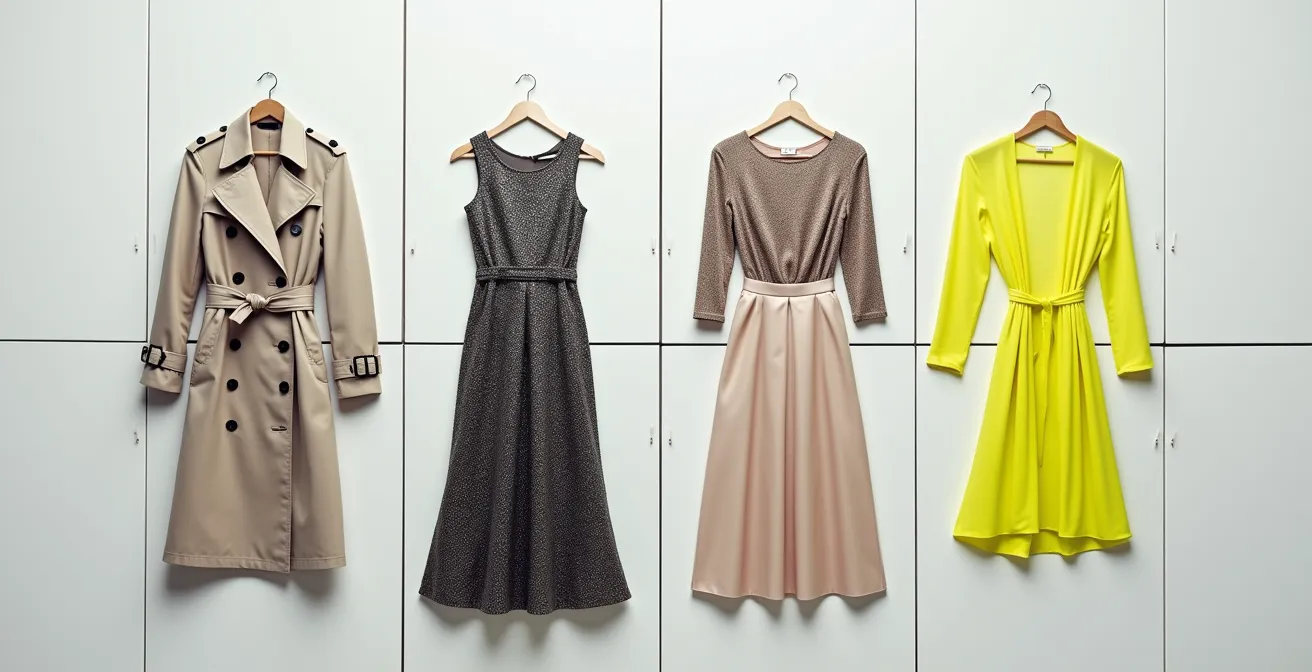
With a new « it » item dropping every week, the central question for any conscious consumer is: « Is this a long-term investment or a short-term fling? » Answering this honestly before purchasing is the most powerful tool for preventing wardrobe clutter and financial waste. To make this decision, you need a mental model that moves beyond impulse. The Trend Viability Matrix is a simple framework for plotting any potential purchase on two axes: Silhouette Versatility and Timelessness.
A True Investment (e.g., a classic trench coat) scores high on both. It has a simple silhouette that can be styled endlessly and has proven its relevance for decades. A Smart Trend (e.g., a well-made midi dress in a current print) has a versatile silhouette but might feel dated in five years. It’s a good purchase if you can get significant wear out of it in the short to medium term. A Fun Fling (e.g., a sequined party top) has low versatility and timelessness; it’s perfect for a few specific occasions but isn’t a wardrobe workhorse. The danger zone is the Money Pit: items that are neither timeless nor versatile, often stemming from hyper-niche fads.
Before any purchase, particularly of a trendy item, you must validate its potential role in your actual life. The most effective way to do this is with a practical, pre-purchase audit. This simple test forces you to move from abstract desire to concrete application.
Action Plan: The Rule of Three Outfits Test
- Visualize Outfit 1: Can you style the item for your most common daily activity (e.g., work, school, errands) using pieces you already own?
- Visualize Outfit 2: Can you style it for a distinct social occasion (e.g., a dinner out, a party, a date night)?
- Visualize Outfit 3: Can you create a third, different look by dressing it up or down for a completely different context?
- Inventory Check: Do you genuinely own the shoes, tops, and accessories needed to create these three looks without buying more?
- Versatility Score: If you cannot clearly and instantly imagine three distinct, complete outfits, the item is likely a ‘fling’ purchase with a very low cost-per-wear. Treat it as such.
The Risk of Adopting a Trend Just Before It Becomes « Cringe »
In today’s accelerated trend cycle, there’s a fine line between being on-trend and being behind the curve. This is the « Cringe Horizon »: the point at which a trend becomes so oversaturated that it loses its coolness and becomes a marker of being out of touch. Adopting a trend right before it hits this point is a common and frustrating form of wasted money. The very « -core » aesthetics Gen Z uses to build identity are susceptible to this rapid decay, turning what felt unique into something ubiquitous.
Many garments are worn fewer than 10 times before disposal, underscoring a culture of overconsumption.
– Environment+Energy Leader Report, Fashion’s Waste Crisis Analysis 2024
The speed of this cycle means that by the time you decide to buy into a viral trend, thousands of others are doing the same, pushing it closer to its expiration date. This psychological trap is what fast fashion thrives on. It creates a constant sense of urgency and a fear that if you don’t buy now, you’ll miss out, when in reality, waiting is often the smartest move. A key indicator that a trend is nearing the cringe horizon is its widespread availability in discount stores and on major fast-fashion platforms. When it’s everywhere, it’s already over.
So, what do you do with pieces that have crossed the cringe horizon? A smart consumer has an exit strategy. Instead of simply discarding an item, you can extend its life, extract its remaining value, or retire it gracefully. This turns a potential regret into a strategic asset.
- Archive for Future Cycle: Store well-maintained, high-quality trend pieces for the 20-year nostalgia return.
- Metamorphosis Option: Upcycle dated trends into new pieces by cropping, dyeing, or reconstructing them.
- Strategic Resale: Sell the item while the trend still has residual value on resale platforms, typically within 3-6 months after its peak.
- Mix and Neutralize: Pair the dated trend piece with timeless, neutral basics to tone it down and extend its wearability.
- Document and Release: Photograph your best styled looks with the piece before retiring or donating it, creating a record of your style evolution.
How to Style Last Year’s Viral Items to Look Current?
Is it okay to wear old trends? Absolutely, provided you master the art of decontextualization. A piece doesn’t become « dated » on its own; it becomes dated by its association with other elements of a specific trend. The secret to making last year’s viral item look current is a technique called « Component Swapping. » This involves identifying the « dated » styling combination and intentionally breaking it by pairing the item with unexpected, contemporary pieces.
Think of last season’s viral tennis skirt. Its « dated » context is being paired with a matching preppy polo and white sneakers. To make it current, you swap the components. Pair it with something that creates a deliberate clash of aesthetics, like an oversized band t-shirt and chunky combat boots. This immediately removes it from its original « -core » aesthetic and gives it a new, intentional, and modern personality. The key is to create visual tension between the item and what you wear it with.
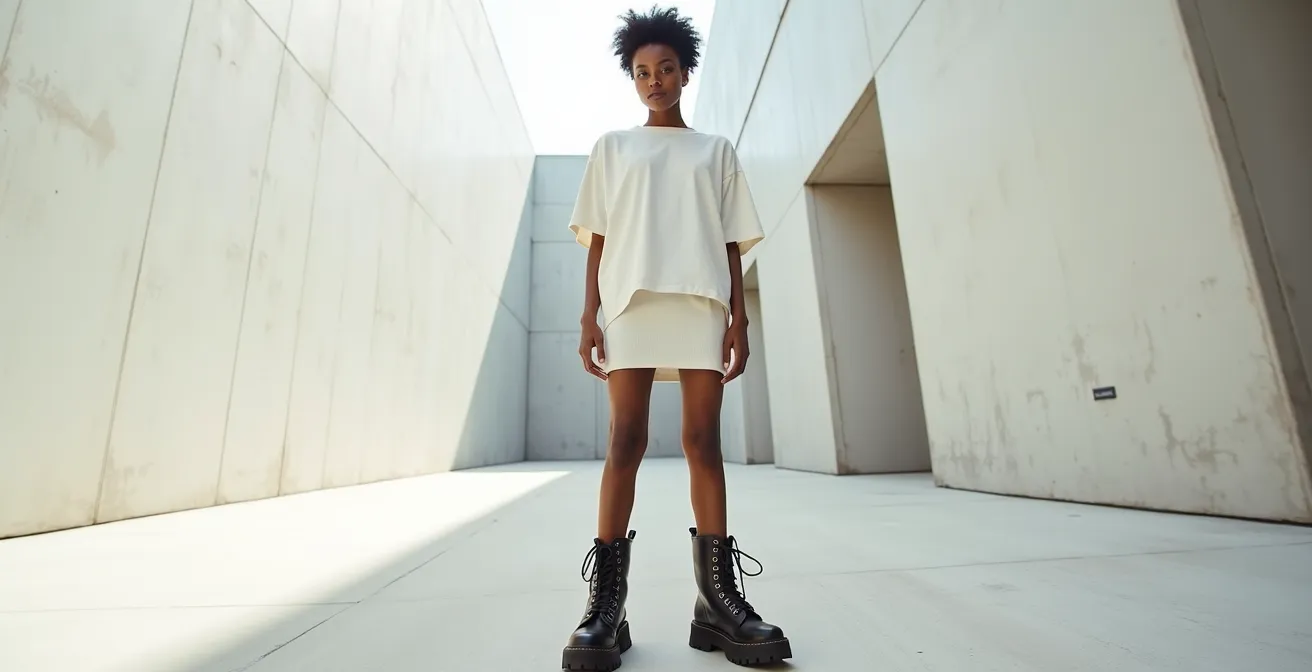
This technique is a powerful way to maximize your wardrobe’s ROI. It allows you to continue getting value from pieces long after their trend has peaked. It’s an act of creative rebellion against the idea that clothes have an expiration date. The table below offers a guide for applying the Component Swapping technique to recent trends.
| Dated Element | Neutralizing Component | Result |
|---|---|---|
| Skinny Jeans | Massively Oversized Blazer | Balanced proportions, modern silhouette |
| Cottagecore Dress | Chunky Sneakers + Leather Jacket | Urban-romantic hybrid |
| Neon Barbiecore Pink | All-black accessories + Minimalist styling | Controlled color pop |
| Y2K Low-Rise | Longline Layered Tops | Strategic coverage, contemporary feel |
Key Takeaways
- The hyper-fast trend cycle is an engineered system designed to fuel overconsumption and waste.
- Develop a diagnostic toolkit: learn to categorize styles (Fad, Trend, Classic) and spot quality to make informed choices.
- Treat your wardrobe like an investment portfolio, diversifying your « aesthetic » assets and limiting high-risk « venture capital » trends.
The Risk of Investing Inventory in a Fleeting Aesthetic
The most strategic way to approach your wardrobe in the age of micro-trends is to adopt the mindset of a portfolio manager. This is Wardrobe Portfolio Theory. Just as a financial investor diversifies assets to manage risk, you should diversify your « aesthetic inventory. » Going all-in on a single, fleeting aesthetic (like fully committing to « coastal grandmother » or « goth-core ») is a high-risk strategy that almost guarantees your wardrobe will feel dated in a year.
The data on clothing use underscores this risk. The worldwide average number of times a garment is worn before being thrown away has decreased by 36% over the past 15 years. This « throwaway culture » is the direct result of poor wardrobe portfolio management—over-investing in low-quality, high-risk assets. A diversified approach mitigates this by building a stable foundation while allowing for small, controlled experiments.
An effective Aesthetic Diversification Strategy follows a simple allocation rule, much like a 60/30/10 investment model. This provides a clear, actionable budget for building a resilient and expressive wardrobe:
- Allocate 60% of your budget to « Blue-Chip Classics »: These are the timeless, high-quality pieces that form the foundation of your style and transcend trends (e.g., great jeans, a classic coat, leather boots).
- Reserve 30% for « Growth Trends »: These are established trends with proven viability of at least 2 years. They add contemporary relevance to your classic base.
- Limit 10% to « Venture Capital Cores »: This is your experimental fund for fun, fleeting micro-trends and fads. The budget is small enough that if these pieces become « cringe » quickly, the financial loss is minimal.
This strategy requires discipline. Tracking your cost-per-wear (total cost of item / number of times worn) for pieces in each category will provide invaluable data to inform your future purchasing decisions and refine your personal investment strategy.
By adopting these diagnostic tools and strategic frameworks, you can break free from the expensive and wasteful cycle of micro-trends. You’ll build a wardrobe that not only reflects your personal style but also represents a series of smart, conscious, and satisfying investments.