
A luxury brand’s high price is not justified by a story, but by the client’s participation in a meticulously constructed narrative world they can experience.
- Effective luxury narratives transform transactions into rituals, from the unboxing to digital clienteling.
- True exclusivity is built on emotional connection and access to the brand’s world, not just on discounts or points.
Recommendation: Stop telling your brand’s story and start designing an immersive world that allows your clients to live it. This is the foundation of perceived value.
For new luxury brand founders, the most daunting challenge is not sourcing rare materials or perfecting a design; it is answering the silent question on every potential client’s mind: « Why is this worth the price? » Many fall into the trap of reciting platitudes about craftsmanship, founder history, or material quality. They believe the story of the product is enough. But in a market saturated with quality, these narratives have become generic background noise. The traditional approach of simply telling a story is no longer sufficient to create the profound sense of value that underpins a true luxury purchase.
The fundamental error is viewing the narrative as a monologue broadcasted to a passive audience. A high price point is an invitation to a world, not a ticket to a lecture. The modern luxury client doesn’t want to be told a story; they want to become part of one. The key to justifying a premium price lies in shifting from storytelling to world-building. It requires creating a cohesive universe of values, aesthetics, and experiences so compelling that the client feels their purchase is not an expense, but an initiation. The product becomes a totem, a physical key to this exclusive world.
This article deconstructs the architecture of a high-value narrative. We will move beyond the « what » of storytelling and into the « how » of creating an experiential universe. We will explore how every touchpoint, from the digital interface to the unboxing ritual, must serve as a portal into your brand’s world. This is not about marketing; it is about creating a mythology so potent that the price becomes a reflection of the client’s desire to belong.
This guide provides a strategic framework for transforming your brand from a collection of products into a coveted narrative world. Explore how each element, from customer service to product development, contributes to a story that justifies not just a high price, but lasting loyalty.
Summary: Building Your Brand’s Narrative World
- Why the Unboxing Experience Matters More Than the Product for Retention?
- How to Integrate White-Glove Service into a Digital Interface?
- The Risk of Diluting Brand Equity Through Discount Retailers
- How to Create a VIP Program That Goes Beyond Points?
- Legacy vs Innovation: What Drives Growth for Historic Houses?
- Storytelling vs Advertising: Which sells High-End Goods?
- Why Inconsistent Messaging Between Instagram and Email Kills Trust?
- How to Build a Mood Board That Actually Translates into Product?
Why the Unboxing Experience Matters More Than the Product for Retention?
The first physical interaction a client has with your brand is often not with the product itself, but with its packaging. This moment is the threshold to your narrative world. A generic, thoughtless unboxing reduces your creation to a mere commodity. A meticulously designed experience, however, transforms the transaction into a ritual of initiation. It’s the first chapter of the client’s personal story with your brand, and it sets the stage for everything that follows. The weight of the box, the texture of the paper, the sound of the ribbon untying—these sensory details are the first tangible evidence of the world you’ve promised.
This is because the unboxing is where perceived value begins to crystallize. The care invested in the packaging becomes a proxy for the care invested in the product, justifying the premium before the item is even revealed. Research confirms this powerful psychological effect; premium packaging significantly boosts repurchase intent, making it a critical driver of retention. The experience communicates respect for the product and, more importantly, for the client who chose it.
Consider the iconic Tiffany & Co. blue box. The brand has cultivated this element so effectively that the packaging itself has become a symbol of luxury and desire, almost as coveted as the jewelry within. The box is not just a container; it is an inseparable part of the brand’s narrative of elegance and timelessness. It demonstrates that the story isn’t just told in campaigns; it’s embedded in every tangible asset. For a new founder, this is a crucial lesson: the narrative is not an add-on; it must be woven into the very fabric of the customer journey, starting with the box.
How to Integrate White-Glove Service into a Digital Interface?
In the digital age, the concept of « white-glove service » seems antithetical to the cold, impersonal nature of a screen. Yet, this is where luxury brands can create their most significant point of differentiation. The challenge is not to replicate the in-store experience online, but to translate its core principles—personalization, anticipation, and human connection—into the digital realm. A successful digital interface shouldn’t feel like an automated vending machine; it should feel like a private consultation. This is achieved not through complex AI, but through thoughtful design that prioritizes human-to-human connection.
This can manifest as dedicated client advisors accessible via video call, personalized product recommendations curated by a stylist rather than an algorithm, or proactive communications about order status from a named individual. These touches transform a sterile digital journey into a relationship. The value is immense, as a study from PWC confirms that 86% of buyers are willing to pay more for a great customer experience, with a significant premium for luxury services. This proves that the experience—the feeling of being seen and valued—is a core component of the product’s price.

As the image above suggests, the goal is to create an atmosphere of intimacy and expertise. The interface becomes a seamless bridge to a real person whose purpose is to serve the client’s needs. This digital-to-human handover is a powerful reinforcement of the brand’s narrative world, proving that its commitment to exceptional service transcends physical location. It tells the client that they are not just a number in an e-commerce system but a valued member of an exclusive community, worthy of personal attention.
The Risk of Diluting Brand Equity Through Discount Retailers
A luxury brand’s value is a carefully constructed illusion, a shared belief in its rarity and desirability. Placing products with discount retailers is the fastest way to shatter that illusion. While it may offer a short-term boost in sales, it inflicts long-term, often irreparable, damage on brand equity. The presence in a discount environment sends a clear and devastating message: the product was not worth its original price. It breaks the foundational promise of the narrative world—that ownership confers entry into an exclusive club. Suddenly, that club is open to everyone, and its value plummets.
The luxury market is unforgiving of such missteps. The top-tier customer base is not seeking bargains; they are seeking distinction. When a brand signals that it is willing to compromise on price, it also signals a compromise on its values and its story. This perceived lack of integrity alienates the very clients who are willing to pay a premium for the brand’s narrative. As Bain & Company’s recent analysis highlights, this is not a theoretical risk. In 2024, only about one-third of luxury brands managed to grow, down dramatically from previous years, partly because the feeling of an « exceptional » experience is fading for top customers.
This contraction of the luxury customer base, particularly among younger generations, is a direct consequence of brands losing their narrative coherence. When the story says « exclusive » but the distribution says « accessible, » trust is broken. A single negative experience, such as seeing a coveted item on a sale rack, can be enough to permanently sever the client’s emotional connection. Protecting the narrative means ruthlessly controlling the context in which your product is seen. The price is part of the story, and any deviation from it must be managed with extreme care, if at all.
How to Create a VIP Program That Goes Beyond Points?
Traditional loyalty programs, based on earning points for purchases, are fundamentally transactional. They reward spending, not loyalty. For a luxury brand, this model is a liability. It reduces the relationship to a crude calculation of discounts, cheapening the brand and attracting the wrong kind of client. A true luxury VIP program must transcend this transactional logic. Its purpose is not to offer discounts, but to deepen the client’s immersion into the brand’s narrative world. It should reward participation and belief, not just consumption.
The focus must shift from monetary rewards to experiential access. This means offering benefits that money cannot buy: invitations to the atelier to meet the artisans, previews of new collections before they launch, or access to a « secret menu » of bespoke services. These are not discounts; they are an invitation into the inner circle. They reinforce the client’s status as a true patron of the brand, not just a customer. This strategy recognizes that the most valuable clients are not seeking to save money, but to gain a deeper connection to the stories and values they admire.
The most forward-thinking luxury houses are already moving in this direction, as seen in the strategic shift towards experiential offerings like the Louis Vuitton Hotel in Paris. By creating a physical space where clients can live inside the brand’s universe, they are offering the ultimate reward: total immersion. For a new founder, the lesson is scalable. A VIP program could offer a private styling session with the designer, a custom-engraved detail on a future purchase, or a simple, handwritten note of thanks. The goal is the same: to make the client feel seen, valued, and initiated into a world that remains inaccessible to others.
Legacy vs Innovation: What Drives Growth for Historic Houses?
For any luxury brand, especially a new one aspiring to timelessness, the narrative must navigate the delicate balance between legacy and innovation. Legacy provides the roots, the story of origin, and the sense of permanence that justifies a high price. Innovation provides the relevance, the connection to contemporary culture, and the energy that keeps the brand alive. Relying too heavily on heritage risks becoming a museum piece, irrelevant to the modern client. Chasing trends without a grounding in legacy risks becoming ephemeral and disposable. Sustainable growth is found at the intersection of the two.
As the luxury branding experts at Dialogue Agency note, the nature of this balance has shifted. They articulate this tension perfectly:
Storytelling has always been the lifeblood of luxury. Legacy brands built their power on origin myths, artisanal lineage and timeless design. But heritage alone no longer holds sway. Today’s luxury consumer isn’t seduced by provenance for its own sake. They’re looking for narrative with personal meaning, cultural fluency and aesthetic magnetism.
– Dialogue Agency, 5 luxury brand storytelling strategies to engage HNW audiences
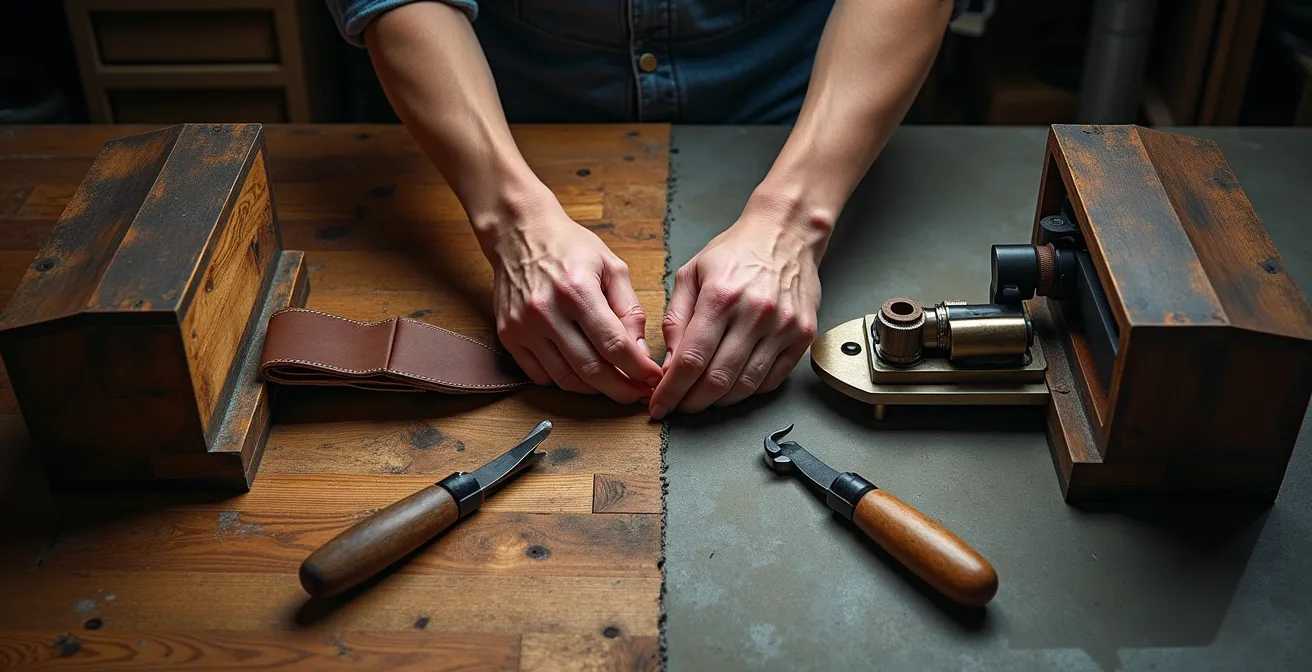
The most successful narratives are those that use innovation to reinterpret and re-energize their legacy. This could mean using a modern digital campaign to tell an ancient artisanal story, applying a revolutionary material to a classic design, or collaborating with a contemporary artist to create a new expression of the brand’s core values. The innovation makes the legacy feel current, and the legacy gives the innovation depth and meaning. For a new founder, this means defining your « legacy » from day one—your core principles, your founding myth—and then constantly finding new, innovative ways to tell that same core story.
Storytelling vs Advertising: Which sells High-End Goods?
The distinction between storytelling and advertising is critical in the luxury space. Advertising tells you what to buy. Storytelling gives you a reason to believe. Advertising is a transaction; it interrupts the consumer and presents a product. Narrative is an invitation; it creates a world so compelling that consumers seek it out. For high-end goods, where the purchase is driven by emotion and identity, advertising’s rational appeals fall flat. It is the immersive power of the narrative world that ultimately justifies the price and sells the product.
Advertising speaks in the language of features and benefits, which is easily replicated and commodified. Narrative speaks in the language of myth, values, and emotion, creating a unique and defensible territory for the brand. It is the narrative that builds the sense of prestige and exclusivity, reinforcing the perception of rarity and value that no ad campaign can achieve on its own. The story gives the product a soul, transforming it from an object into a symbol.
Chanel’s dominance on platforms like YouTube serves as a powerful case study. The brand invests in high-production films that are not commercials but short stories—explorations of their brand mythology, odes to their founder, and celebrations of their craft. They create content people choose to watch and share, generating massive organic reach. They are not advertising bags; they are propagating their narrative world. This approach is not only more effective but also more efficient. By building a powerful brand narrative, they create a gravitational pull that draws clients in, rather than constantly pushing messages out. The lesson is clear: invest in the story, not just the ad spend.
Why Inconsistent Messaging Between Instagram and Email Kills Trust?
A luxury narrative is a fragile construct. Its power lies in its coherence and believability. Every single touchpoint must reinforce the same story, the same values, and the same aesthetic. Inconsistency is the narrative’s mortal enemy. When a brand’s Instagram feed projects an aura of effortless, artistic cool, but its email marketing screams « 20% OFF! BUY NOW! », the spell is broken. The carefully constructed narrative world collapses, revealing a purely commercial entity behind the curtain. This dissonance is a betrayal of trust.
The luxury client is paying for the integrity of the world you have built. Any crack in the facade devalues the entire experience. This is what branding strategists refer to as message coherence. It goes beyond simply using the same logo and colors. It means that the tone of voice, the style of imagery, the nature of the offer, and the underlying message must be perfectly aligned across all channels. Chanel, for instance, maintains its signature black-and-white aesthetic and themes of timeless elegance whether on a billboard, in a magazine, or in a social media post. This creates a unified and instantly recognizable brand universe.
Even a single point of friction or inconsistency can be enough to drive a client away permanently. The luxury consumer has high expectations and low tolerance for brands that fail to meet them. The story you tell must be the story you live, in every email, every post, and every interaction. Maintaining this discipline is not a creative constraint; it is the fundamental work of protecting the brand equity you have so painstakingly built. Without coherence, there is no trust, and without trust, there is no justification for a premium price.
Key Takeaways
- A brand narrative is not a story you tell, but an immersive world you build for your clients to experience.
- Every touchpoint, from packaging to digital service, is a ritual that must reinforce the brand’s core mythology.
- Consistency is not enough; message coherence across all channels is what builds and protects the perceived value that justifies a high price.
How to Build a Mood Board That Actually Translates into Product?
A mood board is the genesis of your narrative world. For many, it is a scattered collection of pretty pictures. For a luxury brand strategist, it is a rigorous architectural blueprint. Its purpose is not just to define an aesthetic, but to codify the entire sensory language of the brand. A successful mood board is one that can be « read » by a designer, a marketer, or a packager, and translated into a cohesive product, campaign, or experience without further explanation. It must be a tool for translation, not just inspiration.
To achieve this, the mood board must move beyond visuals. It needs to contain directives for all senses. What is the brand’s texture—is it the cool smoothness of marble or the rough warmth of raw linen? What is its sound—a crisp click or a soft whisper? These abstract concepts must be represented by tangible materials, fabric swatches, and even written prompts. This creates a sensory lexicon that provides clear, actionable guidance for every aspect of product development and brand communication.
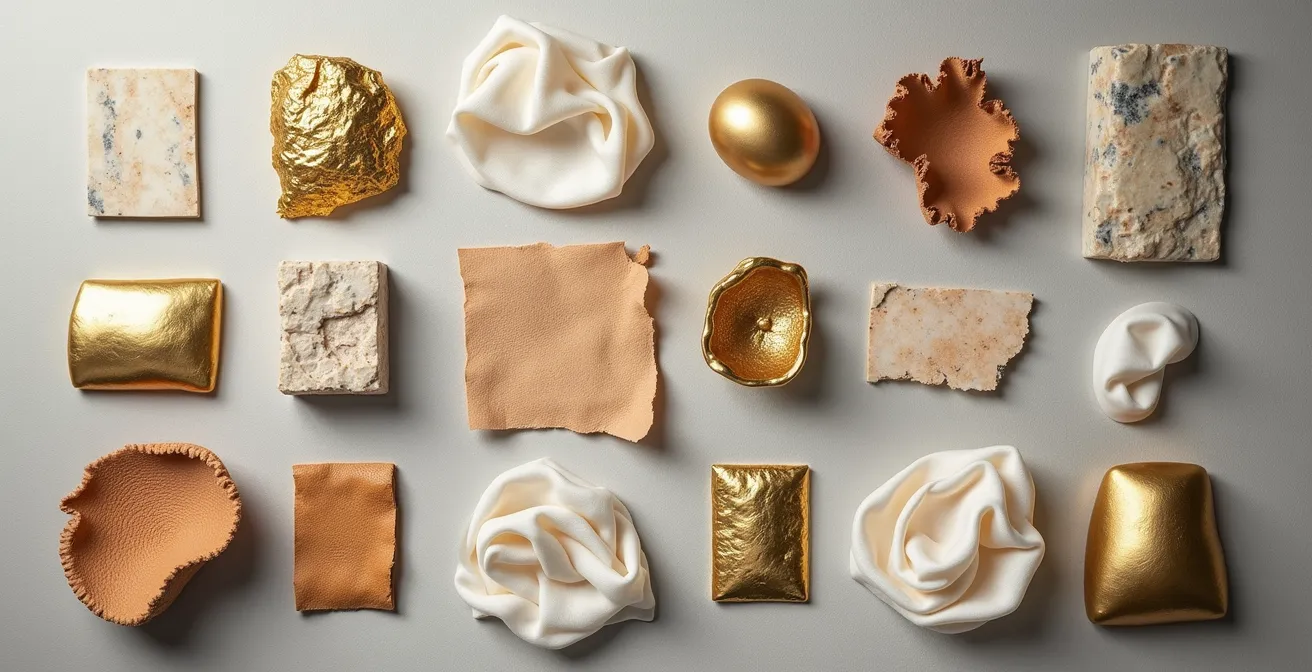
Furthermore, a truly strategic mood board defines not only what the brand is but also what it is not. Including an « anti-mood board » section—a collection of images, textures, and words that represent everything the brand must avoid—creates powerful creative boundaries. It prevents brand dilution and ensures that every design choice is a conscious step toward reinforcing the core narrative, not a random step away from it. The mood board becomes a constitution for your brand’s world, a document against which all future creative decisions are judged.
Your Action Plan: Translating Mood to Matter
- Establish a Narrative Arc: Structure your board with three acts: Origin (heritage, inspiration), Tension (a modern challenge or context), and Resolution (how your product or brand is the answer).
- Incorporate a Sensory Lexicon: Go beyond images. Include specific textures (fabric, paper), scent profiles (notes of leather, wood), and even sounds (a sharp click, a soft rustle) that define the brand’s physical presence.
- Develop an ‘Anti-Mood Board’: Create a small, separate board defining what your brand is *not*. This provides clear creative guardrails and prevents dilution.
- Define a Keyword Lexicon: List 10-15 keywords (e.g., « austere, » « sculptural, » « luminous ») that define the narrative’s tone. Every design choice must be justifiable with these words.
- Layer with Cultural Context: Don’t just pin images. Add notes on historical references, artistic movements, or philosophical ideas that give the visuals depth and meaning.
Building a luxury narrative that justifies a high price is an act of meticulous world-building. It requires a founder to think less like a merchant and more like an architect of desire, constructing a cohesive universe that clients are not just buying into, but aspiring to be a part of. The price then becomes an appropriate cost of admission to this exclusive world. To begin this journey, start by architecting the sensory and emotional blueprint of your brand.