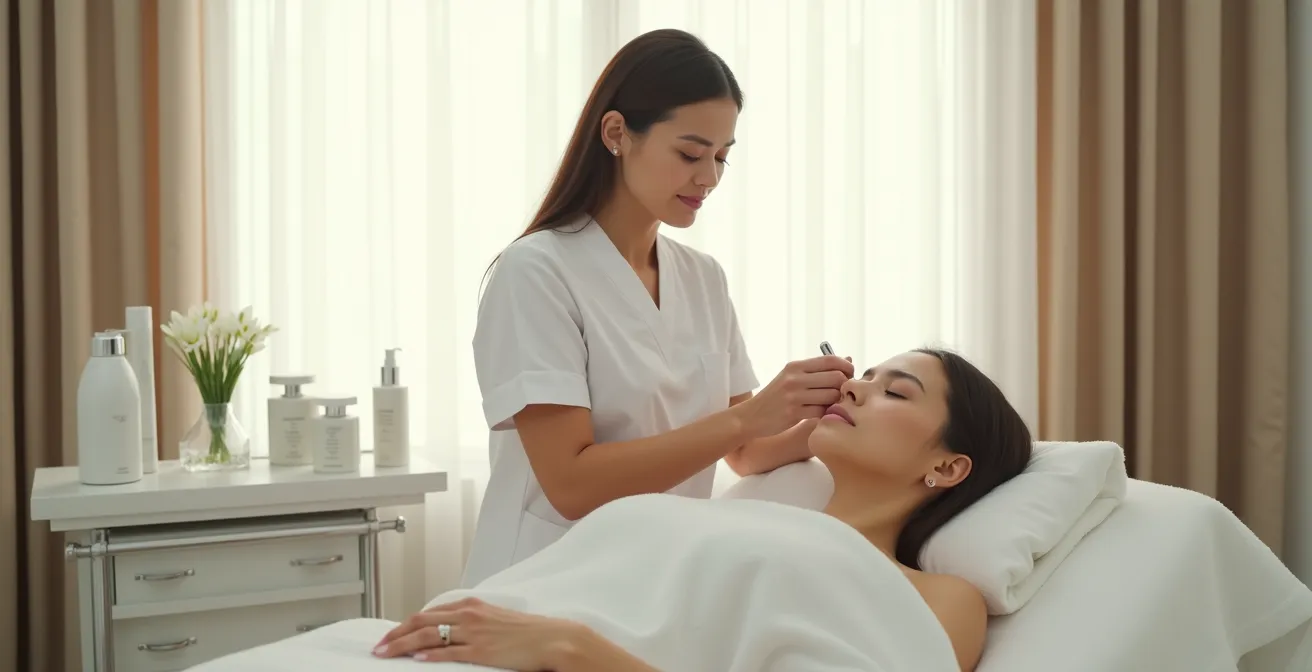
True success as an esthetician is built less on mastering facial techniques and more on developing the business-minded soft skills that create a loyal, high-value clientele.
- Your income potential is directly tied to your chosen path (medical vs. day spa) and your ability to build relationships, not just perform services.
- Long-term career success requires proactive strategies to manage the physical demands of the job and the emotional labor of client care.
Recommendation: Focus your training not just on the state board exam, but on mastering client consultation, retention strategies, and ergonomic self-care from day one.
You’re drawn to the world of esthetics. You envision transforming skin, boosting confidence, and creating a career from a passion for beauty and wellness. The path seems clear: attend esthetician school, pass your state board exams, and find a job in a serene spa. This is the dream, and it’s a beautiful one. But as a master instructor who has guided hundreds of aspiring professionals, I want to share the reality that training brochures don’t always cover. The most successful estheticians aren’t just those with the best hands-on technique; they are savvy business operators, client psychologists, and masters of self-preservation.
Most programs will teach you the fundamentals of skin analysis, sanitation, and various treatments. These are the non-negotiable foundations. However, the true difference between an esthetician who struggles to fill their books and one who has a thriving, six-figure career lies in the unspoken curriculum. It’s about understanding the subtle art of consultative education, building a client journey that fosters loyalty, and managing your own physical and mental energy for the long haul. The secret isn’t just in what you do during the 60-minute facial, but in everything you do before and after. This guide is designed to take you beyond the textbook and into the real-world strategies that define a prosperous and fulfilling career in professional skincare.
To give you a clear roadmap, this article breaks down the essential, real-world aspects of the profession that determine long-term success. We’ll explore everything from financial realities to the critical soft skills that build a loyal clientele.
Summary: A Master Instructor’s Guide to a Thriving Esthetics Career
- Medical Spa vs Day Spa: Which Career Path Pays Better?
- The Physical Risk of Repetitive Strain Injury in Esthetics
- How to Retain Clients so They Book Every 4 Weeks?
- Why Men Are the Fastest Growing Client Base for Estheticians?
- The « Fix Me » Client: How to Manage Expectations for One Facial?
- Why Clienteling Boosts Customer Lifetime Value More Than Ads?
- How to Interview for « Soft Skills » That Drive Sales?
- How to Motivate Sales Associates to Hit KPIs Without Stress?
Medical Spa vs Day Spa: Which Career Path Pays Better?
One of the first major decisions you’ll face is the type of environment you want to work in. This choice significantly impacts your earning potential and day-to-day responsibilities. While a traditional day spa focuses on relaxation and maintenance, a medical spa operates under a physician’s supervision, offering more advanced, corrective procedures. The compensation models reflect this difference. In a medical setting, estheticians often earn a higher base salary, with data suggesting an average of around $45,374 annually, supplemented by performance bonuses tied to high-ticket procedures like chemical peels or laser treatments.
Conversely, day spa compensation is often more reliant on tips and commission from service and retail sales. While this can be lucrative for a well-established esthetician with a full book, the income can be less predictable. The ceiling for growth also differs. A top-performing medical esthetician might advance to a clinical trainer or practice manager role. A day spa professional might evolve into a spa owner or solo-preneur, where the earning potential becomes significantly higher—successful med spa owners can earn well into the six figures by building a strong business.
To make the right choice, you must look beyond the hourly rate and consider the entire compensation structure. The following comparison breaks down the key financial and career distinctions.
| Setting | Hourly Rate | Additional Income | Career Growth |
|---|---|---|---|
| Medical Spa | $34.66 (43% above national average) | Performance bonuses on high-ticket procedures | Clinical trainer, practice manager |
| Day Spa | $24.12 (national average) | Tips + commission on services | Spa owner, solo entrepreneur |
Ultimately, the « better » path depends on your goals. If you are passionate about clinical results and prefer a more structured environment with potentially higher, more stable pay from the start, a medical spa is an excellent choice. If you thrive on building deep client relationships, enjoy the art of relaxation, and have an entrepreneurial spirit, the day spa route offers a clear path to business ownership.
The Physical Risk of Repetitive Strain Injury in Esthetics
Here’s a topic rarely discussed in school but critically important for your career’s longevity: the physical toll of being an esthetician. You will spend hours on your feet, hunched over a treatment bed, performing small, repetitive movements with your hands and wrists. This puts you at a high risk for Repetitive Strain Injuries (RSI), lower back pain, and shoulder issues. I have seen talented careers cut short not from a lack of skill, but from physical burnout.
Thinking like an athlete who protects their body is non-negotiable. This means making ergonomic longevity a core part of your practice from day one. It starts with your treatment room setup. An adjustable bed and stool are not luxuries; they are essential tools for your health. You must learn to position your body correctly for every service, minimizing strain on your joints and spine. It also means incorporating regular stretching and strengthening exercises into your routine, specifically targeting your wrists, shoulders, and core.
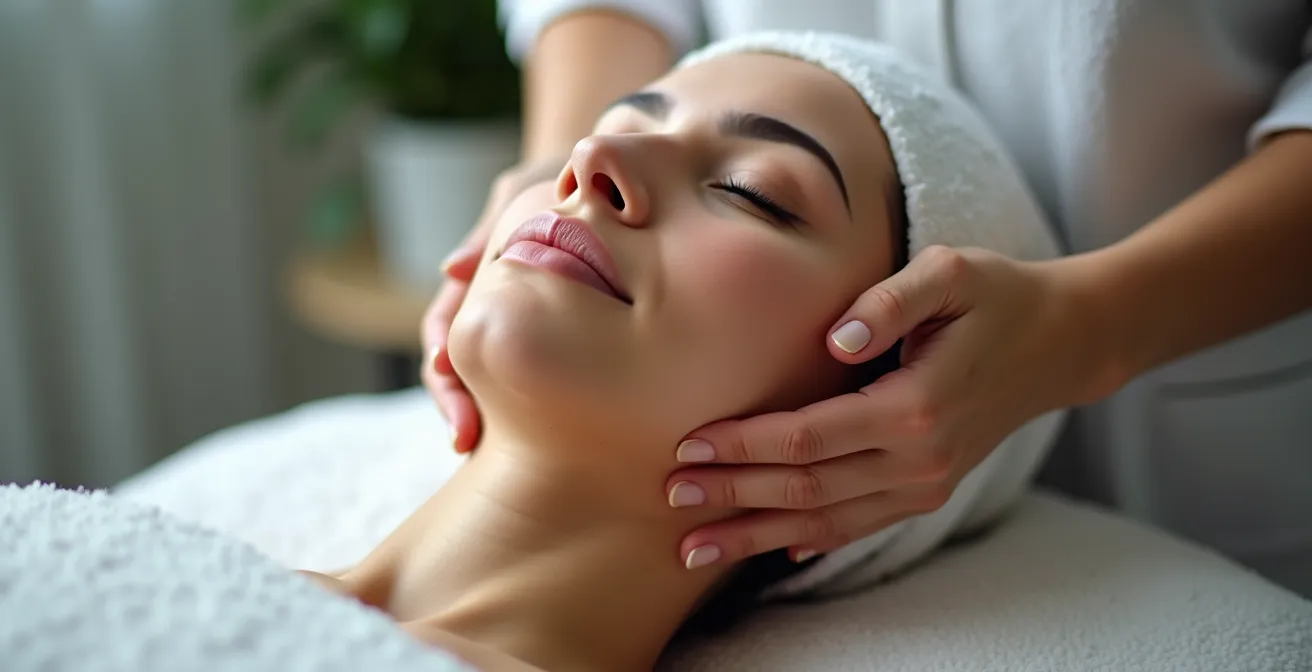
As you can see, proper positioning is about creating neutral alignments to reduce stress on your body. Treating your physical well-being with the same seriousness as you treat your clients’ skin is the only way to ensure you can continue doing the work you love for decades to come. Don’t wait for pain to start; build preventative habits now. The following checklist provides a concrete plan to audit and optimize your workspace for a long, healthy career.
Your Ergonomic Audit: A 5-Point Plan for a Safer Treatment Room
- Adjust your treatment bed height to align with your hip bones when standing, which significantly reduces lower back strain during facials.
- Position your stool so your feet are flat on the floor and your knees are at a 90-degree angle, promoting a neutral spine.
- Arrange essential tools and products on a mobile cart within arm’s reach to eliminate repetitive reaching and twisting motions.
- Utilize an adjustable magnifying lamp with an articulating arm to bring the view to you, preventing neck and shoulder strain during detailed work.
- Implement a mandatory 5-minute stretching routine between clients, focusing on your wrists, shoulders, and lower back to release tension.
Viewing yourself as a « skincare athlete » changes your perspective. It transforms self-care from an indulgence into a professional necessity. Your body is your most important tool; invest in maintaining it, and it will support a long and prosperous career.
How to Retain Clients so They Book Every 4 Weeks?
A full appointment book is the lifeblood of any successful esthetician. While attracting new clients is important, the real stability and profitability come from high retention rates. Your goal should be to transform a first-time visitor into a loyal client who sees you every four to six weeks. This consistency is what builds predictable income and allows you to achieve real, cumulative results for their skin. So, how do you make that happen?
The secret is to shift from being a service provider to a « Client Journey Architect. » A one-off facial can provide a temporary glow, but a long-term treatment plan delivers transformation. This begins during the consultation. Instead of just focusing on the single service they booked, you must educate them on the skin cycle and explain *why* consistency is key to achieving their goals. Frame their treatments as a journey, with each session building upon the last. A successful strategy used by many spas is offering treatment packages or series at a slight discount, which creates a powerful incentive for clients to commit to a multi-session plan upfront.
The rebooking process itself should be a seamless, natural part of the checkout experience. Don’t ask, « Would you like to rebook? » This gives an easy « no. » Instead, assume the rebooking. While the client is still relaxed and glowing from their treatment, say, « To maintain these beautiful results and continue working toward your goals, I need to see you again in four weeks. I have openings on Tuesday at 10 AM or Thursday at 2 PM. Which works better for you? » This confident, expert-led approach positions the next appointment as a necessary step in their plan, not an optional add-on.
By designing a clear treatment path and guiding your clients with professional confidence, you not only secure your income but also elevate your role from a simple facialist to a trusted skincare advisor. This trust is the foundation of a career filled with loyal, happy clients.
Why Men Are the Fastest Growing Client Base for Estheticians?
If you’re picturing your future clientele as exclusively female, you’re overlooking one of the biggest growth opportunities in the industry. Men are increasingly seeking professional skincare, moving beyond basic grooming to address concerns like acne, aging, razor burn, and sun damage. This demographic represents a largely untapped market for many estheticians, and knowing how to cater to them can significantly expand your business.
The key to attracting and retaining male clients is to adjust your approach. Men are often results-oriented and problem-focused. They may be less interested in a pampering, sensory experience and more concerned with efficiency and visible outcomes. Your marketing language and service menu should reflect this. Instead of « Rejuvenating Bliss Facial, » consider « Advanced Skin Repair Treatment » or « Executive Deep-Cleansing Facial. » The environment of your spa also plays a crucial role. A gender-neutral aesthetic with clean lines, minimalist decor, and a calm, professional atmosphere is more welcoming to a diverse clientele than an overly feminine space.
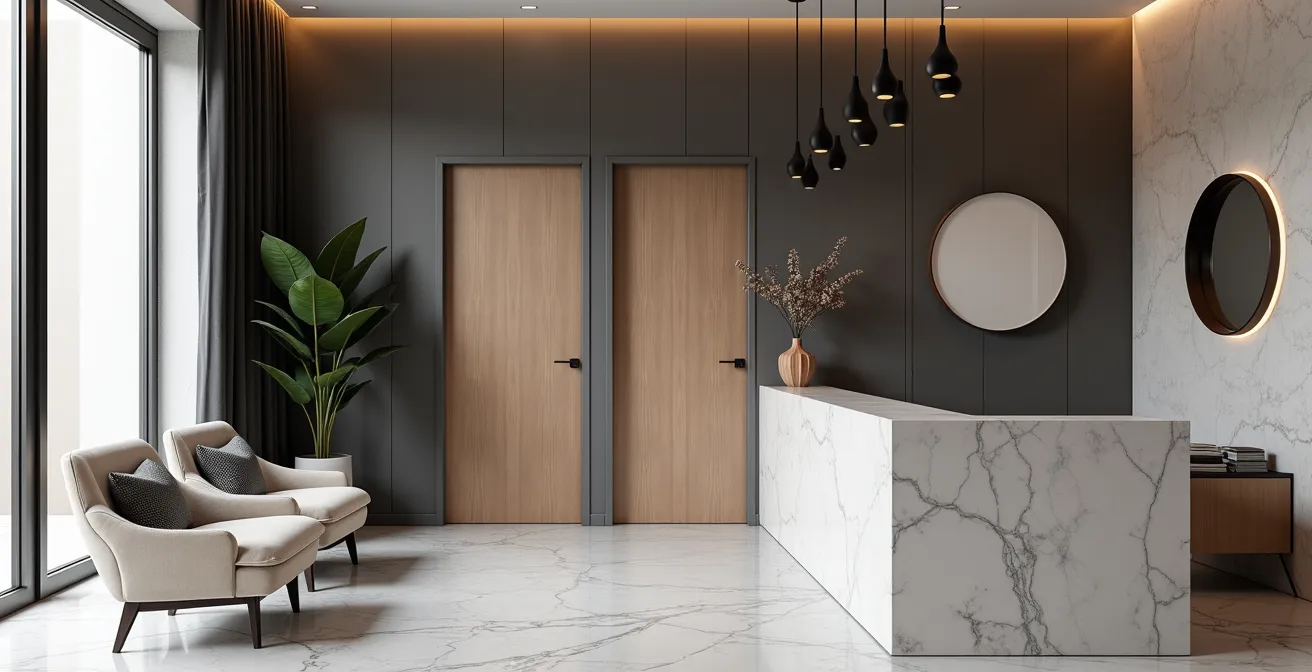
A proven strategy for engaging this client base is through « gateway services. » As one case study reveals, successful spas introduce men to esthetics with shorter, high-impact treatments. An express deep-cleansing facial or a back treatment focused on clearing up breakouts provides immediate, tangible results. This builds trust and demonstrates your value, opening the door to introducing a more comprehensive homecare regimen and a regular treatment schedule. Don’t be afraid to market specifically to men; they are looking for solutions, and you have them.
Ultimately, great skin is a universal goal. By creating an inclusive environment and communicating the tangible benefits of your services, you position yourself as the go-to expert for everyone who wants to look and feel their best, regardless of gender.
The « Fix Me » Client: How to Manage Expectations for One Facial?
You will inevitably encounter the « Fix Me » client. They arrive for their first-ever facial a week before a major event, pointing to years of sun damage or persistent acne, and expect you to magically erase it all in 60 minutes. This is one of the most challenging situations for a new esthetician. Your ability to handle it with grace and professionalism will define you as a true expert.
As the ASCP Skin Care Professionals wisely state, « Most clients who come to a skin care clinic or day spa do so because they have a skin issue they cannot solve themselves, and they are looking for a professional they can trust to give them advice about their skin that results in real and long-term results. » Your first job is not to perform a miracle, but to establish that trust through honest expectation alignment.
Most clients who come to a skin care clinic or day spa do so because they have a skin issue they cannot solve themselves, and they are looking for a professional they can trust to give them advice about their skin that results in real and long-term results.
– ASCP Skin Care Professionals, ASCP Industry Education Resources
The consultation is your most powerful tool. Begin with a thorough skin analysis, explaining what you see in clear, educational terms. Use analogies to make the point. My favorite is, « Your skin is like a garden. One watering today will make it look fresh, but it won’t make the flowers bloom overnight. Consistent care is what creates lasting beauty. » This simple metaphor immediately reframes the situation. Then, set a specific, achievable goal for today’s treatment: « Today, our focus will be on deeply hydrating your skin and calming inflammation to give you a beautiful glow for your event. This is step one of our journey. » Finally, you must introduce the concept of homecare as their « homework, » explaining that 70% of their results will come from their daily commitment between professional treatments.
By managing expectations effectively, you prevent disappointment and position yourself as a credible, trustworthy advisor. You haven’t failed because you didn’t provide a miracle; you have succeeded because you’ve set the client on a realistic path to genuine, long-term skin health.
Why Clienteling Boosts Customer Lifetime Value More Than Ads?
In the beauty industry, it’s easy to get caught up in the chase for new clients through social media ads and promotions. While acquisition is important, the most profitable and stable esthetics practices are built on a different principle: clienteling. Clienteling is the art of nurturing client relationships to maximize their loyalty and lifetime value. It’s the difference between a transactional service and a transformational partnership, and its return on investment is staggering.
The numbers don’t lie. Industry data consistently shows that retaining an existing client is far more cost-effective than acquiring a new one. In fact, focusing on client retention strategies can yield a 5 to 25 times higher ROI than new client acquisition because loyal clients not only rebook consistently but also purchase more retail products and refer their friends and family. This is where your soft skills become your greatest financial asset. Remembering a client’s upcoming vacation and suggesting a travel-size SPF, or sending a quick follow-up message a few days after a treatment to check on their skin, costs nothing but time and thoughtfulness. Yet, these small acts build immense trust and loyalty.
Consider the success story of one med spa owner who focused on relationship-building from the very beginning. By hosting a launch event and personally connecting with attendees, she generated over $42,000 in sales in her first month, primarily through personalized follow-ups rather than expensive ad campaigns. This demonstrates the power of creating a community around your brand. It’s not just about what you know about skin; it’s about what you know about your clients. This deep, personalized knowledge is something that no competitor’s flashy ad campaign can ever replicate.
Stop thinking of yourself as someone who just « does facials » and start seeing yourself as a relationship manager. The personal connection you build with each client is your most powerful and profitable marketing tool, creating a loyal following that will sustain your career for years to come.
How to Interview for « Soft Skills » That Drive Sales?
Whether you’re hiring for your own spa or preparing for an interview yourself, it’s crucial to understand that technical proficiency is only half the battle. The most valuable estheticians possess a potent combination of soft skills: empathy, communication, and the ability to educate. These are the traits that drive retail sales and client retention, yet they can’t be measured by a practical exam. So, how do you identify them in an interview?
You must move beyond standard questions and use behavioral and situational prompts. Instead of asking, « Are you good at sales? » ask them to role-play. Top-performing spas look for candidates who demonstrate a consultative, not a « pushy, » sales approach. They seek individuals who naturally ask questions about skin concerns before ever suggesting a product and can explain a complex ingredient like retinol in simple, relatable terms. This indicates genuine expertise and a client-first mindset. The goal is to see if the candidate defaults to educating or to selling.
Here are some powerful behavioral questions to uncover these essential soft skills in a candidate:
- « A client loves their current moisturizer, but you know a newer formula would better address their concerns. How do you introduce the change? »
- « Role-play this with me: Explain why a vitamin C serum is essential for a client who thinks they only need a basic moisturizer. »
- « Describe a time when you had to educate someone about a complex topic. How did you make it understandable and relatable? »
- « A client is very frustrated with a recent breakout just before an important event. Walk me through your exact response, from the moment they express their concern. »
- « How do you stay current with new skincare ingredients and treatments? Give me three specific examples of sources you trust. »
Look for the teacher, the problem-solver, and the empathetic listener. An esthetician who embodies these qualities will not only meet sales goals but will also build the kind of deep client loyalty that is the true foundation of a thriving spa business.
Key takeaways
- Profit Follows Passion and Strategy: Your income is a direct result of your chosen career path (medical vs. day spa) and your mastery of business skills, not just technical ones.
- Protect Your Primary Asset: Your physical health is your most important tool. Prioritizing ergonomics and self-care is a non-negotiable for career longevity.
- Build Relationships, Not Just Clientele: True stability comes from high client retention, which is achieved by becoming a trusted « Client Journey Architect, » not just a service provider.
How to Motivate Sales Associates to Hit KPIs Without Stress?
The term « Key Performance Indicators » (KPIs) can often induce stress in a spa environment, making estheticians feel like high-pressure salespeople. This is a critical mistake. The best way to motivate a team to hit targets is to frame those targets around client success, not just dollar signs. When your team is focused on providing genuine solutions, sales become a natural and stress-free byproduct of excellent service.
The key is to shift from traditional, intimidating KPIs to client-centric metrics. Instead of focusing on « total retail sold per month, » track the « % of clients on a complete homecare plan. » This reframes the goal from selling a product to ensuring every client has the tools they need for success. Instead of tracking the « number of products sold, » measure the « % of clients rebooked for a treatment series. » This emphasizes the importance of building a long-term treatment journey. This approach fosters a collaborative, educational environment where the team’s success is directly tied to the client’s results and loyalty.
This table illustrates how to reframe KPIs to foster a healthier, more effective team dynamic:
| Traditional KPIs | Client-Centric KPIs | Impact on Team |
|---|---|---|
| $ retail sold per month | % of clients on homecare plan | Reduces pressure, focuses on client needs |
| Number of products sold | % of clients rebooked for series | Emphasizes relationship building |
| Individual sales targets | Team retail-to-service ratio | Fosters collaboration and mentorship |
Ultimately, the most powerful motivator is confidence. As seen in comprehensive training programs, when estheticians receive extensive hands-on practice under experienced supervision, they develop a deep understanding of ingredients and treatments. This confidence translates into a natural, authentic ability to educate clients and recommend solutions. Investing in continuous education for your team is the single best way to boost their confidence and, in turn, their performance.
When you transform your spa’s culture from one of selling to one of educating, you empower your team to become the trusted advisors clients are searching for. This is the path to achieving your business goals with integrity, passion, and a complete absence of stress.