Fashion Training
The fashion industry demands far more than creative vision and artistic flair. Behind every successful garment lies a foundation of technical expertise, material knowledge, and precision craftsmanship that transforms abstract ideas into wearable reality. Fashion training bridges the gap between inspiration and execution, equipping designers with the practical skills necessary to navigate the complex journey from initial sketch to finished product.
Whether you’re drawn to the mathematical precision of pattern making, the tactile exploration of draping, the scientific understanding of textiles, or the visual storytelling of fashion illustration, comprehensive training provides the essential toolkit for professional success. This field encompasses both time-honored traditional techniques and cutting-edge digital innovations, creating a dynamic learning landscape where artistry meets engineering. Understanding these core disciplines will empower you to make informed decisions throughout the design process and communicate effectively with manufacturers, pattern makers, and other industry professionals.
Understanding the Foundations: Pattern Making and Construction
Pattern making represents the architectural blueprint of fashion design, translating two-dimensional sketches into three-dimensional garments that fit the human body. This technical discipline requires both mathematical precision and spatial reasoning, as designers must account for curves, movement, and the unique properties of different fabrics.
From Sketch to Garment: The Technical Journey
The transition from conceptual drawing to physical pattern involves mastering flat pattern drafting, a methodical process that uses measurements, geometric principles, and established templates to create pattern pieces. Beginners often start with basic blocks or slopers—fundamental patterns for bodices, sleeves, and skirts—which serve as the foundation for infinite design variations. Think of these blocks as the grammar of fashion construction: once you understand the rules, you can create endless creative sentences.
This process demands careful attention to critical details that inexperienced designers frequently overlook. Common pitfalls include:
- Insufficient or inconsistent seam allowances that complicate assembly
- Failure to account for fabric stretch or drape characteristics
- Neglecting grain line alignment, which affects how the garment hangs
- Overlooking production efficiency in pattern layout
Precision in Fit and Engineering
Achieving exceptional fit requires understanding that fabric behaves differently depending on its fiber content, weave structure, and weight. A pattern that works beautifully in stable cotton may fail completely in fluid silk charmeuse. This is where the science of pattern engineering intersects with artistic vision—you must design with material limitations in mind from the very beginning, not as an afterthought.
Professional training emphasizes the irreplaceable value of live fit models over dress forms alone. While mannequins provide consistency, only human models reveal how garments perform during real movement: sitting, reaching, walking. Troubleshooting fit issues becomes substantially easier when you can observe how fabric interacts with the body’s natural contours and mobility. Additionally, mastering marker making—the strategic arrangement of pattern pieces to minimize fabric waste—demonstrates respect for both economic and environmental concerns in fashion production.
The Science Behind Fashion: Fabric Properties and Behavior
Understanding textiles at a scientific level transforms you from someone who merely selects attractive fabrics into a designer who can predict performance, anticipate problems, and innovate with materials. Textile science examines fibers, yarns, and fabric structures through both practical and academic lenses.
Identifying and Testing Fabric Quality
Professional designers develop the ability to identify fiber content without relying on labels—a crucial skill when sourcing vintage materials or working with unmarked fabrics. Simple tests can reveal much about composition:
- The burn test shows how different fibers react to flame (cotton burns steadily, polyester melts)
- The drape test demonstrates how fabric falls and moves
- The stretch and recovery test reveals elasticity and resilience
- Visual examination of weave structures under magnification shows construction quality
Even without laboratory equipment, experienced hands can assess thread count, fabric weight, and structural integrity through tactile examination and practical testing methods.
How Fabric Characteristics Shape Design
The relationship between fabric weight and silhouette fundamentally determines what designs are possible. Heavy wool coating naturally creates structured, sculptural forms, while lightweight chiffon produces fluid, ethereal draping. Attempting to force fabric into unsuitable applications leads to disappointing results—imagine trying to create crisp tailoring with jersey knit, or fluid goddess gowns with rigid denim.
Mixing incompatible fibers in a single garment can create serious problems during wear and care. Natural fibers and synthetics often have different shrinkage rates, heat tolerances, and cleaning requirements. Understanding chemical finishing processes—like mercerization, sanforization, or water-repellent treatments—allows you to select fabrics enhanced for specific end-uses, whether that’s athletic performance wear, formal eveningwear, or durable workwear. Recent innovations in fiber technology continue expanding possibilities, from moisture-wicking synthetics to biodegradable alternatives, making ongoing education in textile science essential for contemporary designers.
The Art of Draping: Shaping Fabric in Three Dimensions
While pattern making works from measurements and calculations, draping approaches garment creation from the opposite direction—manipulating actual fabric directly on a dress form or body to create three-dimensional shapes. This intuitive, sculptural technique offers creative freedom that flat pattern drafting sometimes cannot match, particularly for complex cowls, asymmetrical designs, or bias-cut garments.
Draping excels when working with fabrics that have distinctive drape characteristics or when seeking organic, unexpected design solutions. The technique requires different equipment than flat pattern work: professional dress forms in multiple sizes, adequate fabric for experimentation, specialized pins that won’t damage delicate materials, and sufficient workspace for viewing designs from all angles. Many designers find that combining both approaches yields the best results—using draping for initial creative exploration, then translating those three-dimensional discoveries into precise paper patterns for production.
Understanding grainline alignment becomes particularly critical in draping. Fabric behaves dramatically differently when draped on the straight grain versus the bias (45-degree angle to the selvage). Bias draping creates sensuous, body-skimming garments with natural stretch and fluidity—think of iconic 1930s evening gowns—but requires substantially more fabric and expertise to execute properly. Common errors include inconsistent grain throughout the garment, inadequate fabric allowance for the necessary drape, and failure to let bias-draped garments hang before finishing, as they naturally stretch over time. Mastering this art form means understanding not just technique, but the fundamental behavior of woven and knitted textiles under gravity and tension.
Digital Revolution in Fashion Design
The fashion industry has undergone rapid technological transformation, with digital tools now integral to professional practice. Contemporary fashion training must address both traditional hands-on skills and emerging digital competencies to prepare designers for modern industry expectations.
3D Virtual Prototyping
Creating garments in virtual 3D environments has revolutionized the sampling process, allowing designers to visualize, modify, and perfect designs before cutting a single yard of physical fabric. This technology dramatically accelerates development timelines and reduces material waste—a sample that might traditionally require multiple physical iterations can be refined digitally in a fraction of the time and cost.
However, digital fabric simulation requires understanding the physics of textiles in virtual space. Software must accurately replicate how different materials behave: the crisp structure of taffeta, the fluid drape of jersey, the memory of wool crepe. Designers transitioning from traditional 2D CAD software to 3D design platforms face a learning curve, but the investment pays dividends in enhanced visualization capabilities and the ability to present photorealistic renderings to clients or manufacturers before production begins.
Building Your Digital Skillset
Choosing the right software depends on your specific needs and career goals. The market offers various rendering and design platforms, each with distinct strengths:
- Some excel at photorealistic fabric simulation and presentation
- Others prioritize pattern-making integration and technical specification
- Certain programs specialize in knitwear or specific product categories
- Cost, learning curve, and industry adoption vary significantly
Beyond design software itself, building a compelling digital portfolio has become essential for career advancement. Your online presence serves as a 24/7 showcase of skills, creativity, and technical proficiency, accessible to potential employers, clients, and collaborators worldwide. This portfolio should demonstrate range—including technical flats, creative illustrations, finished garment photography, and evidence of your process from concept through completion.
Visualizing Fashion: The Role of Illustration
Despite technological advances, fashion illustration remains a vital communication tool and artistic practice within the industry. The ability to quickly sketch ideas, communicate concepts to teams, and create compelling visual narratives distinguishes versatile designers from those reliant solely on digital tools or photography.
Fashion illustration serves multiple professional purposes: developing initial design concepts, creating presentation boards for clients, producing promotional artwork, and documenting collections. Choosing the appropriate medium for each job demonstrates professional judgment—quick marker sketches for internal brainstorming differ vastly from polished watercolor illustrations for client presentations or dynamic digital artwork for social media engagement.
Common anatomical mistakes plague beginning fashion illustrators, particularly regarding proportions, pose dynamics, and how clothing interacts with the figure beneath. Professional fashion illustration typically uses elongated proportions (8-10 heads tall rather than realistic 7-7.5 heads) to emphasize the clothing and create aspirational imagery, but the underlying anatomical structure must remain credible. The figure serves as a framework to showcase the garment, not as the primary focus.
Questions about illustration’s relevance in the digital age miss the fundamental point: the medium evolves, but visual communication remains essential. Many contemporary illustrators work entirely digitally, using tablets and software to create artwork that seamlessly integrates into digital workflows. The skill of digitizing manual artwork—scanning, cleaning, and optimizing hand-drawn pieces for digital use—bridges traditional and contemporary approaches. Whether rendered by hand or digitally, strong illustration skills enable designers to communicate vision quickly, distinctively, and memorably in an increasingly visual industry.
Fashion training encompasses far more than learning to sew or sketch pretty designs. It represents a comprehensive education combining technical precision, scientific understanding, artistic expression, and technological fluency. The five pillars explored here—pattern making and construction, fabric science, draping techniques, digital design tools, and fashion illustration—form an interconnected foundation that supports creative vision with practical expertise. As y
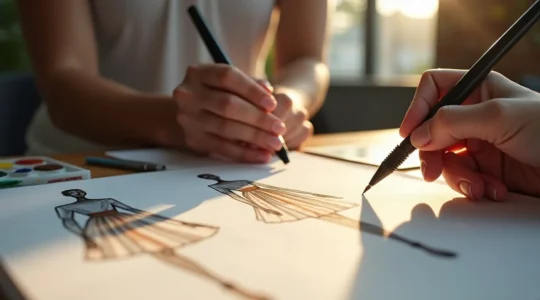
How to Forge Your Signature Style as a Fashion Illustrator
Contrary to popular advice, a unique fashion illustration style isn’t found by accident—it is deliberately engineered. Your signature emerges from the strategic tension between your choice of medium, your intentional stylization of anatomy, and your ability to tell a story….
Lire la suite
Why Are Brands Hiring 3D Designers Faster Than Traditional Ones?
The surge in hiring 3D designers isn’t just about creating faster renders; it’s because brands now need ‘Digital Garment Engineers’ who build production-ready virtual products, not just illustrate concepts. This new role directly translates to reduced sampling costs and significantly…
Lire la suite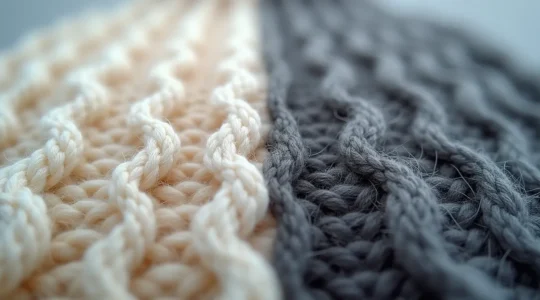
Why Yarn Twist Is the Critical Factor in Sweater Pilling
Pilling is not a random defect but a predictable mechanical failure directly controlled by yarn construction, primarily twists per inch (TPI). Low-twist yarns allow short staple fibers to migrate to the surface under abrasion, forming pills. High-twist yarns create superior…
Lire la suite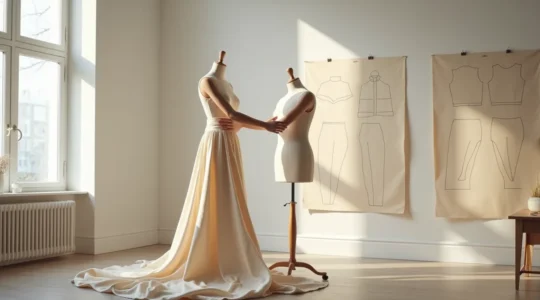
Why Draping Teaches Fabric Behavior Better Than Flat Pattern Making
Draping builds a ‘material intelligence’ that flat-pattern drafting cannot, transforming you from a sketch-translator into a fabric-first designer. It forces you to confront gravity and fabric personality from the first pin, eliminating the gap between a 2D idea and 3D…
Lire la suite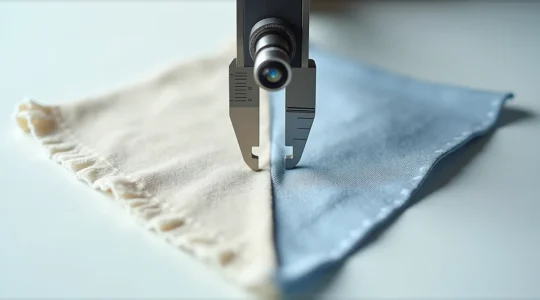
Natural vs. Synthetic Fibers: Which Is Really More Durable for Workwear?
Workwear durability is not a simple choice between natural and synthetic; it’s an engineering outcome defined by measurable material properties and targeted finishing processes. True performance lies in understanding the structural integrity of fibers, not just their origin. Key metrics…
Lire la suite
How to Grade Pattern Sizes Without Distorting the Original Silhouette?
Pattern grading is not about resizing a garment; it is a disciplined process of geometric translation designed to preserve the designer’s original intent across a size range. Proportional harmony, not linear increments, is the absolute key to avoiding silhouette distortion….
Lire la suite
How to Transition from Sketch to Structure Without Losing Design Integrity?
The common belief is that a great sketch automatically makes a great garment. This is fundamentally wrong. A design’s success hinges on translating artistic intent into a geometrically sound structure, not on replicating an often-distorted drawing. Technical decisions about block…
Lire la suite